
About the Brand
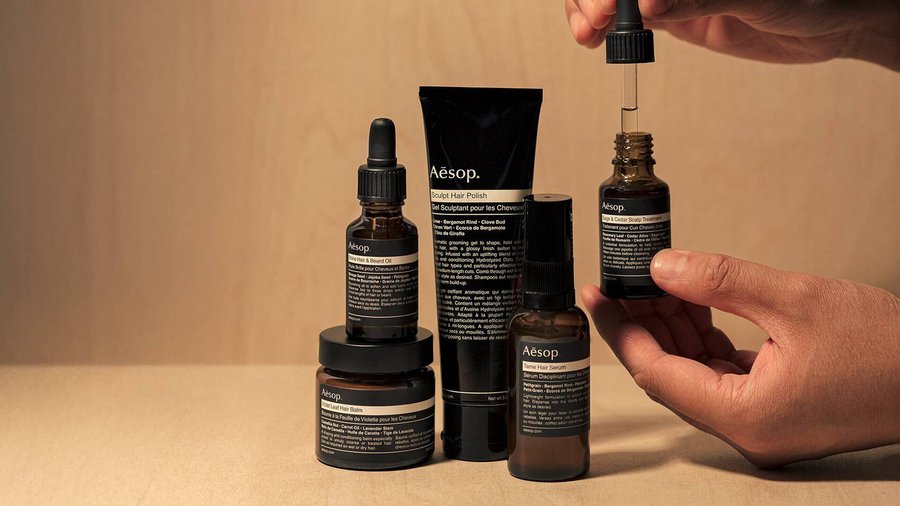
Aēsop is a perfume and skincare brand founded by Dennis Paphitis in 1987 in Melbourne, Australia. Their products are based on a synthetic interaction of scientifically approved formulas with organic and traditional oils, spanning fragrances, candles, soaps, skin and hair care, and more. The conceptual foundation of the Aēsop fragrance portfolio is rooted in the deconstruction of traditional perfumery, shifting the paradigm from mass unconscious consumerism to a phenomenological experience. Known today as a retail-centric brand, Aēsop positions itself against product-centric competitors. Its identity system—from the ancient Greek fabulist metaphor in the naming to modern philosophy and PR—is considered a prime example of qualitative consumer connection, helping raise awareness about body treatments and home furnishings.
Core Positioning
The key to Aēsop’s success is that it does not treat the human body as an object to be decorated, but instead offers a healthy method for achieving phenomenological and ideological pleasure.
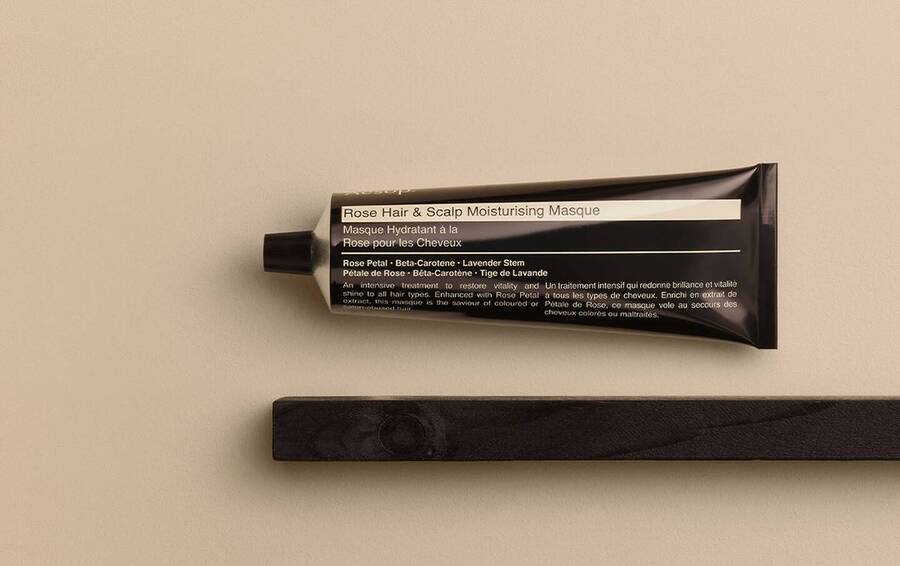
The potential target audience comprises cultural creatives, design-conscious professionals, and intellectual minimalists who actively reject hyper-consumerism and overt luxury branding. Conversely, the broader audience includes urban individuals engaged in displaying class discretion. Culturally, both segments converge under the psychotype of the intellectual aesthetician—individuals characterized by high cognitive complexity who experience dissonance when confronted with aggressive marketing, requiring their consumption choices to validate their intellectual self-image and aesthetic agency.
The underlying insight explains:I do not want my fragrance to speak for me before I do, nor do I want it to mask my individuality; I require a scent that acts as a quiet, structural framework for my own intellectual presence
Competitive Coordinates and Positioning
Within the competitive landscape of niche and luxury perfumery, Aēsop positions itself in the upper-right quadrant of intellectualized niche, contrasting with the lower-left quadrant of trendy, clear, and accessible brands.
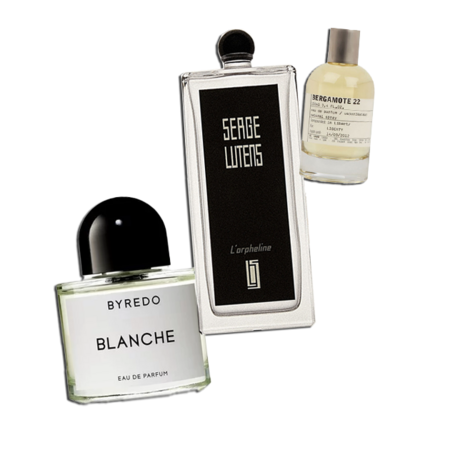
Unlike legacy houses such as Serge Lutens, which rely on orientalist drama, or Byredo, which utilizes nostalgic emotionalism, Aēsop maintains a stance of objective modesty. While Le Labo leans on an industrial craft aesthetic, Aēsop responds with an uncompromising alignment to high modernist design and botanical realism.
Values and Vision
The brand’s value system is founded on intellectual integrity, architectural discipline, and the preservation of stillness. Aēsop rejects the built-in obsolescence of the beauty industry, advocating instead for slow consumption, enduring formulas, and ecological responsibility. Within this framework, the daily use of fragrance becomes a ritual for balancing a micro-climate of order, reflection, and intellectual independence amid chaotic urban environments.
Communication Channels
When it comes to a brand’s public presence, Aēsop consistently focuses on forging meaningful, direct relationships with its customers rather than pursuing mass reach. This cultivated bond with its audience also allows the brand to position itself in the near-luxury or «corporate niche» category.

To sustain this, they employ a sophisticated yet approachable language and a restrained tone of voice in official announcements and press releases. They combine lyrical terms like «herbal extracts» and «finely milled» with thorough, scientific explanations of ingredients, often signaling adherence to sustainability principles (for instance, all their items are labeled as entirely vegan and cruelty-free).

What they are additionally striving for in the public sphere are partnerships with the hospitality industry. Aēsop bath products are featured in exclusive hotels, restaurants, and wellness spaces across the globe. The customer encounters the brand within a specific context—while traveling, staying in an authentic hotel, or entering a premium service environment. The product becomes associated with comfort, taste, and a certain level of status. On the left: Aēsop products in Waldorf Astoria Hotels
This also reflects on the way the company operates in the digital public sphere. To begin, consider their elaborately architected website, which functions as a virtual extension of their physical stores. Aēsop partnered with the Work & Co digital product agency to realize the ambitious vision of adapting and transforming the customer’s shopping experience for the online medium.
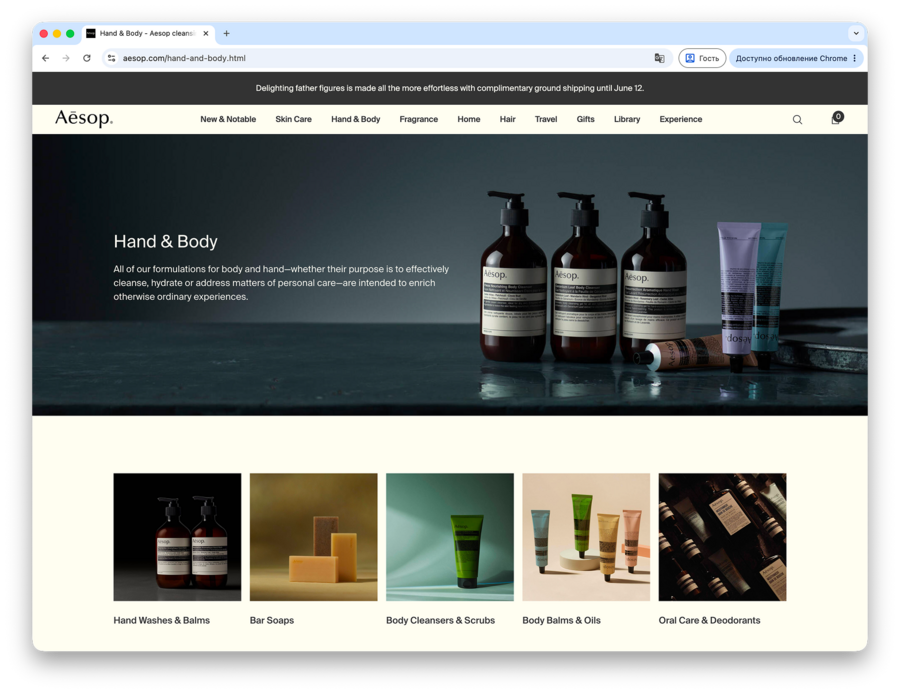
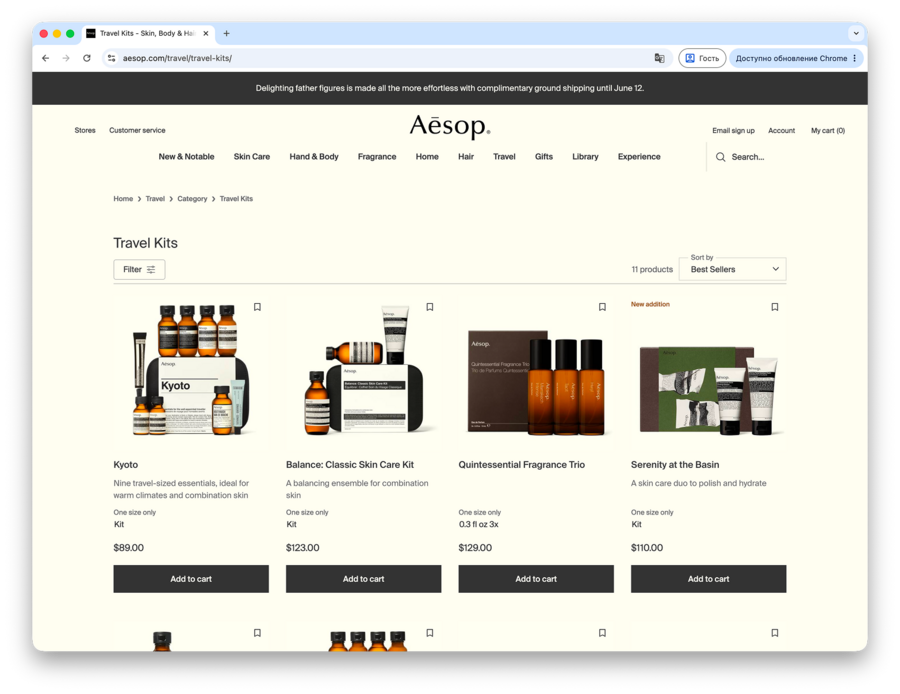
Webpage screenshots showcasing the diverse product line from Aesop
Like any other business operating on a high-profile scale, Aēsop maintains official accounts on the following social media platforms: Instagram*, Facebook*, X**, LinkedIn, and Pinterest. Rather than adopting a one-size-fits-all approach, the company tailors its tactics to suit the distinct advantages of each channel.
Aēsop’s Instagram Posts
For instance, Instagram’s visual nature allows users to choose a thematic grid and place graphic or video content within a specific geometric and thematic structure, thereby enhancing the message they aim to convey. This approach is particularly effective when presenting a new product line, as it visually separates it from other content on the customer’s feed through a series of photos unified by a distinct visual style.
Aēsop’s fragrance interactive slider
It is almost impossible to find photographs of models or celebrities posted on their social media accounts. Aēsop rarely utilizes influencers in its PR, but even when they do, the choices are judicious and the execution is subtle and deliberate. Everything is curated to appeal to a high-end clientele while maintaining the image of a thoughtful and intellectually curious brand.
Theoretical Framework & Analysis
We chose Aēsop, an Australian skincare brand, to examine how two class theories apply to a real-world brand case: the Elaboration Likelihood Model (ELM) proposed by Petty and Cacioppo, and Grunig and Hunt’s Excellence Theory of public relations. Aēsop is a compelling example because it avoids the loud promotional style often found in the skincare market. Instead, it cultivates a calm, design-forward image through its stores, packaging, language, and customer experience. This deliberate restraint is one of the reasons the brand’s communication feels so effective.
The ELM posits that audiences process persuasive messages via two pathways: the Central Route, which is a path of cognitive processing involving close scrutiny of message content; and the Peripheral Route, which is a mental shortcut process that accepts or rejects a message based on irrelevant cues rather than actively engaging with the issue. Aēsop appears to engage both routes. For consumers who pay close attention to product information, Aēsop descriptions bypass the exaggerated claims common in the skincare industry. The copy is clear and almost clinical—it provides exact ingredient lists and straightforward usage instructions. This tone allows the brand to be perceived as calm, knowledgeable, and trustworthy. This framing encourages consumers to read more carefully, aligning closely with Objective Elaboration—a bottom-up mode of thinking where facts are studied without bias, seeking truth regardless of where it may lead.
Most consumers, however, are not trying to analyze hand wash like a scientific product. Their response is often shaped by the peripheral route. Aēsop handles this very carefully: the amber bottles, restrained typography, ambient scent, and characteristically dim lighting all communicate a coherent identity without explicit claims. Aēsop rarely relies on the usual shortcuts of social proof—the idea that everyone else is doing it—authority, where the message is accepted simply because it comes from them, or scarcity, where the pressure is that they are all about to sell out. Aēsop places its stores in older, culturally distinct districts and collaborates with local architects, so each space feels more like a small gallery than an ordinary shop. The purchase becomes partly symbolic: it communicates something about taste and identity while still remaining a simple everyday transaction.
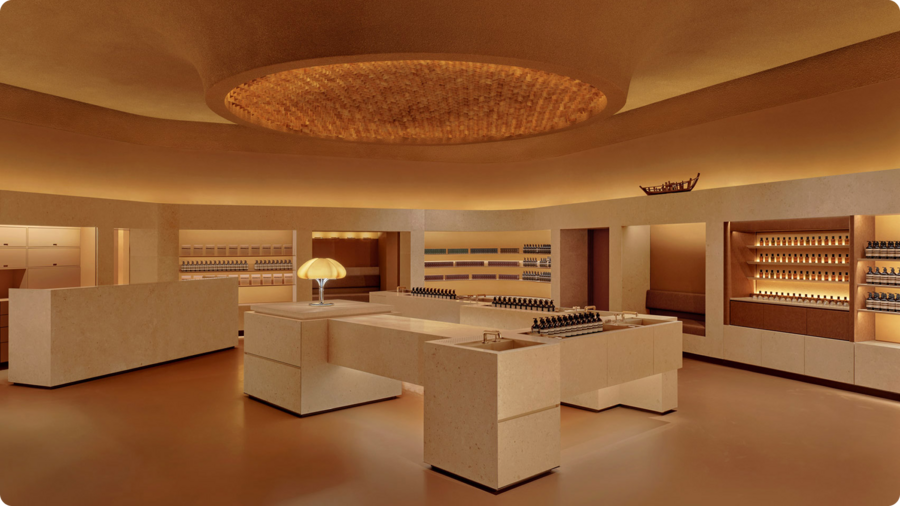



Aesop’s physical stores from culturally diverse places