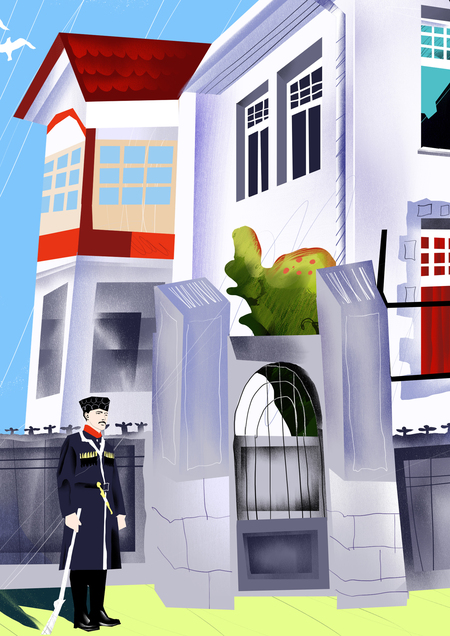
My project explores the lost Sukhumi architecture: buildings, people, objects and stories linking them — a memory that is not available today. The aim of the project is to create a series of works for an exhibition at the SCALAD cultural site and to create a virtual space to demonstrate these works. The whole project is not an attempt to familiarize the audience with Sukhumi’s archive, but a small opportunity to get away from the unheeded voids on the city’s body for a little while, to face the «ghost» of a lost reality. Each work is accompanied by an animation filled with fragmented and unstable forms, similar to a lubricated memory. Exhibition curator: Leon Logua Artists: Adlayba Danakai, Naala Pazzia
Dr. Fishov’s house.
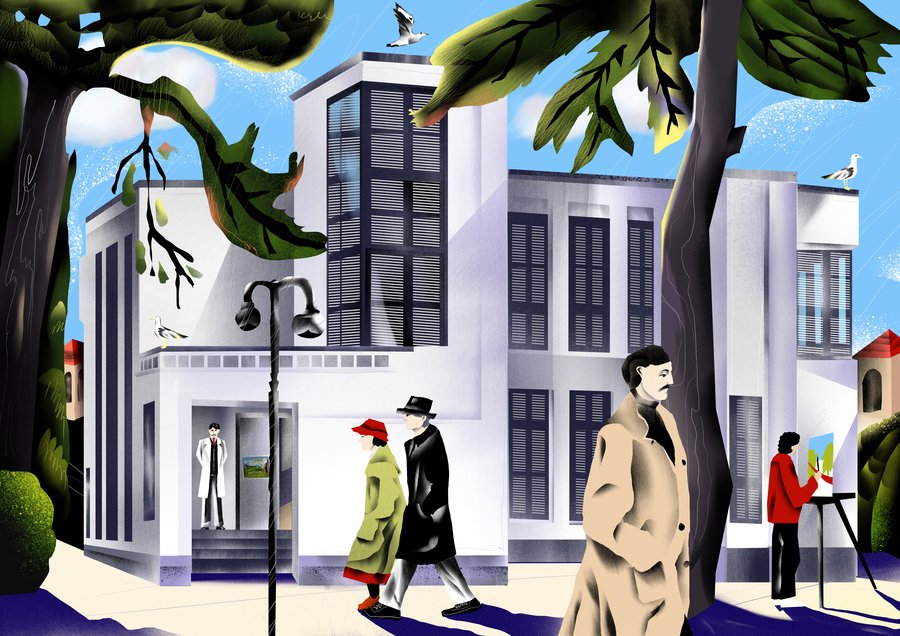
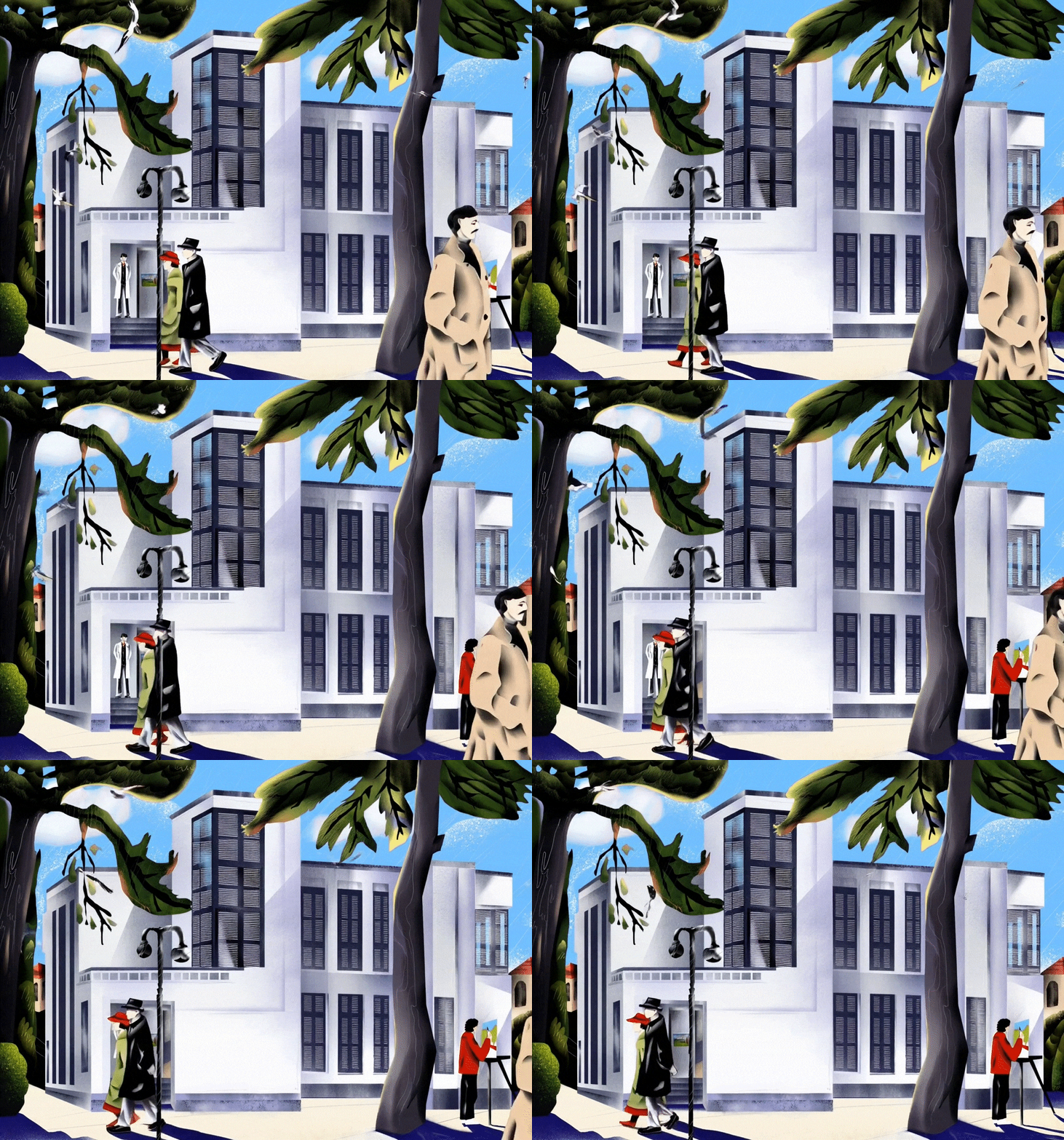
Dr. Fishov’s house.
The building was built in the design style of the late 1920s, with Dr. E. L. Fischkov working as a doctor at the Suhum «communicable» hospital (infection hospital) at the beginning of the 1930s. He was a passionate art collector. His home and collection of paintings by the artists of Abkhazia he bequeathed to the future art gallery. The current collection of Abhaz State Art Gallery paintings began with the meeting of Dr. Fischov.
Dance of Lieutenant Colonel A. S. Averkiev
Dance of Lieutenant Colonel A. S. Averkiev
At the beginning of the twentieth century, a retired lieutenant colonel, A. S. Averkiev, purchased a sanitation site and built a two-story driveway on it in 1905. In 1912 there was a sanatorium run by Dr. Gambashidze. In 1921, the building was municipalized and housed the Sukhumi Children ' s Home for Street Children. Later, the children’s home closed and the building became a multi-family house. It’s gone.
Samuridi Theatre, synematograph ♪ Science and life ♪
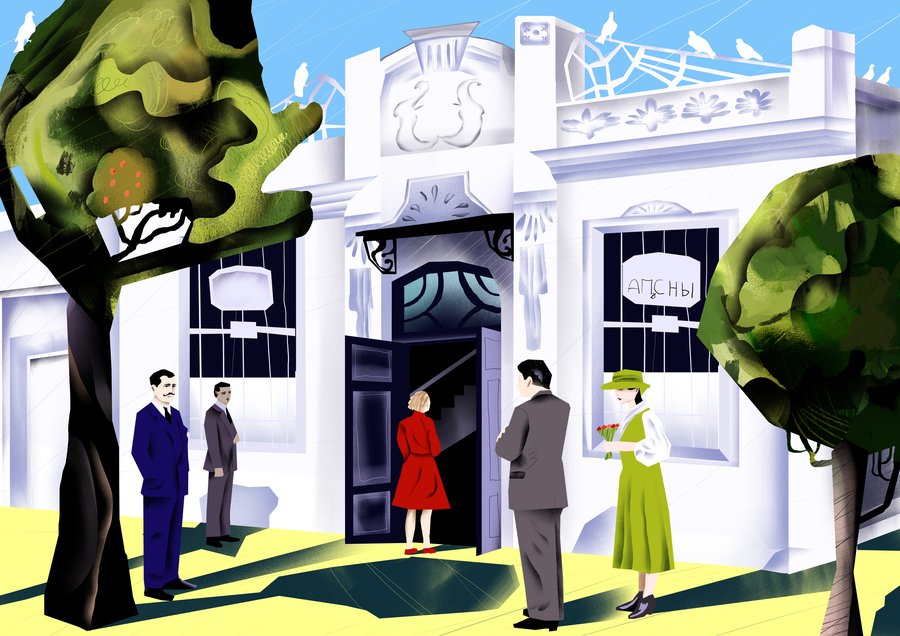
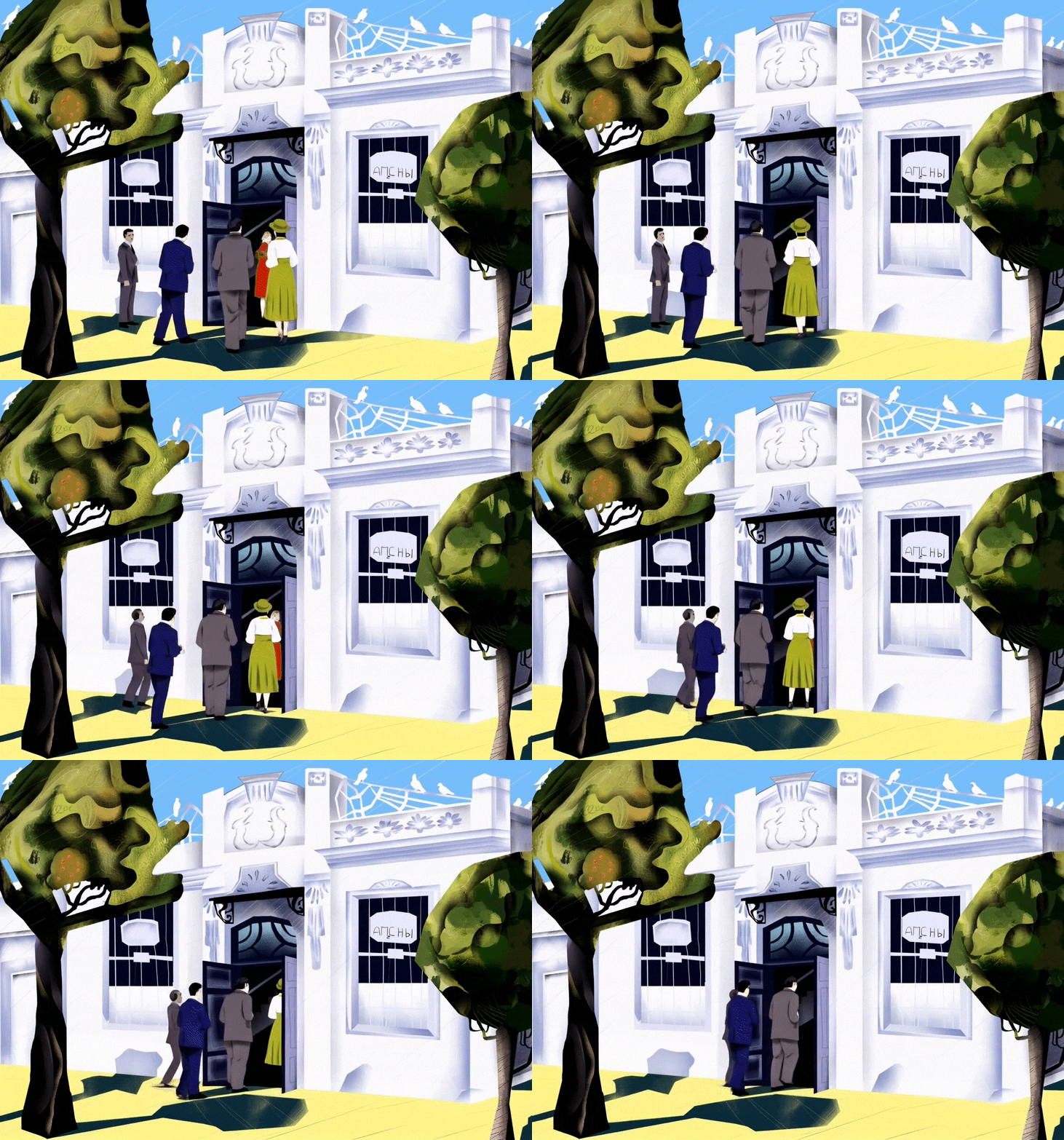
Samuridi Theatre, synematograph ♪ Science and life ♪
==History==The Samuridi theatre was opened in 1912 in Sukhumi as the first building specially designed for a dramatic theater, and was created by architect Alfred Bamme in a modern style for merchant H. K. Samuridi, who also owned the Science and Life cinema and the restaurant in the same building. In 1915, the theatre was sold and, since 1921, became a municipality and was renamed the 2nd Gosteatre of the SSR of Abkhazia. In the late 1930s, he was renamed the Apsna Cinema. The restaurant Science and Life was demolished in 1949 and the cinema was demolished in the 1980s.
O. I. Bostanjoglo House (N. Lakoba Home Museum)
O. I. Bostanjoglo House (N. Lakoba Home Museum)
O.I. Bostanjoglo built a two-story home for his family. In 1917, the house was sold to a merchant, A. A. Guliantsu, and in 1923 it was municipalized. Nestor Lakob’s family has been living here ever since. In 1936, Lakoba was killed and in 1937 his wife and son were arrested and later killed. In 1982, the house was opened by the N. A. Lakoba Museum, but during the 1992-1993 war, the building was destroyed and all the pieces burned down.
The Lacob family did not have many rooms: the living room, the dining room, Nestor’s office, his bedroom, and Sarah, and Rauf’s separate torch. Every bedroom had its own balcony. And on what was Rauf’s, there was a monkey sitting on it, and someone gave it to the boy. Many people in the old generation remembered this monkey, and she was very prickly, and she jumped all the time. There have always been great visitors to Lakob’s house: marshal Michael Tuhachevsky, party activist Vasily Blucher, revolutionary Gregory Ordzhonikidze, and many others. In the living room on the second floor, there were famous writers and poets, including Osip Mandelstam, Zinaida Richter and writer Peter Pavlenko.
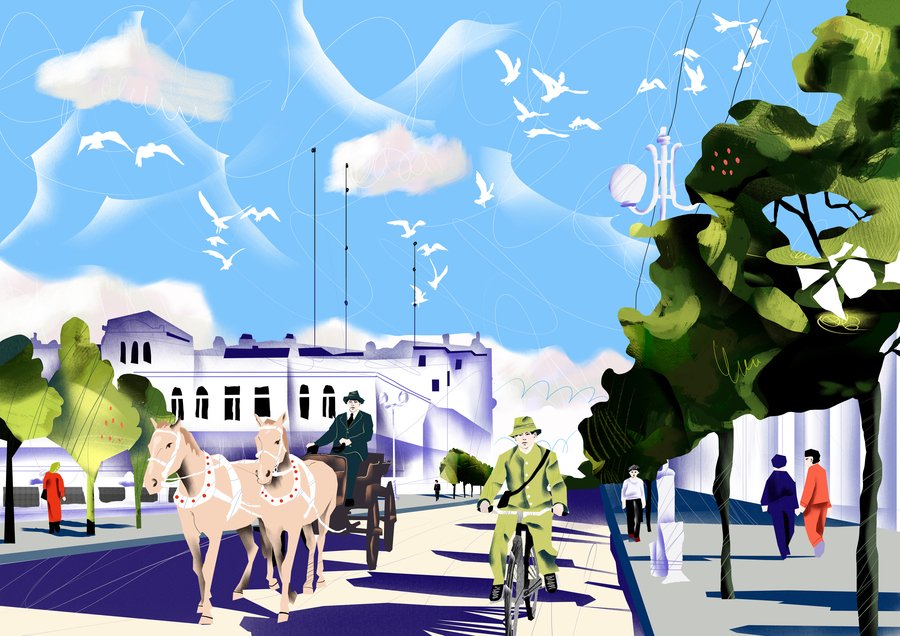
In the early part of the twentieth century, post offices were sent daily to all points in Abkhazia from Sukhumi to deliver mail. The mailmen delivered letters or notices of banderoles to the city by means of drivers and bicycles. It’s burned.