The project is an observation of how a collective self forms when it inevitably reflects upon others, and it also affirms that cultural identity is not a stable schema, but a dynamic, repeatedly reassembling process.
Binary oppositions in the Russian consciousness serve less as a tool for distinguishing self from other, and more as a method for realizing its dual nature. The subordination of polar identities within a single mentality allows individuals to select a behavioral model appropriate to the spirit of the age. The cyclical shift in values fits into this complex worldview—the East and the West contend, yet they are not separated.
Space > Fence
Icon
The duality of the Russian mentality, situated between East and West, manifests in a constant act of comparison with others. Individuals rarely look at themselves directly; more often, this happens through the lens of everyday comparisons, clichés, historical texts, and external descriptions—which over time become integrated into one’s self-perception. This constantly shifting reception triggers a reevaluation of what constitutes the collective Russian self.
Opening, Hole
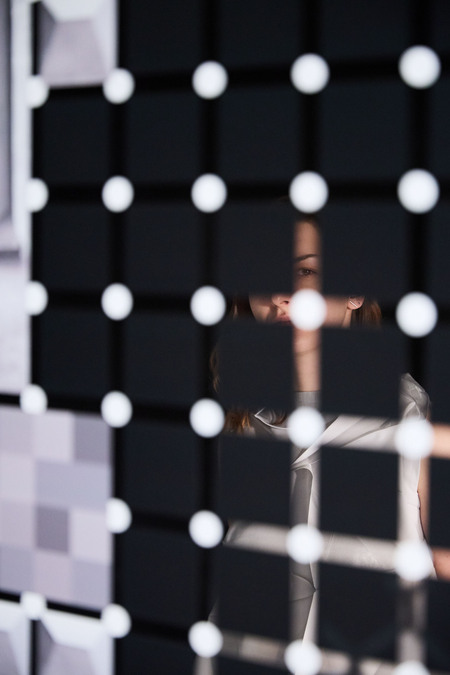
A series of small works framed in antique frames plays upon the motif of openings in a fence—peeks through which one customarily observes the «other.» However, as the viewer looks inside, they discover not another’s life, but their own reflection. The antique framing adds a layer of duality to this gesture: the familiar act of peeping is placed within an almost museum-like context, transforming it into self-observation. Thus, the reverse gaze is born: the attempt to see difference turns into an encounter with oneself, confirming that the «other» is always partly an imagined construction in which we recognize our own clichés, fears, and fantasies.
The work
The series of works
About Us
Often, what lies outside attention—the East and the West as conceived in the Russian consciousness—are largely imagined constructs. The ideals and flaws attributed to them are as fantastical as the stereotypes they impose upon each other. In this sense, Russia is neither a bridge nor a barrier, but a space where the East and the West continue to converse, debate, and reflect each other, creating a reciprocal view of themselves as the «other of the other.» In the exhibition, this concept is embodied in multiple reflective effects.
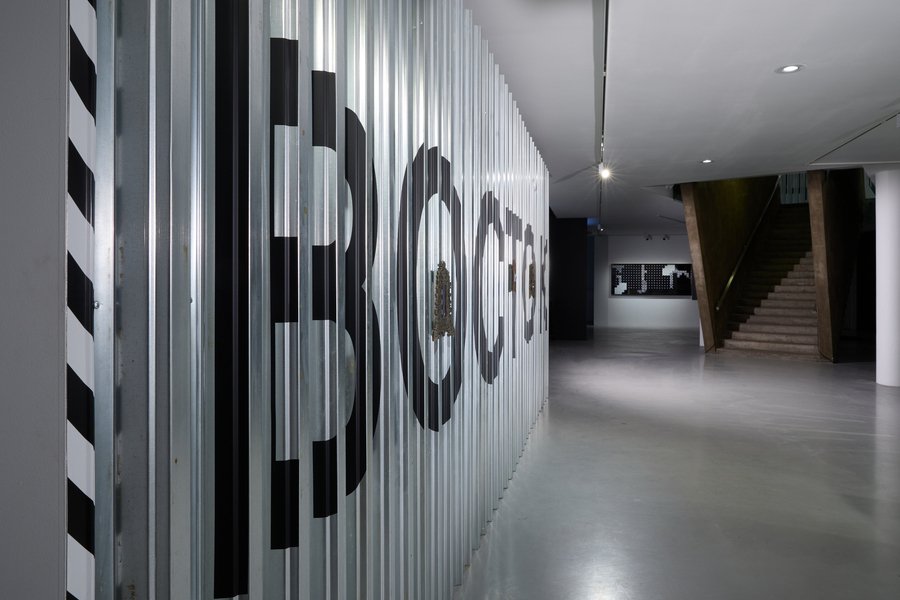
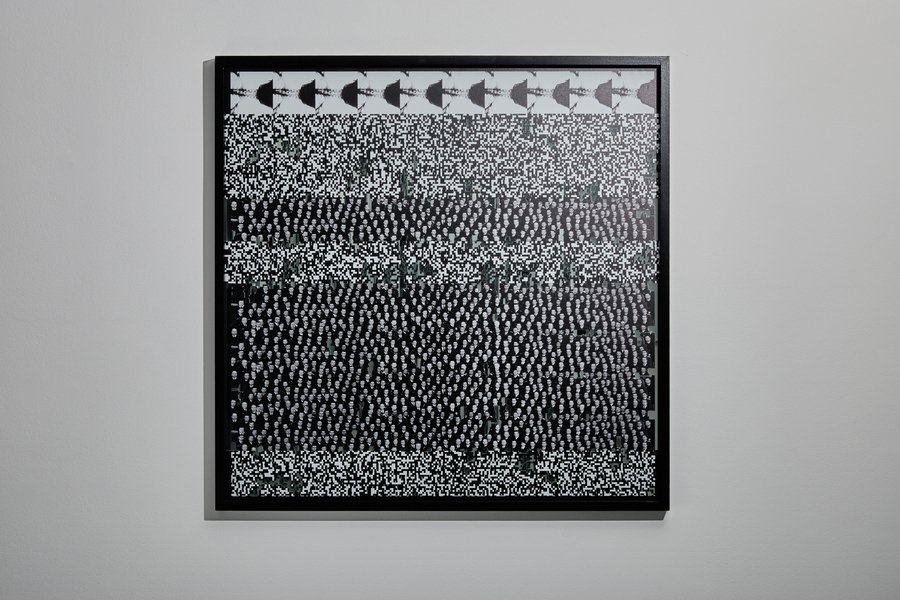
A second central element of the exhibition is the fence in various iterations, ranging from concrete segments from PO-2 to a pixelated grid. In the context of relationships with others, the fence is, on the one hand, a deliberate facade. Behind it, one can hide doubt and that very difference. On the other hand, the fence, riddled with gaps, gates, doors, and windows, represents an attempt at voyeurism—an approach without crossing over. Moreover, both the internal and external gaze are not necessarily striving for penetration, reflection, or replication; sometimes they merely register the fact of presence. Thus, the fence does not so much separate as it questions the very possibility of division.
An illusion visualizing self-exoticization as part of Russian identity. The lenses magnify the image behind the stained glass, while the relief glass simplifies it.