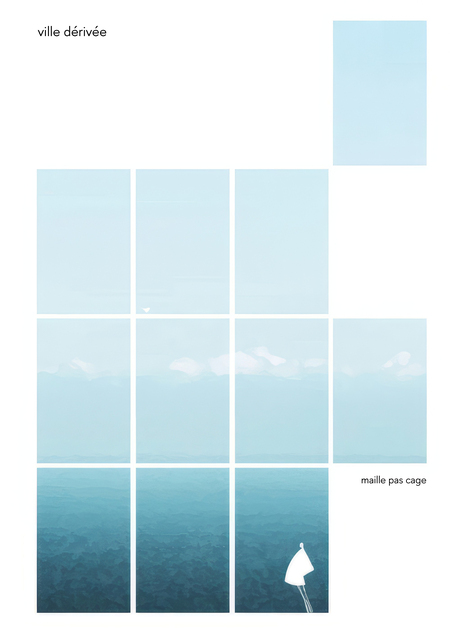
*maille pas cage — a grid, not a cage
Rubric
I. Project Concept
     i. Problem and relevance of the project

     ii. Solution

     iii. Analogs
II. Image of the city
      i. Location of the city

      ii. Formal analysis of the image of the city
          according to H. Wölfflin
III. Urban structure
        i. General plan

        ii. Section

        iii. Fragments of the city
Project Concept
Problem and relevance of the project
The question of the appearance of the urban environment has never lost its relevance largely because of its absolute influence on human formation.
Literally everything affects a person: the surrounding architecture, the area of personal space in a residential house, his daily pastime and the way the city organizes it.
Even ecology affects not only physical, but also moral health — modern scientists have found an increased crime rate in cities with polluted air relative to more «healthy» neighbors, which is directly related to the impact of gas emissions on brain function.
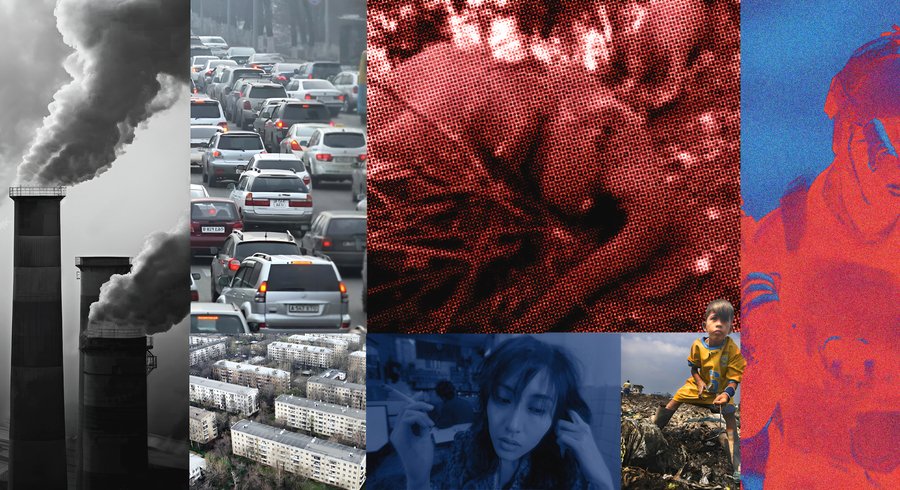
Based on the marginal state of modern society, we can assume that the existing approach to shaping the urban environment needs urgent rethinking.
Solution
The main criterion of the city of the future should not be simply «automation» or abstract «increased comfort of life», but the realization of a new principle of social structure.
Such an arrangement should be based on the principle of comprehensive environmental friendliness: the urban population as a community, a healthy natural environment, an urban environment close to that of the home, the predominance of public transportation over individual transportation.
Analogs
«New Babylon» by Constant Nieuwenhuys
«New Babylon» by Constant Nieuwenhuys is related to Johan Huizinga’s concept of «Homo Ludens» and suggests the freedom of organizing space and leisure for the individual.
Nieuwenhuys worked closely with representatives of the The Situationist International, who saw freedom of activity as the root of the new social order. «Dérive» is a concept developed by the situationist Guy Debord, describing both the chaotic wandering around the city in search of its true points of attraction and an independent way of life from external circumstances.
«Ville Spatiale» by Yona Friedman
Friedman’s project is very similar to New Babylon, but presents a more traditional but flexible urban environment.
Friedman’s city does not force people to «act», but gives them the opportunity to live a more ecological life.
Image of the city
The image of my city is the folkloric Whalefish. This image reflects an independent island city roaming the seas and oceans.
In my search for the urban planning features of my city, I decided to «cut» the Whale and there it was — functional zoning.
Thus, my city became a floating closed megastructure with buildings inside it.
«Dérive» here is not only a reference to the work of Nieuwenhuys and the Situationists, but also a description of the ship’s behavior at sea — its chaotic wandering with the anchor unsecured.
Image of the city
Location of the city
In order to make the city free, it was decided to locate it in the Pacific Ocean, in neutral waters, a maritime space beyond the outer limits of the territorial sea, not subject to the sovereignty of any state or states, and in the common and equal enjoyment of all nations.