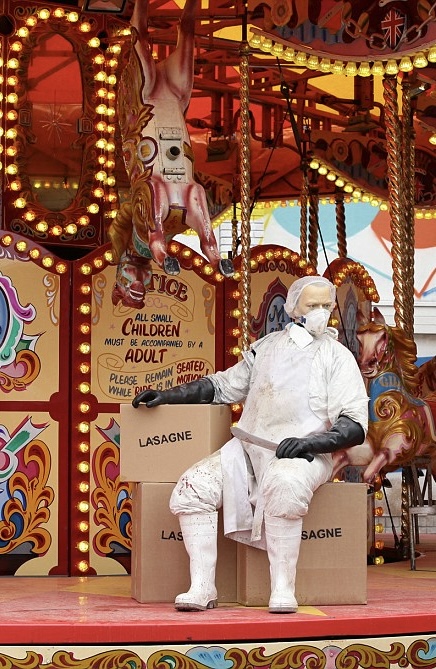
The Concept of Liminality
«Liminality and Communitas» by Victor Turner, «The Ritual Process: Structure and Anti-structure.» In this essay, the author examines how people transition from one social status to another and explores the concept of a special feeling of universal equality.
Victor Turner’s concept of liminality perfectly describes the experience of visiting amusement parks. Theme parks function as contemporary «liminal spaces, ” where established social structure temporarily dissolves, giving way to an „anti-structure“ and pure emotion.
The State of «Neither Here, Nor There»: The individual (neophyte) in a liminal phase seems to fall outside the familiar framework of classifications and societal structure. They possess neither a name, possessions, nor status. Ambivalence: Liminal beings are often symbolically compared to the dead or embryos in the womb. They are simultaneously dangerous and sacred, possessing immense potential for transformation. Equalization: All participants in the ritual appear alike (for example, they wear the same clothing or are nude), which erases previous social distinctions.
Transitional State and Laughter
Mikhail Bakhtin’s book on carnival culture examines laughter and the transitional states of humans during a feast, carnival, or fair. It is the same state a person experiences while in an amusement park.
Bakhtin’s carnival is a «world inside out.» The king is crowned by the fool; the fool becomes the king. There is no division between actors and spectators—everyone is equal in the carnival frenzy. The amusement park is a space where an adult can legally act like a child, and the child gains power over emotions (controlling the ride, choosing the route).
Bakhtin posited a central concept—grotesque realism and the grotesque body. This body is exaggerated, open to the world, emphasizing protrusions, orifices, movement, and excess (laughter, food, shouting). The carnival utilizes familiar contact and profanation (reducing the sublime to the lowbrow). The entire aesthetic is built upon vibrant, public, and «incorrect» art. On an amusement park ride like a roller coaster, the human body undergoes intense physical stress. The face distorts from the scream (a purely Bakhtinian grotesque image), the wind billows the clothing, and safety harnesses compress the figure. In the park, people consume «excessive» carnival food (enormous cotton candy, caramel apples).
Loss of Control
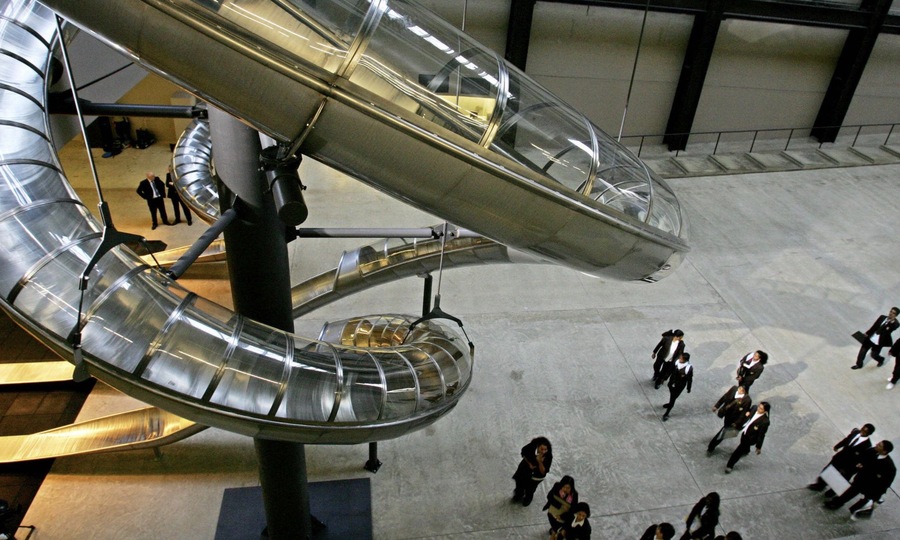
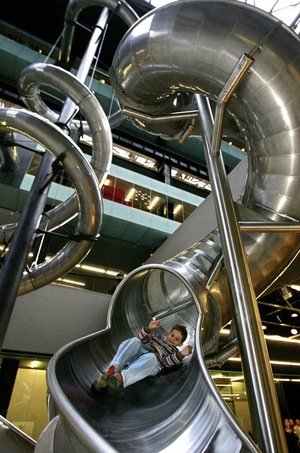
Carsten Höller
Höller created massive spiral slides that viewers descended on themselves. The audience doesn’t simply observe the work—they engage with the structure’s movement. For the artist, the boundary between fear and pleasure, control and loss, is what matters.
Dismaland
The amusement park transforms into a space of anxiety, catastrophe, and social critique. Dismaland was Banksy’s temporary art project in 2015, deliberately built as a bleak inversion of a typical theme park.
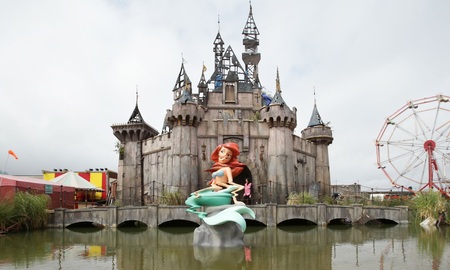
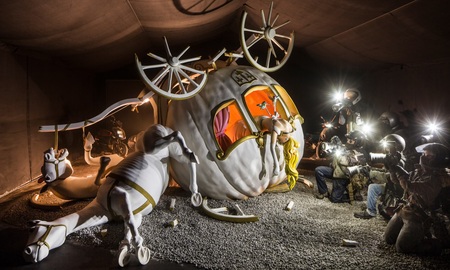
Banksy’s «Dismaland»
In 2015, Banksy, along with 58 artists from around the world, created an entire park of «amusements» for adults. The meaning of every object was «turned upside down» and carried an entirely different significance. Many of the works addressed acute political issues and opened eyes to many matters.
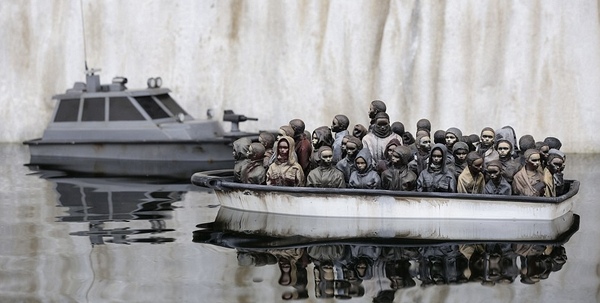
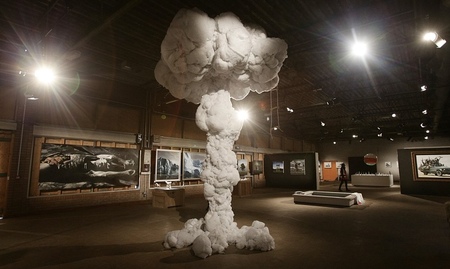
Banksy «Dismaland»
This park was a call to attention regarding the world situation and a reversal of the theme park people were accustomed to seeing. Entertainment transformed into anxiety. What was meant to evoke pleasure began to provoke the opposite emotion. Dismaland presents the park not as an escape from reality, but rather as a space through which reality can be discussed.
Banksy «Dismaland»
Helter Skelter
Helter Skelter as a metaphor for the transition from euphoria to chaos—a ride where the pleasure of motion is inseparable from the fear of falling and losing control.
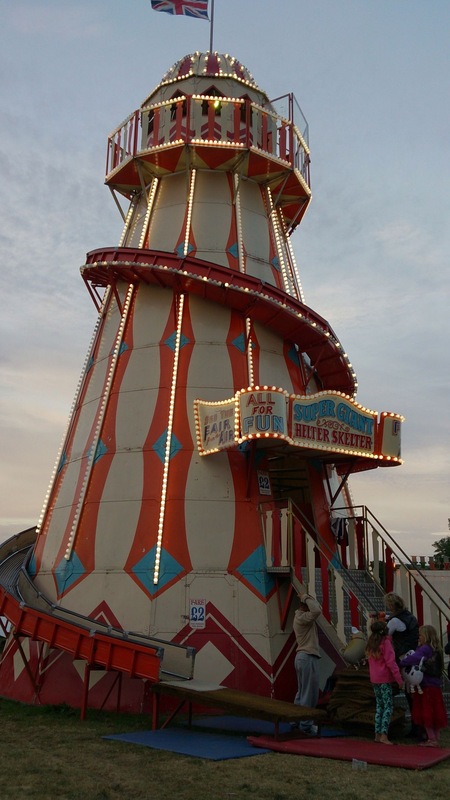
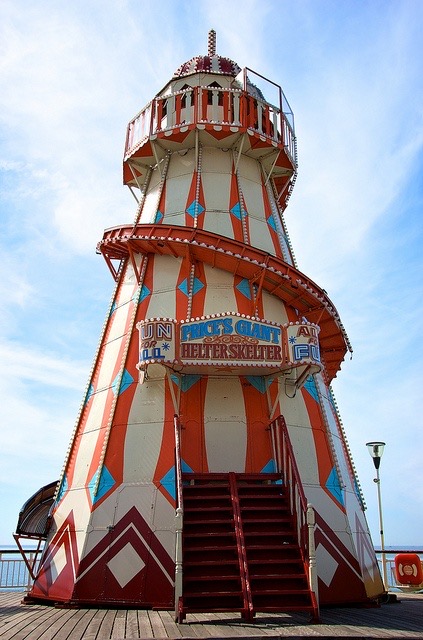
«Helter Skelter» Attraction
Helter Skelter most accurately encapsulates the condition under investigation, as its motion is based on a spiral descent: the individual voluntarily enters the structure, moves upward, and then relinquishes control to the motion and chaos.