
The project presents a series of twelve paintings documenting an often-unseen ecological issue: the contamination of Moscow’s natural spaces by non-biodegradable holiday decorations. Each piece serves as a documentary portrait of one of the city’s twelve parks in a specific month of the year, where the permanent presence of confetti and bunting takes precedence—literally—over the seasonal changes in nature.
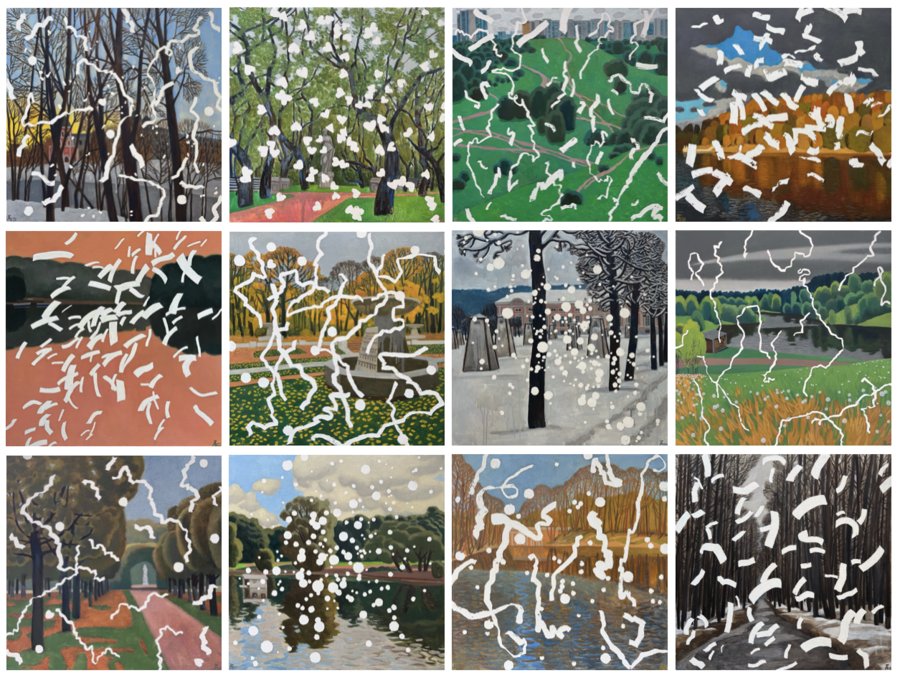
In this series, I explore the paradoxical coexistence of artificial celebratory elements with the living nature of urban parks.

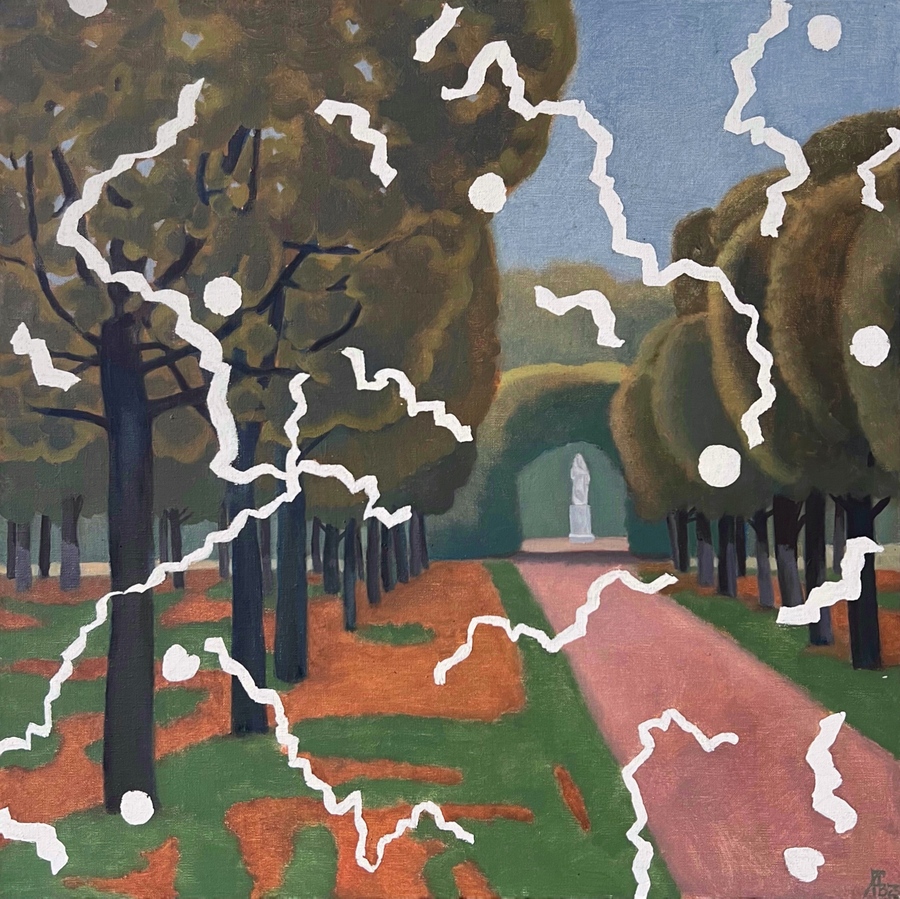
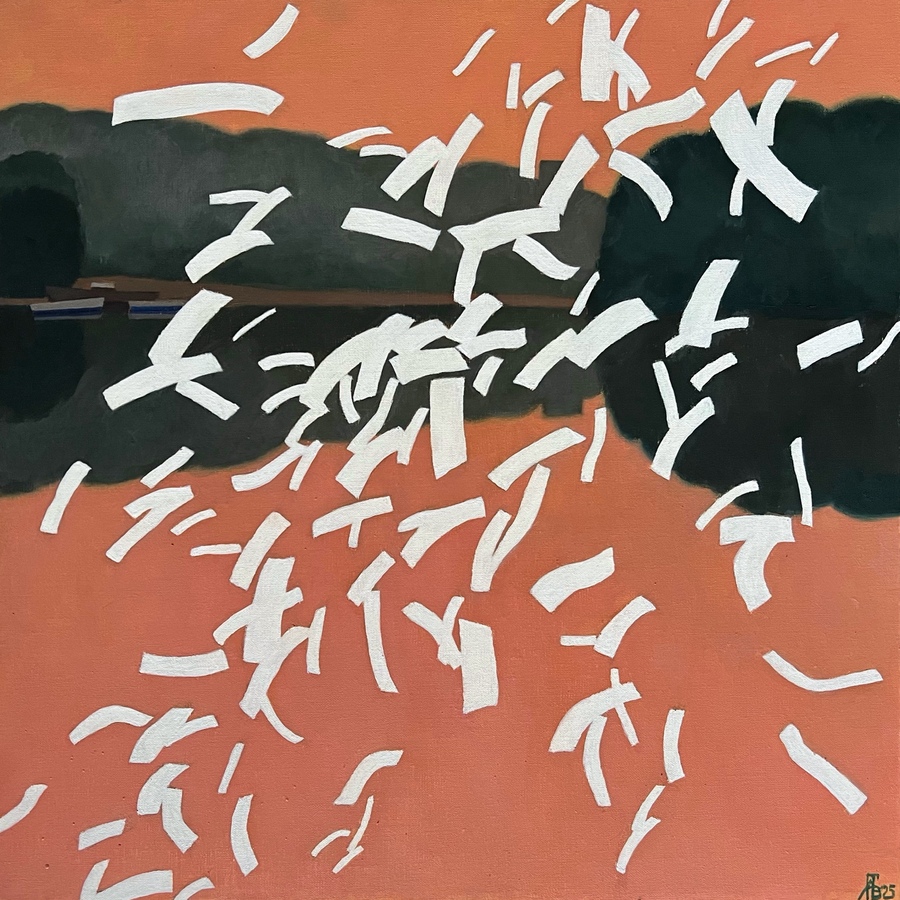

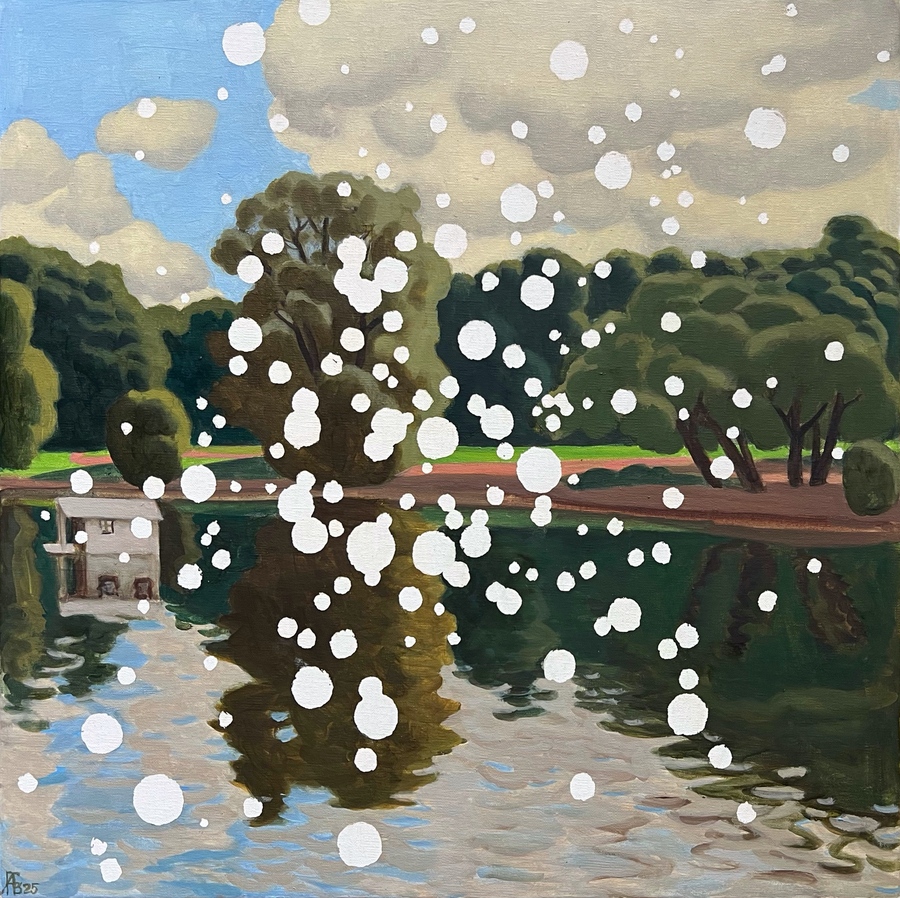
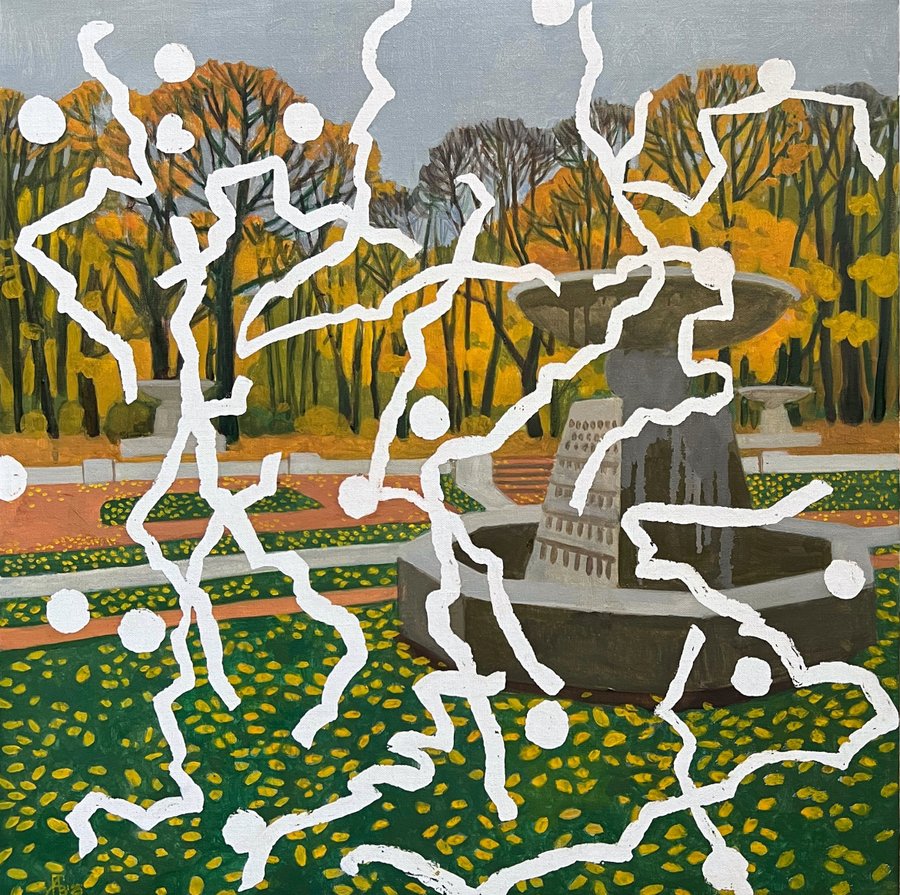
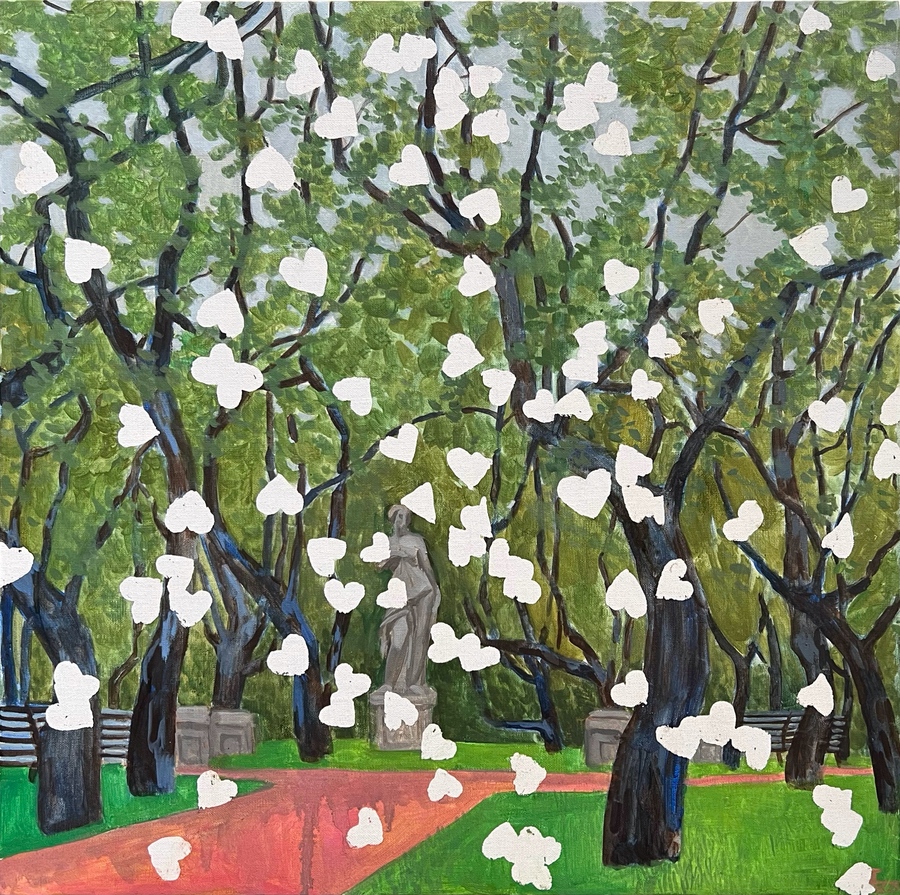





The visual noise of a missed plan, presented as confetti, serves as a metaphor for anthropogenic interference in the natural environment—where bright, artificial elements of a celebration become long-term pollution, creating «interference» in the perception of the natural landscape.
«Confetti is a widely used, striking, and generally inexpensive way to create an amazing festive and carnival atmosphere. Thousands of bright, colorful, shimmering pieces create the semblance of a fantastical rain or snowfall. (…)Streamers are recommended not for standalone use, but only in combination with confetti, as each streamer element is quite large and creates a strange impression without the accompaniment of a confetti shower.»
This series explores the paradoxical transformation of a fleeting festive event into a permanent ecological footprint. Confetti, which manufacturers describe as «a widespread, striking, and usually inexpensive way to create a spectacular atmosphere of celebration and carnival, ” appears within the context of the exhibition as an indicator of irresponsibility toward public spaces.
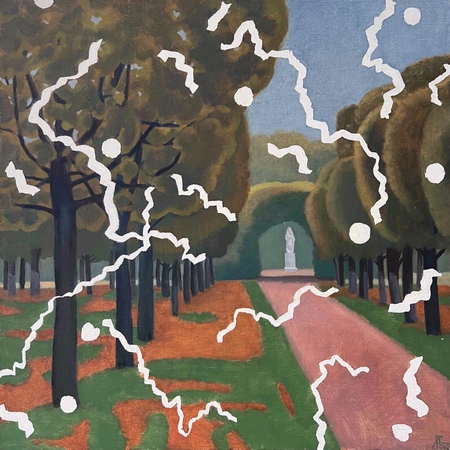
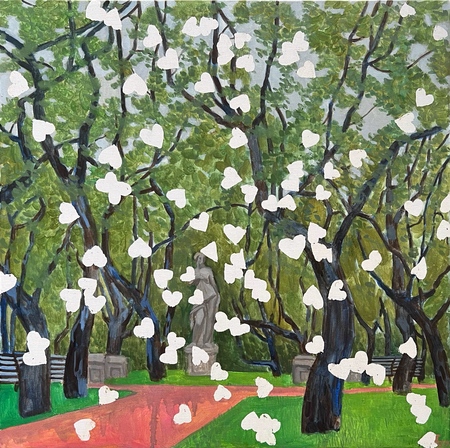
«If you are planning a large-scale event, standard party poppers will not suffice. You will need professional confetti cannons. (…) The type of machine you should use depends on the area that needs to be covered with confetti and the machine’s specifications. When choosing, it is best to err on the side of caution and select an option with extra capacity. An insufficient amount of confetti or an underpowered unit will create a comical and pathetic impression—the opposite of what you desire.»


In the annual cycle of work within the series, I emphasize that the problem is not resolved naturally—confetti does not decompose; it accumulates.
«(…)Metallized, or foil, confetti is made not from actual foil, but from a special, extremely thin and light PVC film/polypropylene onto which an aluminum coating is applied, and then it is dyed in various colors. Uncolored metallized confetti is silver; in addition to this, various colors are available, as well as two-tone confetti, where one side is dyed and the other remains silver. The physical characteristics of the film confetti are essentially the same as paper confetti: it also drifts slowly and smoothly, remaining suspended in the air for a long time after being released. Overall, metallized confetti is more dramatic than paper confetti, especially when it shimmers and catches the light, but it is also more difficult to clean up afterward.»


Images of actual Moscow parks demonstrate a problem that is more tangible and local, rather than abstract.
In this series, I question the cost of human celebrations to nature.