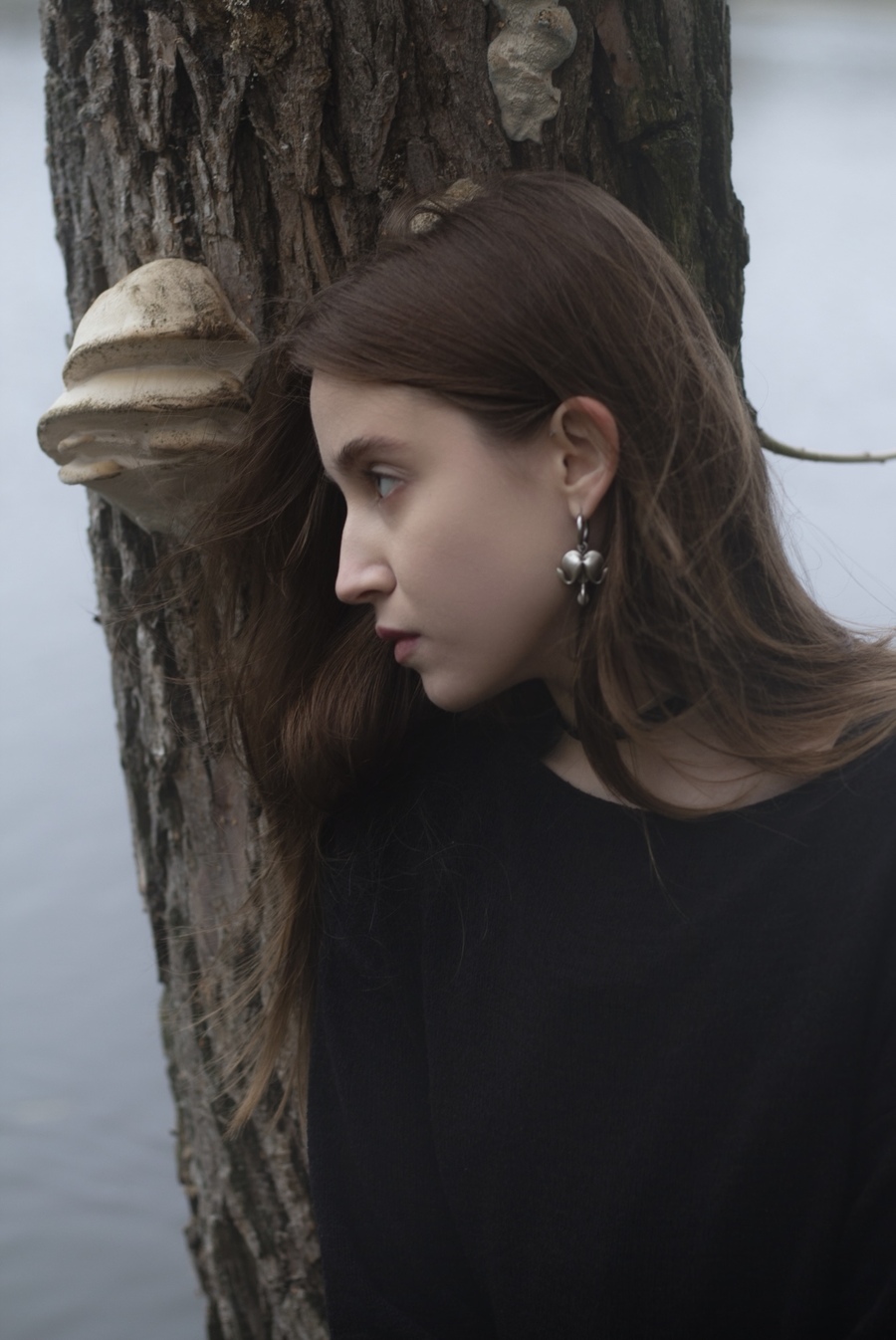
This collection is about life and love. Love is a rhythm of openings and defenses, in which vulnerability is not a weakness, but a form of strength.
I turned to natural forms because vegetative matter is not a backdrop to our lives; it is a mirror of them. The movements of plants are silent, yet comprehensible to the body: we too unfold when safe and contract when in pain. Silver captures this plastic language. The cool metal remembers the warm impulse, transforming feeling into form.

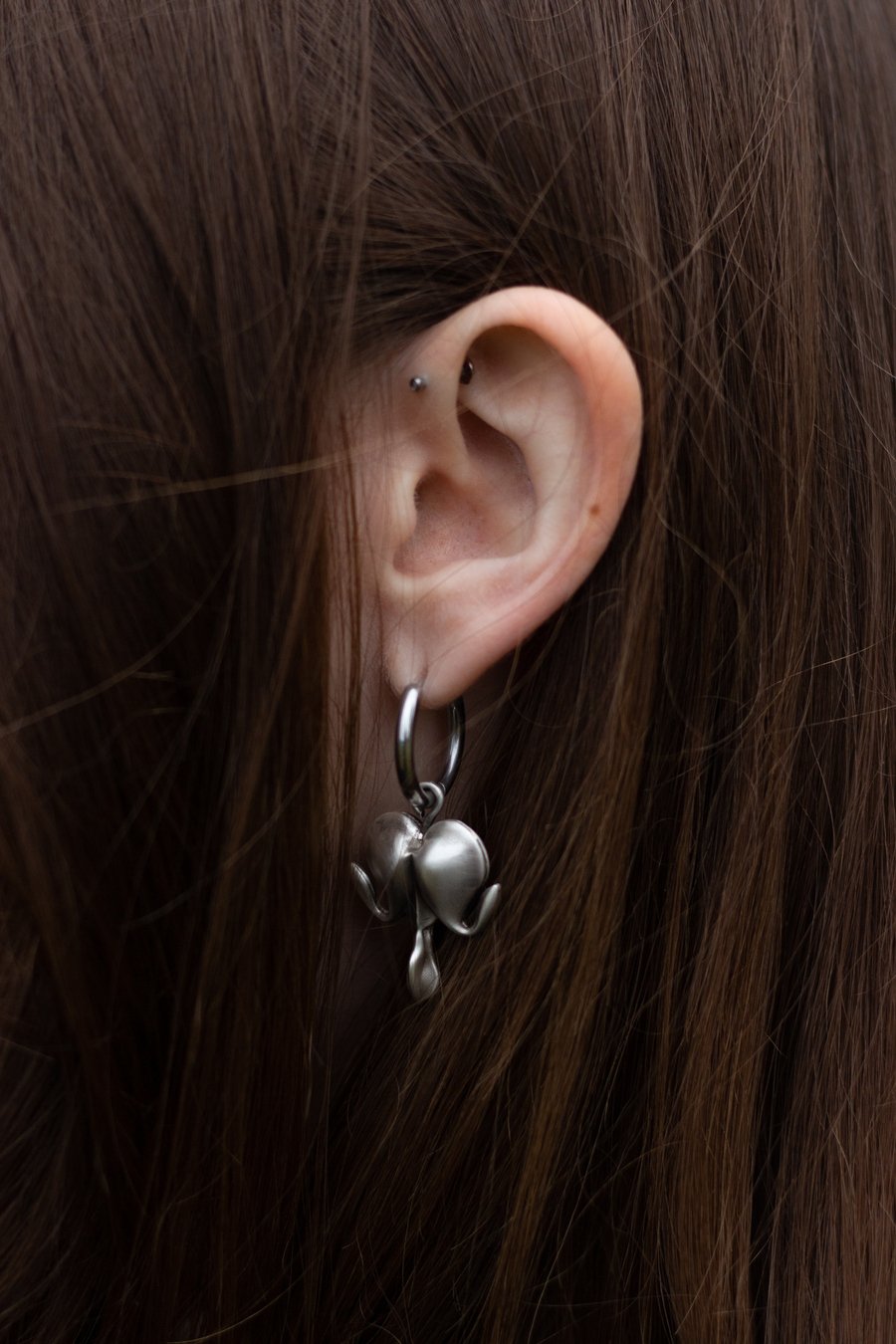
The collection comprises three pieces: a dichroic earring, or «bleeding heart,» as a symbol of vulnerability; a Venus flytrap locket pendant, symbolizing intimacy and protection; and a lotus leaf comb—an embodiment of tranquility.

This collection emerged from observing how living things operate—how the core of a dichontic organism opens and closes, the valves of a Venus flytrap, and how steady and stable the surface of a lotus is. The visual plasticity of plants evolved not into stylization, but into concrete technological solutions for structural construction.
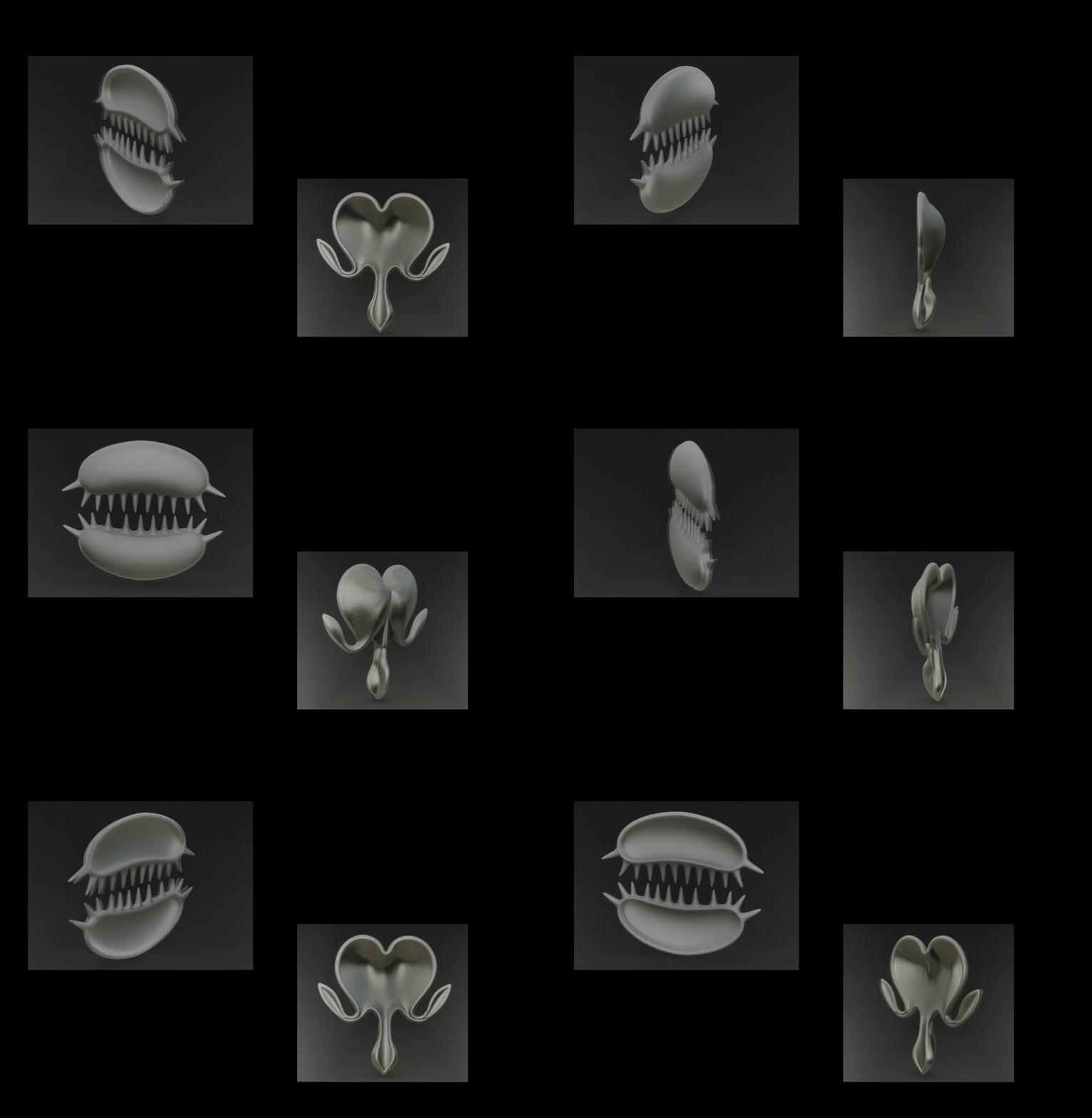
The «poetics» of the collection was rooted in very specific technical objectives and goals:
Form Design: 3D modeling and hand-waxing
Printing and Casting: selecting technologies suited to different challenges
Mold Acceptance: identifying issues and developing workarounds
Assembly and Mechanics
Final Finishing: sanding, polishing, and oxidation
The goal was to achieve visual lightness and expressive line quality while adhering to all technical specifications of working with silver.
«Dicentra» Earring (Bleeding Heart): I modeled this from two halves to achieve a hollow structure—this keeps the earring visually substantial while remaining physically light and preventing it from pulling on the earlobe.
«Morel» Locket Pendent: It was modeled as a two-flap locket. The interior volume was designed to hold a small «secret"—a photograph or a tiny note. Furthermore, the thin walls make it almost weightless.
«Lotus» Hairpin: I hand-sculpted the leaf from wax because the organic line and the plasticity of the veins were crucial. The hand-waxing created an «uneven breathing» at the edge, which was my intention. This allows it to read as a natural contour in the final polish, rather than as graphic geometry.
3D printing was utilized for the earring and pendant—precise symmetry in the halves and the ability to work with closed contours were necessary. The lotus wax mold was created by hand and immediately sent for silver casting.
Conclusion of the Work:
- Working with Thicknesses
What is deemed «forgivable» for gold (due to higher fluidity and different final properties and polishing behavior) can be extremely risky when working with silver. The pendant had walls that were too thin—in my view, this worked aesthetically, but technologically it required extreme care during subsequent finishing.
- Attention to Joint Design During 3D Modeling
When developing the prototype, allowances for error must be planned. The two halves of the earring did not meet perfectly. The solution was to trim the tail off one half and solder it to the half with the tail to achieve a clean seam and proper fit.
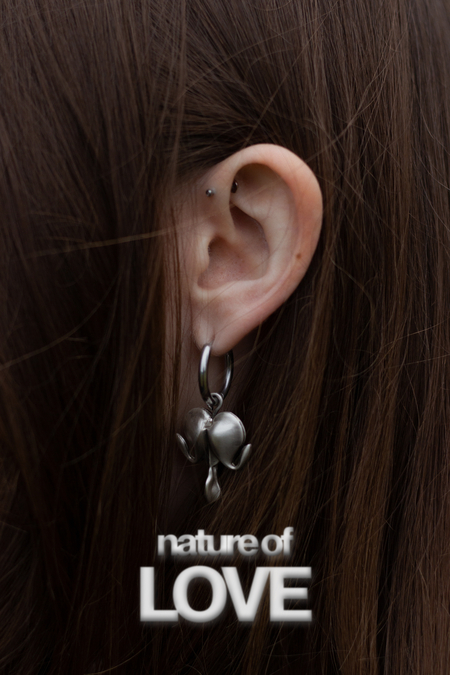
«nature of love» — on one hand, a visual narrative exploring vulnerability, protection, and serenity. On the other, a practical investigation into thickness, tolerances, soldering, finishes, and the behavior of silver in thin-walled elements. I completed the entire cycle—from 3D modeling and wax molding to assembly and oxidation—and established specific technological guidelines that subsequently allow the form to be rendered even cleaner and more accurate, and the meaning—even clearer.