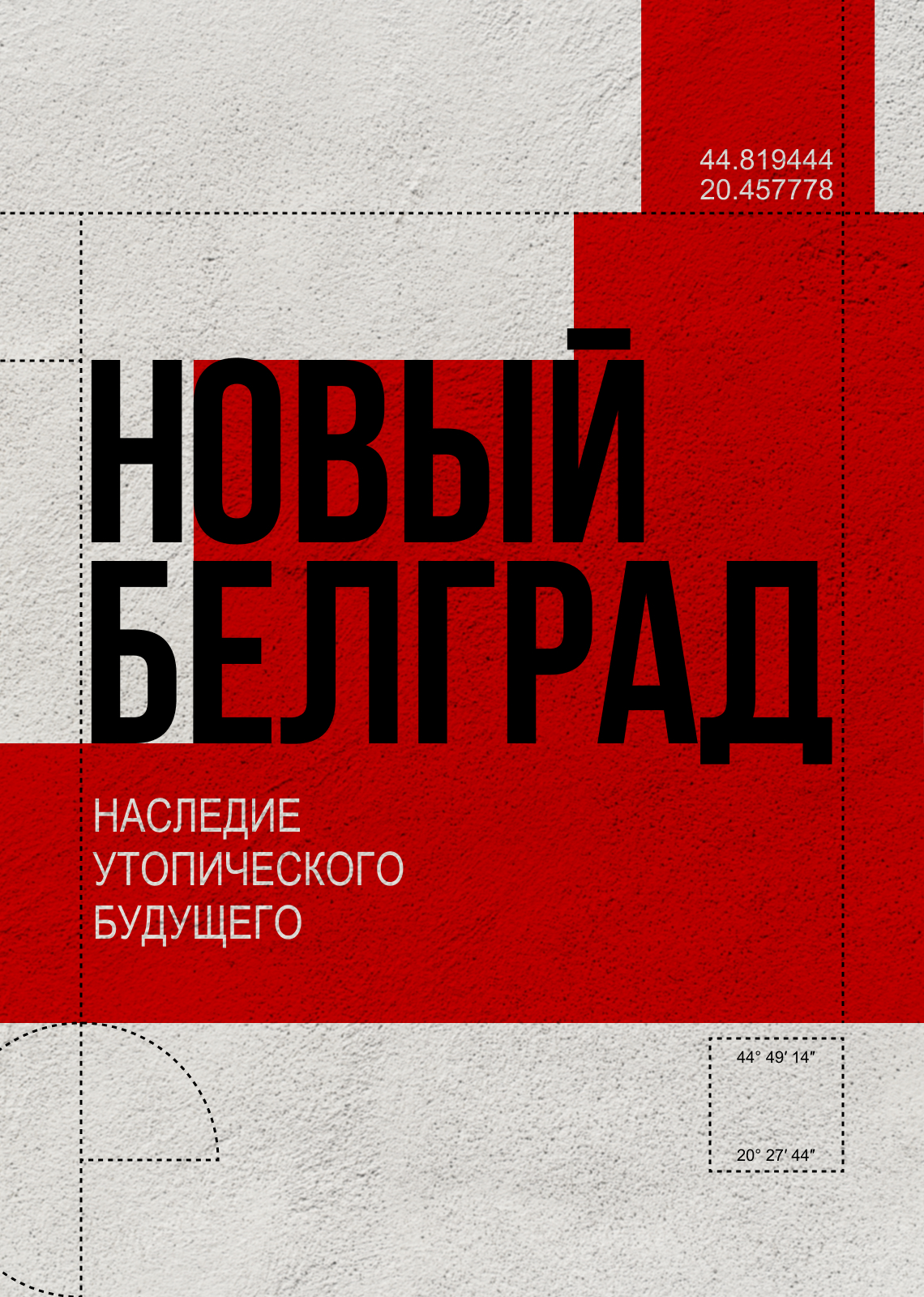
concept
The exhibition «New Belgrade: The Legacy of a Utopian Future» is dedicated to Socialist Modernism and the Brutalist heritage of Belgrade in the 21st century. At the heart of the project is the architecture of New Belgrade, which reflects the concept of a shared future. This district was envisioned as a space where housing, labor, leisure, and daily life would coalesce into a new urban community. Today, this architecture exists in a different time—it functions as a residential environment, a subject of memory, interest, criticism, and debate about the city’s future.
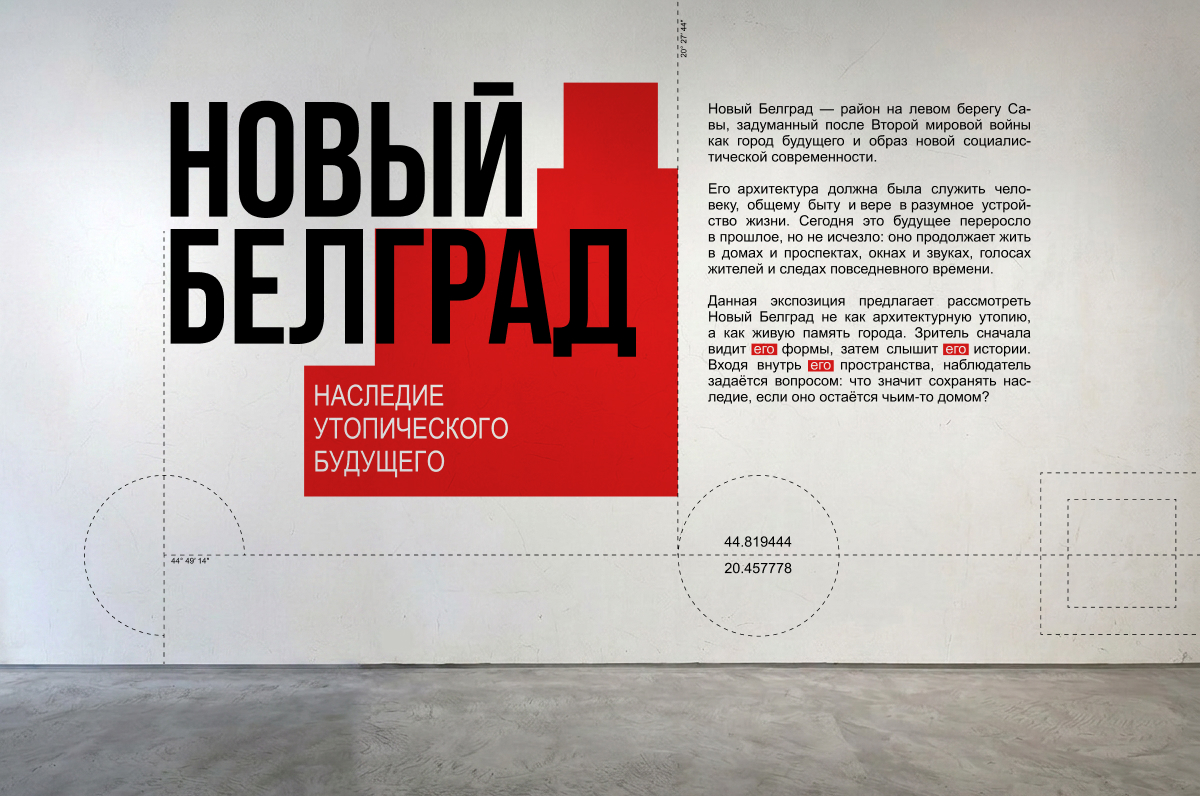
Exhibition 2. The Opener Wall
Exhibition plan and dramaturgy
The exhibition’s dramaturgy is structured as a gradual approach to architecture: first, we see it, then we hear it, then we learn the stories of the people who live within it, and finally, we contemplate its future.
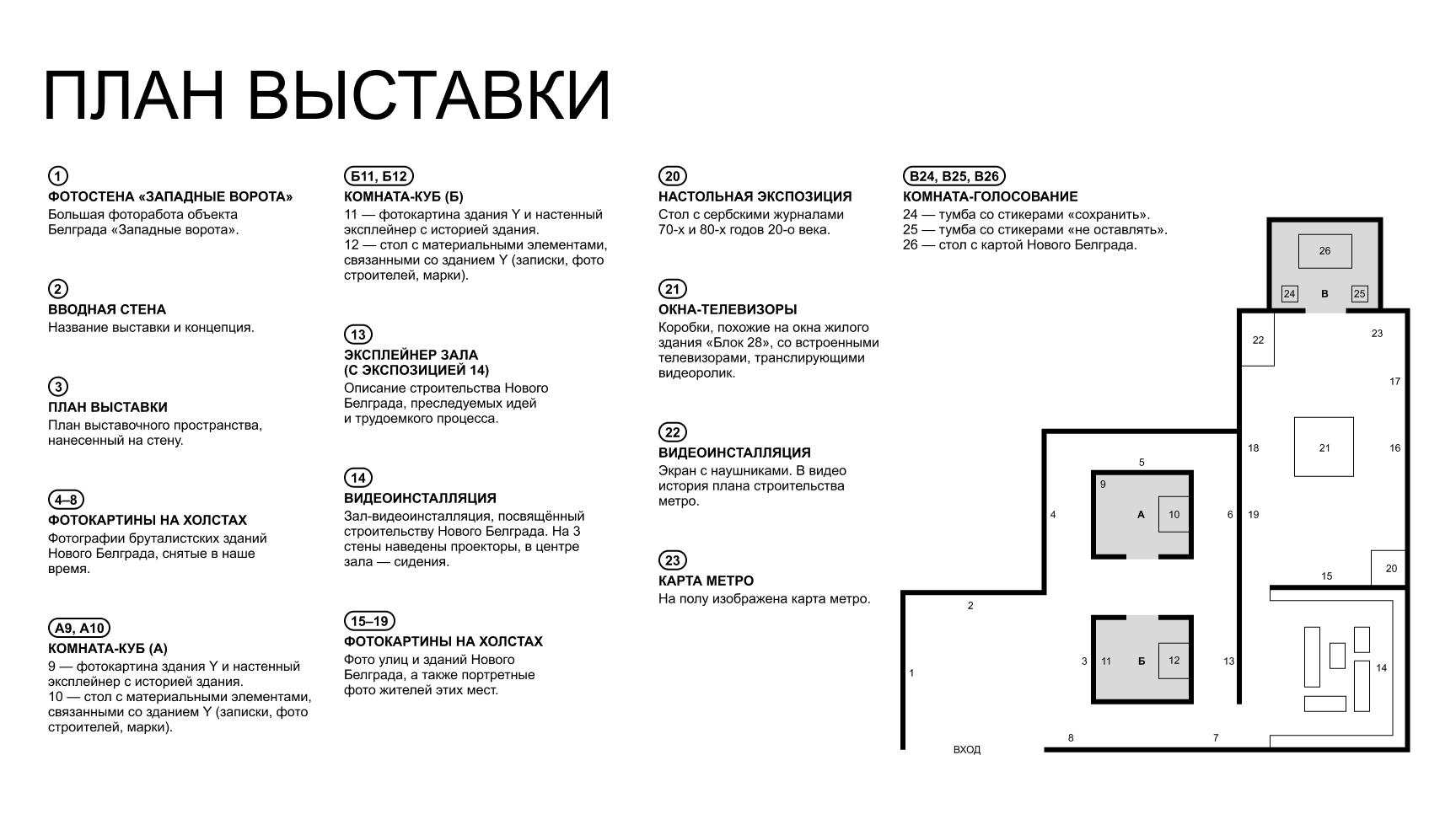
Hall 1. Brutalism at First Glance
The first hall presents New Belgrade as an image of the future. It features photographs by Mirko Nahmias from the «Minimal Belgrade» series: mid-20th-century buildings appear as stark and almost fantastic forms, strikingly distinct from the standard residential blocks.
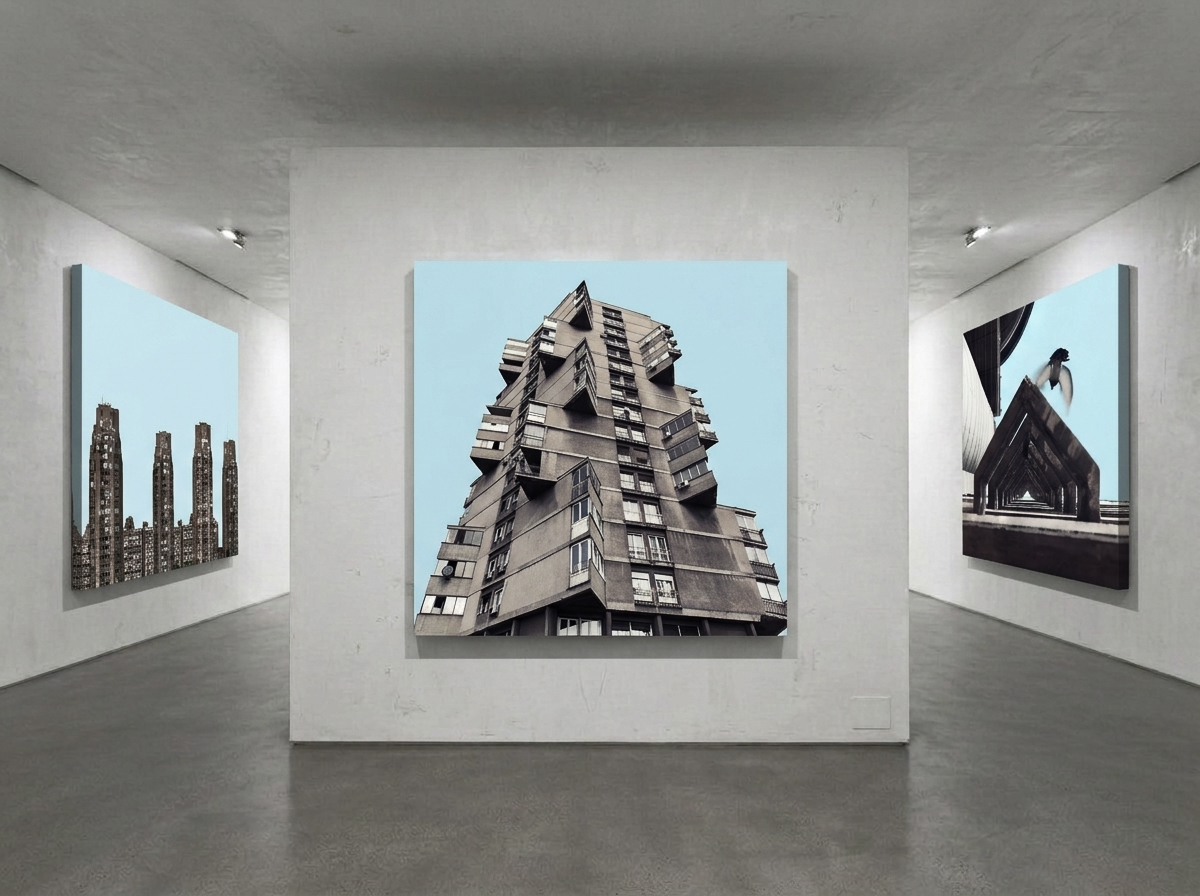
Exhibitions 4, 5, 6. «Minimal Belgrade,» Mirko Nahmijas
Inside the exhibition hall, there are also two artificially constructed rooms, each containing a detailed description of specific, renowned architectural sites in New Belgrade. Within the rooms, you can find: a photograph of the structure itself, a historical overview displayed on the wall, and interesting artifacts related to the reason for and the process of construction.
Exhibition A. Cube Room «Avalskaya TV Tower»
Room 2. Hearing the City
The second hall focuses on archives, sound, and film history: the construction of the city is presented as a collective and ideological process. It features the work of Mila Turajlić, which evokes the archival memory of Yugoslav construction and demonstrates how the image of a shared future was created through collective labor and cinematic language. Inside the room, there are three large screens displaying video footage, seating for viewing, and smoke effects symbolizing construction work.
Exhibition 14. «We Build the Country — The Country Builds Us!», video installation by Mila Turailich
Зал 3. Люди
The third hall speaks directly to the residents of New Belgrade: through portraits, interviews, and personal stories, architecture becomes part of daily life. This section features Marius Svaleng Andersen’s project, which combines photography with the voices of residents to showcase contemporary life within a modernist setting. The walls are intended for several exhibitions, each featuring two photographs: the city’s residents on the right, and their brutalist dwelling on the left.
At the center of the hall is an installation made of particleboard blocks, mimicking the concrete walls of the «Block 28» residential quarter in New Belgrade. Instead of a presumed window in the block, an old-fashioned television is embedded. The television displays an interview with subtitles taken from random city dwellers.
Exhibition 21. Simulation of «Block 28,» interviews with residents
Room 4. The Future of New Belgrade
The final gallery invites the viewer to take a stance on the fate of architectural history through an interactive map featuring famous and semi-abandoned city buildings. It transforms the viewer from a passive observer into an active participant in the conversation about the future of Brutalist architecture, prompting reflection on what should be valued, what should be preserved, what needs to change, and what can no longer be saved. Viewers express their personal opinions by placing special stickers on the buildings. It should be noted that this section can only be implemented if the exhibition is held in Belgrade, as in other circumstances, such a gallery might provoke public controversy.
Relevance
The relevance of this project lies in the fact that the modernist architecture of former Yugoslavia is currently emerging as a significant cultural stratum, yet simultaneously faces commercialization, reconstruction, functional loss, and indifference. The idea of a «communal» life, embedded in New Belgrade, has not completely vanished: it persists within the neighborhood’s structure, the residents' habits, and discussions surrounding the value of this architecture. This exhibition proposes examining Belgrade Brutalism not as a striking form, but as a space where the project of a shared future coexists with private life, memory, and new modes of building usage in the 21st century.
Project Descriptions
Mirko Nakhmiyas, «Minimal Belgrade, ” 2020. Photographic series.
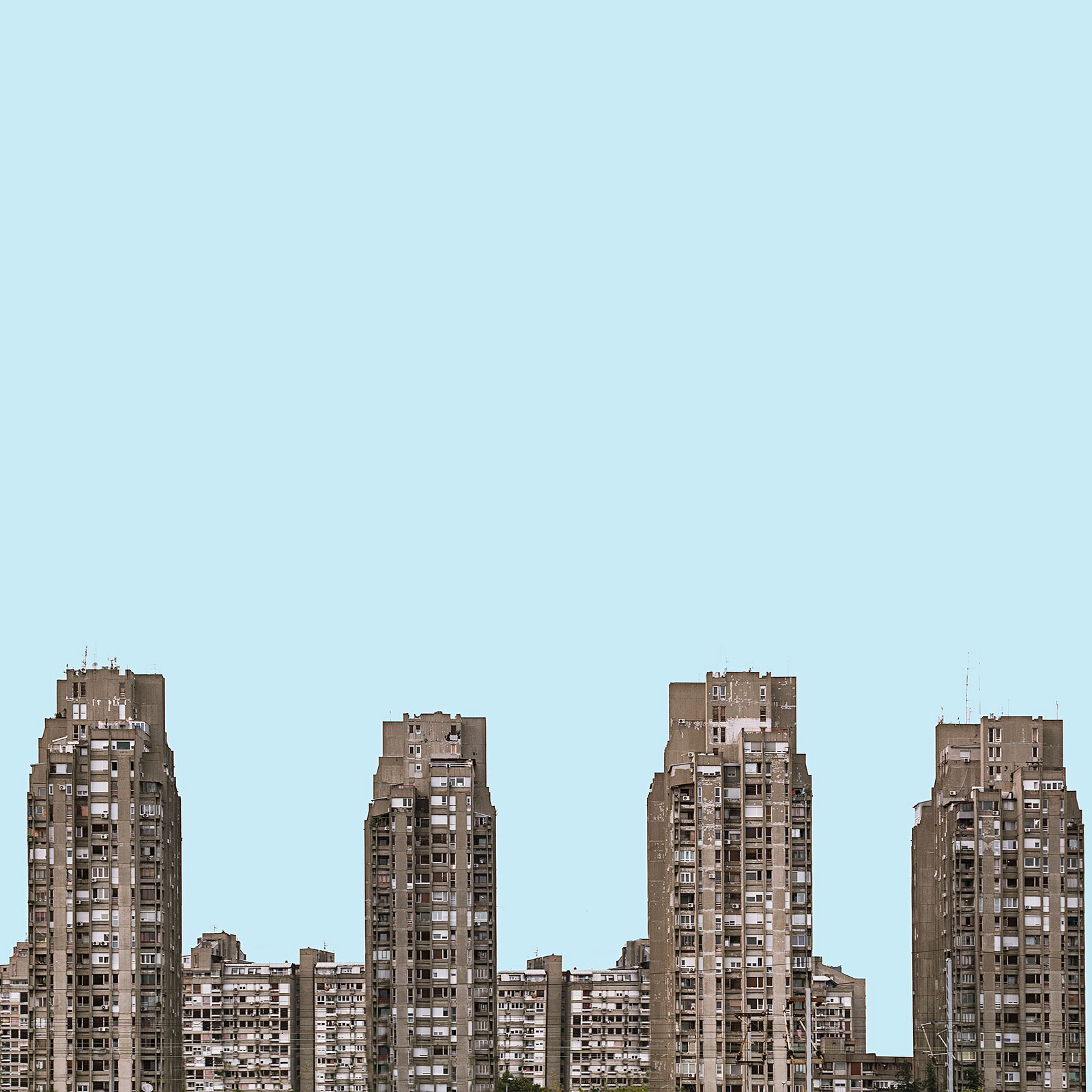
The «Minimal Belgrade» series introduces the exhibition and sets its visual tone. In these photographs, mid-20th-century Belgrade architecture is presented as a rigorous and monumental form. The author captures buildings from socialist modernism and brutalism in such a way that they are perceived not only as part of the urban environment but also as independent artistic images.
Within the context of the exhibition, this series is responsible for the first phase of the viewer’s experience—“first, we see the architecture.» Here, the focus is on the perception of form: the scale, geometry, and rhythm of the buildings help to understand how the idea of a common future and a new social order was expressed through architecture.
The photographs introduce the viewer to the aesthetic appeal of the brutalist heritage, paving the way for other sections of the project to complicate this view—through archives, interviews, the daily lives of residents, and the question of these buildings’ future.
Mila Tourailich, «We Build the Country — The Country Builds Us! , ” 2018. Three-channel video installation.
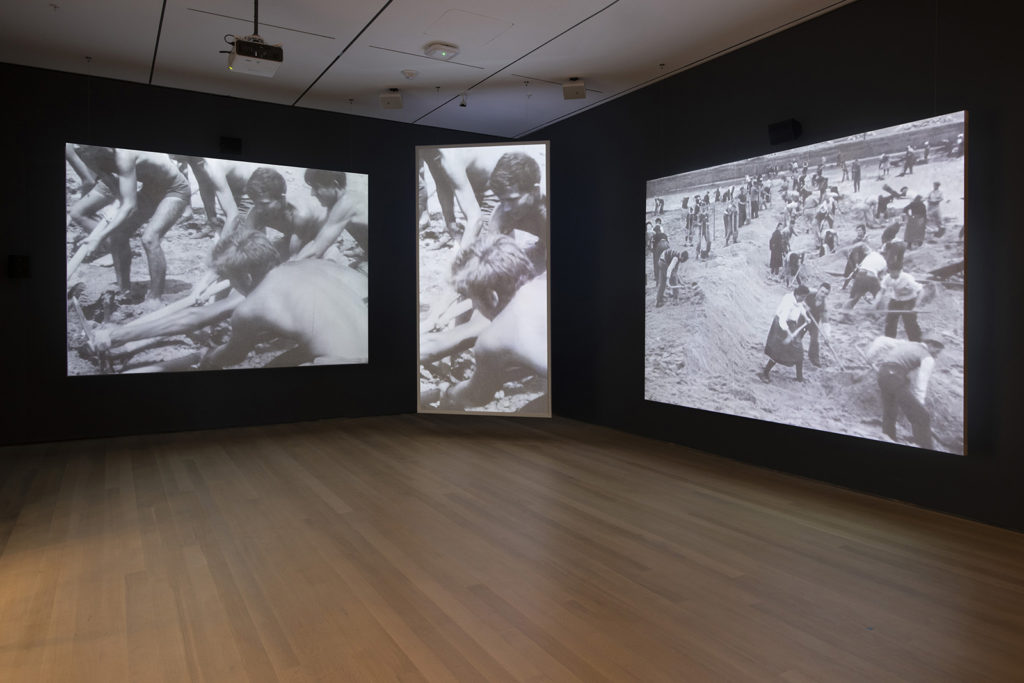
Mila Turailich’s video installation becomes the central piece of the «Hearing the City» section. The work is constructed from archival film footage and comprises three synchronized screens displaying various aspects of socialist Yugoslavia’s construction: mass labor campaigns, the erection of residential blocks, road laying, and infrastructure development. The montage interweaves official chronicles, propaganda films, and documentary footage, creating a rhythm of collective labor. The soundscape includes narrator voices, music, and construction site noises, allowing the viewer not only to see but also to «hear» the process of urban creation.The installation is crucial to the project because it shifts the viewer’s focus from observing the façade to engaging with historical memory. After an initial view of the brutalist form, the viewer hears the ideological and emotional undercurrent of its emergence—the rhythm of construction, the montage of labor, and the post-war optimism. In this way, the work addresses the first part of the exhibition’s central question: what vision of a common future was embedded in these buildings?
Marius Sveling Andersen, «Life in the New, ” 2023. Photobook, photographs, and interviews with residents of New Belgrade.
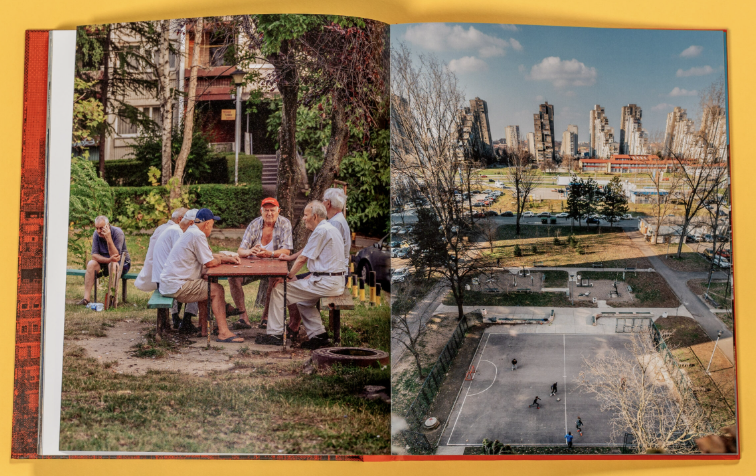
The Marius Svaleng Andresen project occupies the «Life Inside» section of the exhibition. Unlike pure architectural photography, Life in the New illustrates how people inhabit the buildings of New Belgrade. Photographs of residential blocks, portraits of residents, and interviews connect the urban scale with personal narratives. In the exhibition, the project is presented as a series of juxtaposed images and texts: next to each other are a photo of a resident and a photo of the building where they live, with a panel featuring an excerpt from that person’s interview beneath them. This format allows the viewer to transition from the image of the building to the lived experience within it.
Note to the Work
The presented project was created by me as part of portfolio preparation for the «Curatorial Practice in Contemporary Art» program. This project serves as a response to a written assignment required for admission.
Preliminary list of artists/project participants: Mila Turailich; Marius Svaleng Andresen; Mirko Nahmijas; residents of New Belgrade as interview subjects; street photographers of New Belgrade.
Ekaterina Kondratova, a young designer and graduate of the HSE Art and Design School, was involved in developing the exhibition concept. She participated in designing the visualizations of the exhibition space using Figma and AI tools to generate images of museum interiors.