The Myth of Cultural Identity
Today, when we can be anyone, pursue any profession, and live anywhere in the world, the question arises—who are we, truly?
What are we about? What defines us? And is anything even defining us?
When what I thought defined me disappears, what will remain? … If everything I considered eternal changes or is destroyed… Who am I in the midst of it?
The loss of identity and the search for it take up more and more space in our hearts each year. In my work, I wanted to reflect the myth of searching for cultural identity in the modern world—the desire of everyone to define it or create it from what the environment offers.
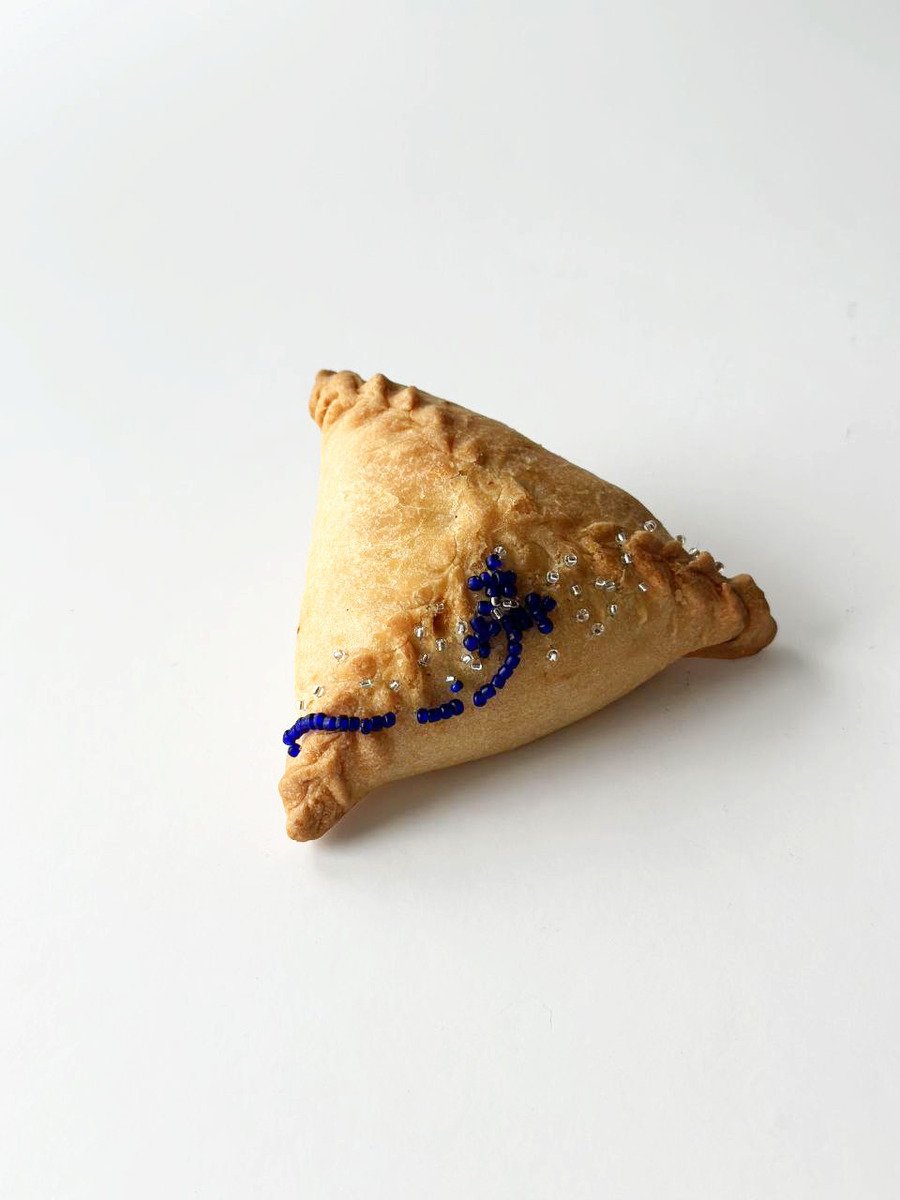
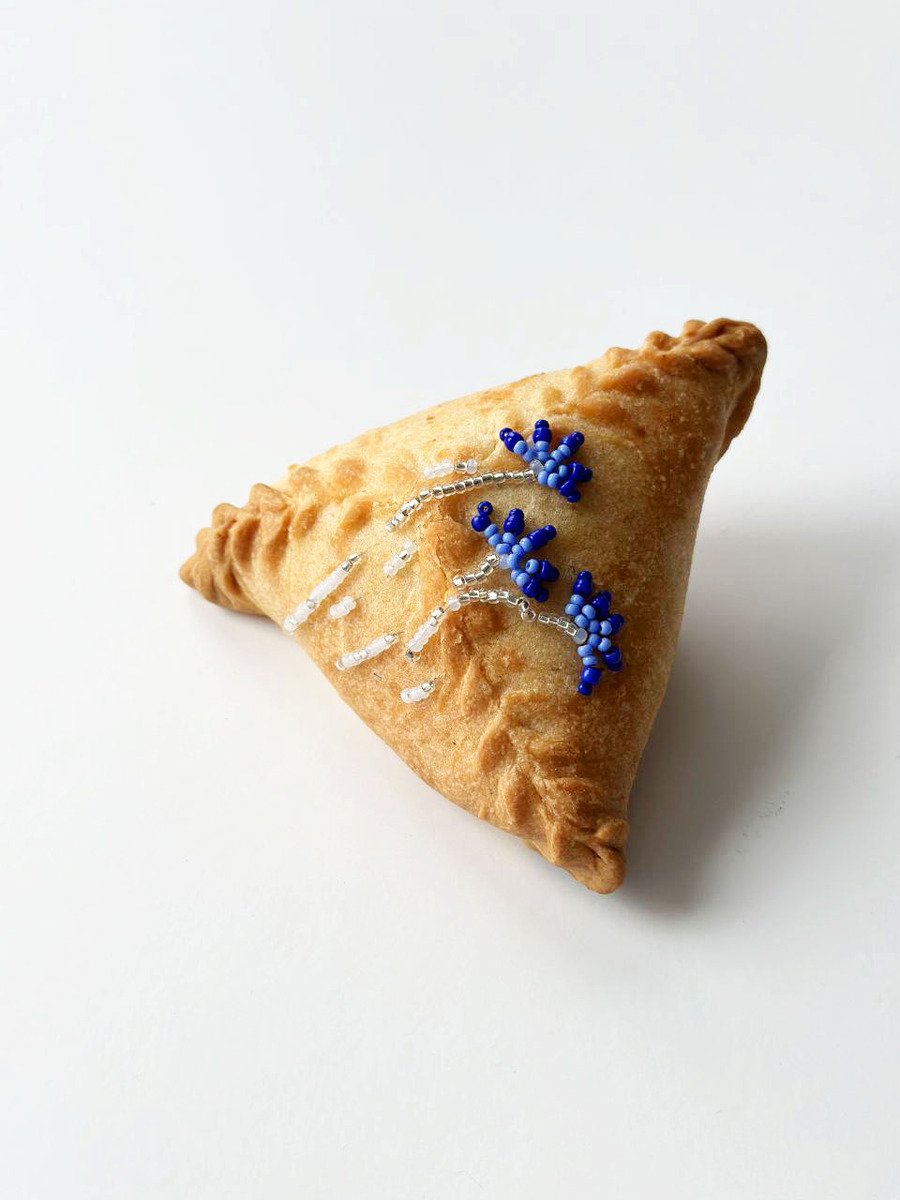
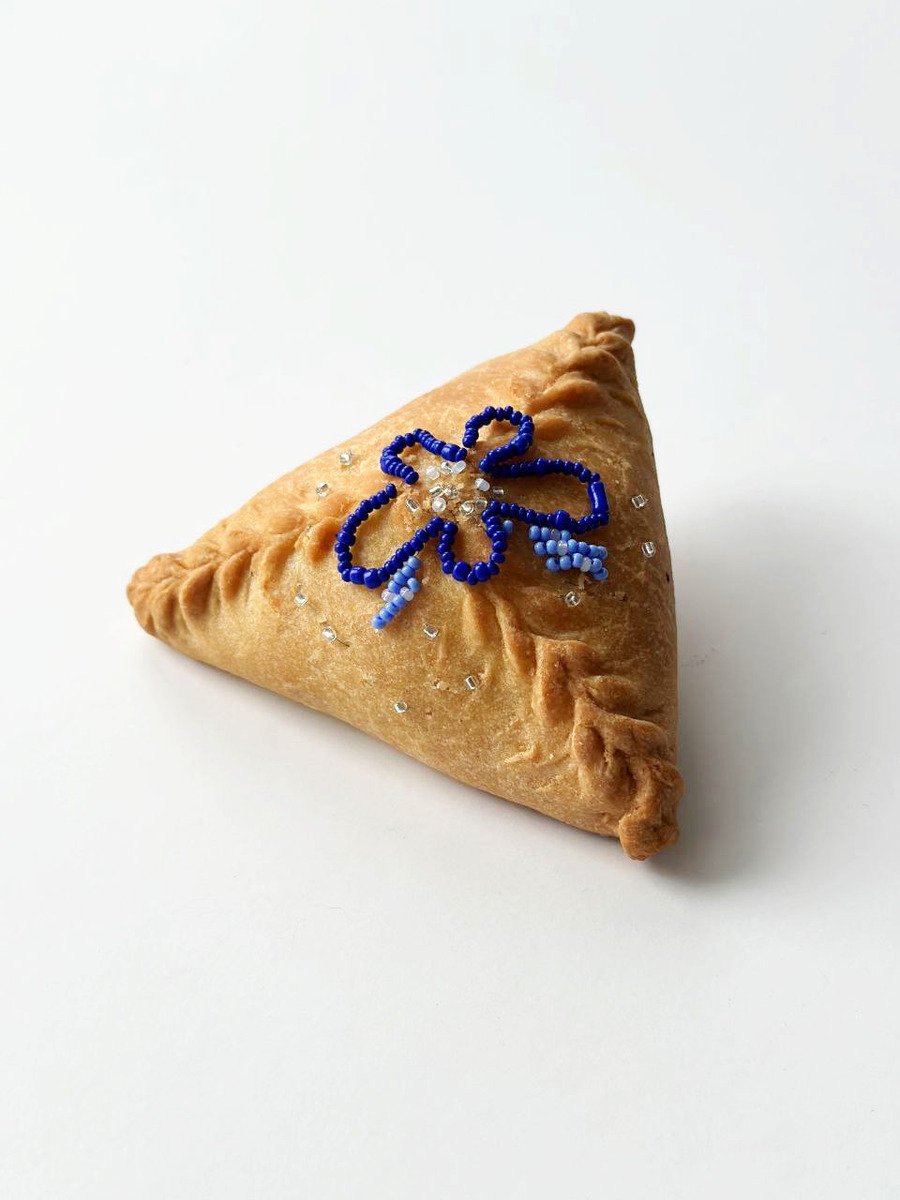
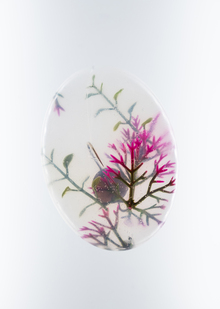
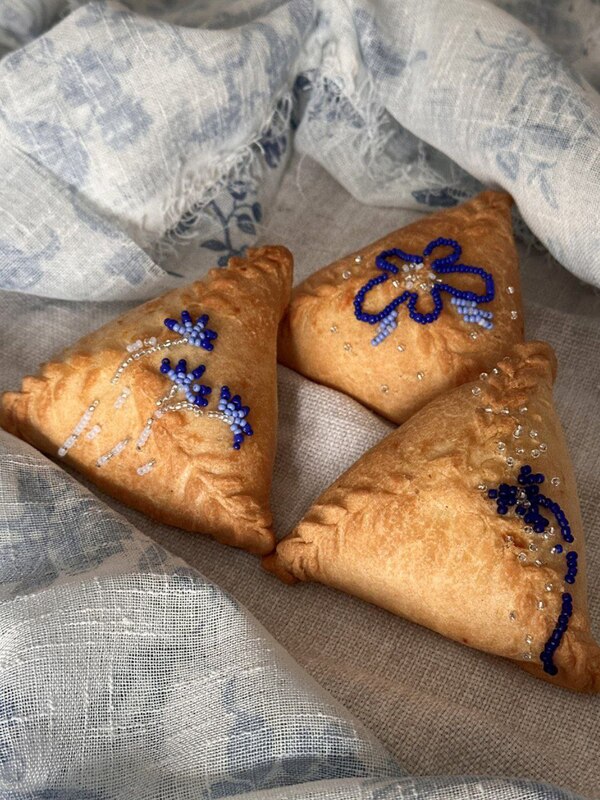
Trilogy of Васильки 1, 2, 3. Materials: chicken enchiladas, beads, surgical thread, 6 mm microsurgery needles. Ph: Shchelokhova Natalia
Food is the first way we begin to understand the world around us, the culture of our people, and those of others. It is through food that we sense a people’s temperament, their passion, and their taste for life. To me, the echpochmak—as a staple food—is a body where the soul is simple and unadorned. In the work, it symbolizes the Tatar himself. One of many.
The echpochmak is thoroughly interwoven with elements of a cultural code foreign to it. Plastic beads serve as a symbol of globalization and the unification of cultural attributes—as well as something eternal and inanimate.
The beads, like elements of DNA, have no meaning on their own; only when assembled do they form a coherent pattern. Similarly, cultural attributes have no inherent meaning until they form patterns in our souls.
Even if we share the same environmental conditions and resources—even if we are driven by the same idea—our patterns will turn out different. The creation of identity is not a simple summation of parts; it is the birth of something entirely new. And in this birth, a third force participates—a force greater than all of us.
Bluebells in the Interior. Photo: Natalia Shchelokhova
Human existence is not eternal. Everything we adopt or internalize—everything we consider a part of ourselves—will eventually decompose. When the body decays, the pattern unravels into its component parts. The identity that each of us avidly seeks and carefully constructs will ultimately dissolve.
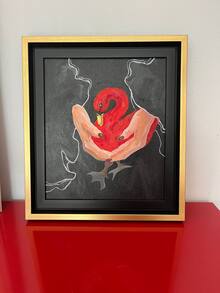
Forget-me-nots—a weed that grows by roadsides. It sprouts on its own. Without rich soil or special care.
On my canvases, the forget-me-nots grew through me, almost effortlessly. This reflects how each of us weaves the myth of our own cultural identity. The myth generates itself during the creative process. It is the work of the personal and collective unconscious. This work is mightier than we are; it weaves a pattern with our hands.
At this moment, every person becomes a canvas upon which, for a brief moment, the trace of cultural identity remains.
The Myth of the Creative Process
Artist: Taliya Nuriakhmetova
Assistants: Mov, ph: Natalya Shchelokhova Ph: Nailya Sabirova
Music: Gustavo Santaolalla — De usuahia a la quiaca
Materials
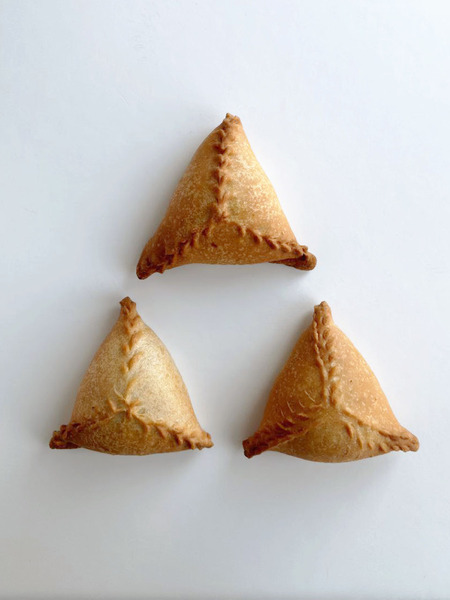
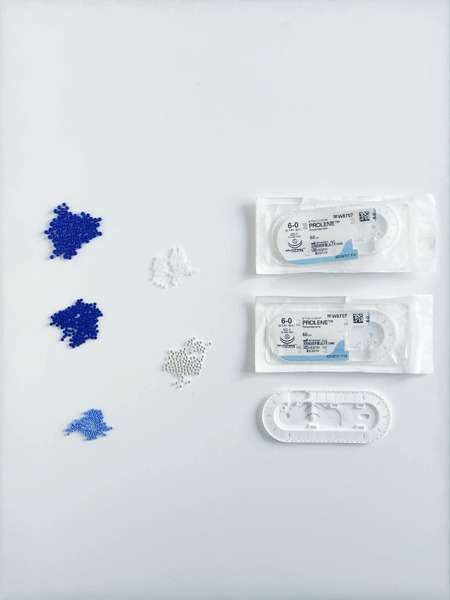
- Chicken rolls; 2) Beads, surgical sutures, 6 mm microsurgical needles
Ph: Nailia Sabirova