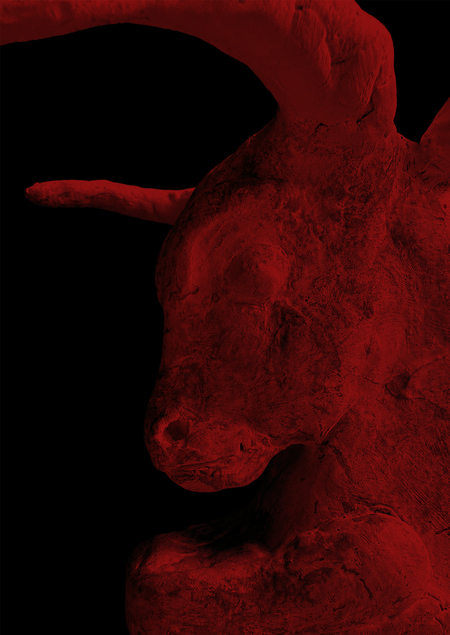
In my view, the main tragedy of the Atreides lies in the fact that the empire they created—all the power they concentrated in their own hands, everything they considered most important—is an illusion. Their lineage and their power were doomed by a curse from the very beginning, and they remain in an endless loop of self-destruction, repeatedly obliterating everything they build. The only non-illusory thing within this airy empire, and what keeps them trapped in this infinite circle of self-annihilation, is their curse—the altar upon which they continue to sacrifice brothers, children, parents, and in short, themselves, to the phantom power.
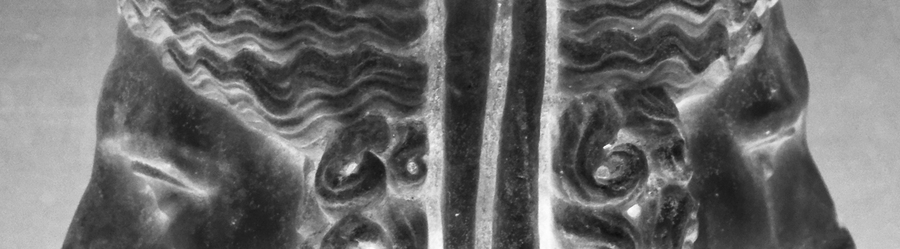
Janus was the Roman god of beginnings and endings; with one face he looks to the past, and with the other to the future, encompassing something timeless—something both beginning and concluding. It is this very image that lies at the heart of the scenography: a palace suspended outside of time, simultaneously existing in its grandeur and already in ruin.Janus is also called the two-faced god, the deity of change. This second characteristic refers to the nature of the characters themselves. We cannot precisely say who in this play is «good» and who is «bad, ” or who has acted rightly and who has not. These dual, ambiguous characters also possess several faces through which one can observe what is happening.
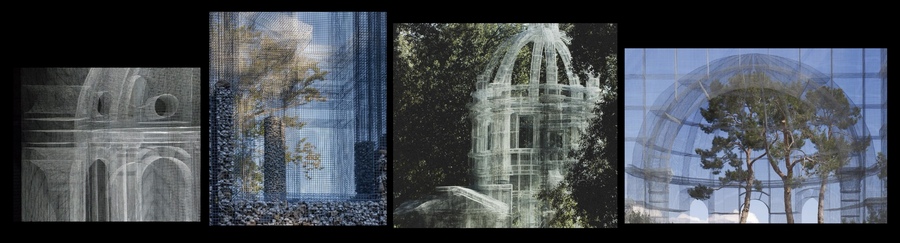
Everything, except for the altar section featuring a central garnet wood element, is constructed from a metallic mesh—it is translucent and ephemeral. This material interacts with light beautifully; depending on the direction and intensity of the beam, the structure’s details can vanish or, conversely, become more sharply defined. The entire architecture is a kind of aerial castle—an illusion.
The Altar—the only element in the scenography that possesses density. It is the only real part of the illusory palace, the sole foundation of this power, and what drives it. Its form simultaneously echoes classical ancient altars depicting a bull and reminds one of the Janus figure. One of its heads—the one gazing into the future—is destroyed. A pomegranate tree has sprouted through it. The tree itself is laden with overripe pomegranates; as they fall and burst, the damaged section of the sculpture is always smeared with juice. Throughout the entire performance, the characters track the juice from their feet and the hems of their clothes, so it covers an ever-expanding space, and they themselves become stained with it.
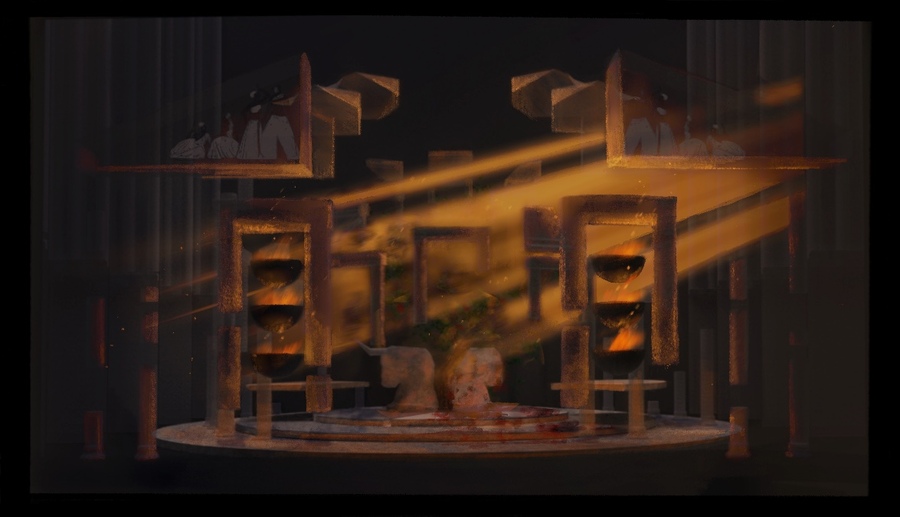
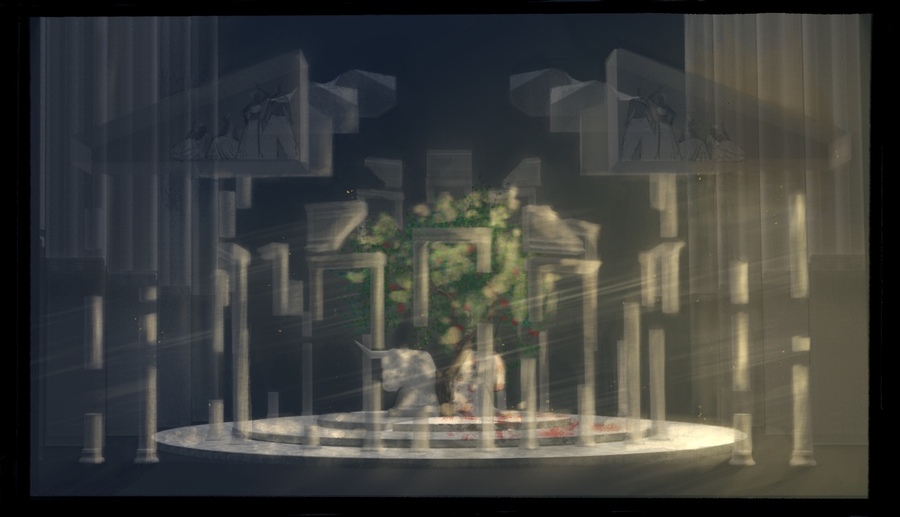
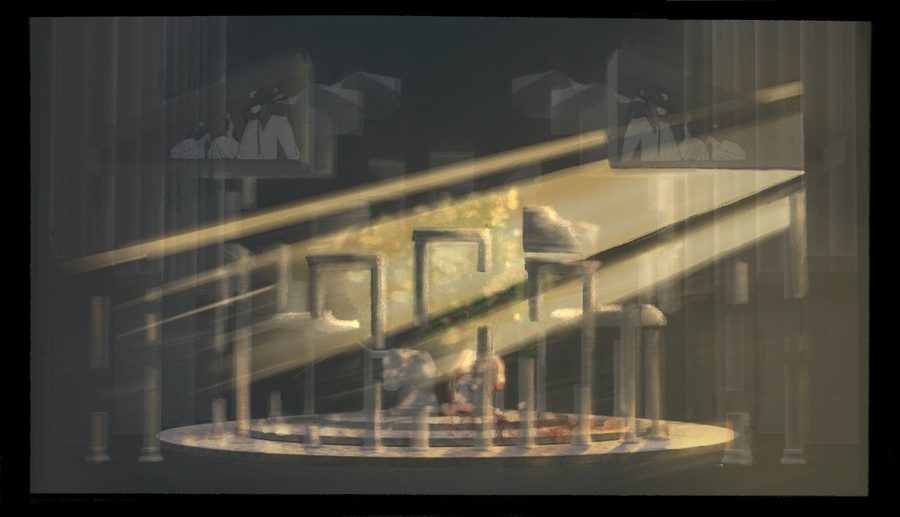
Scene Sketches 1–4
Storyboard
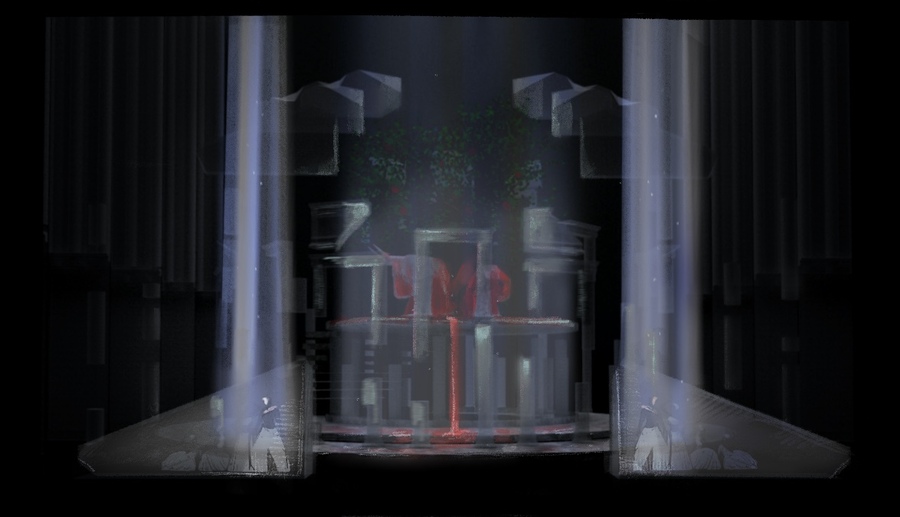
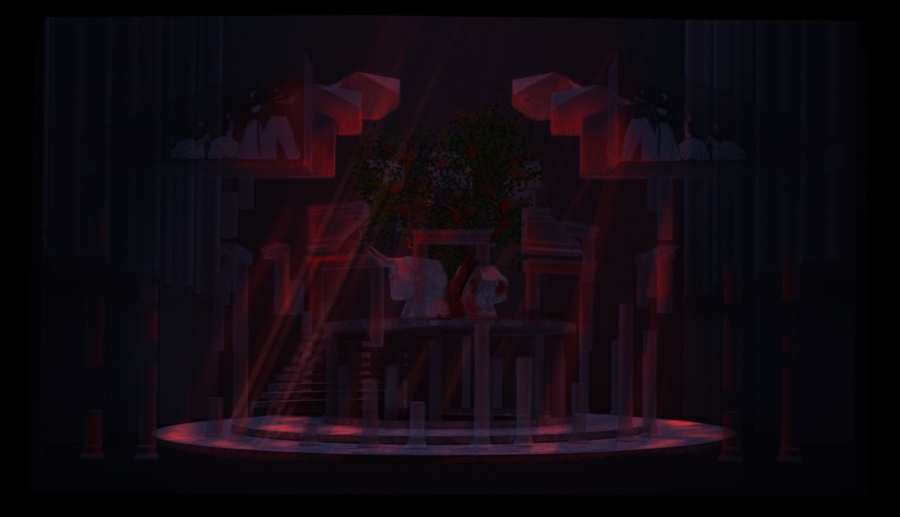
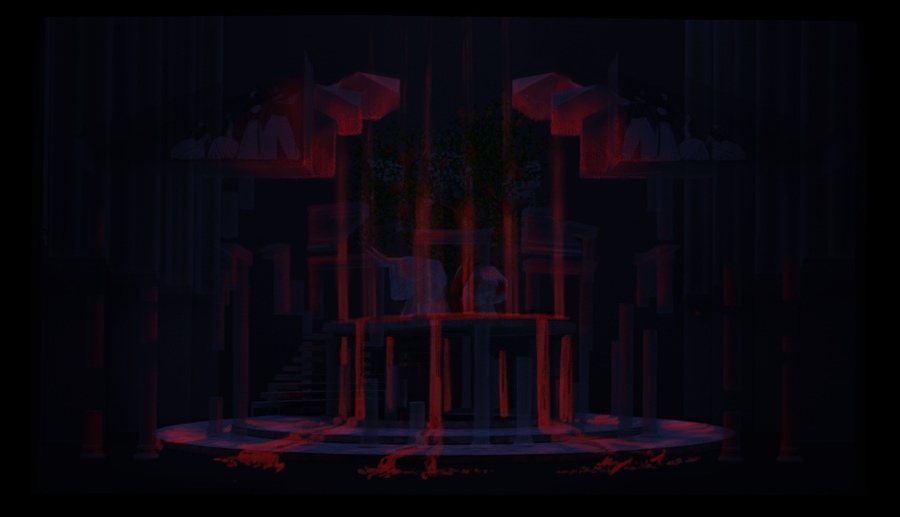
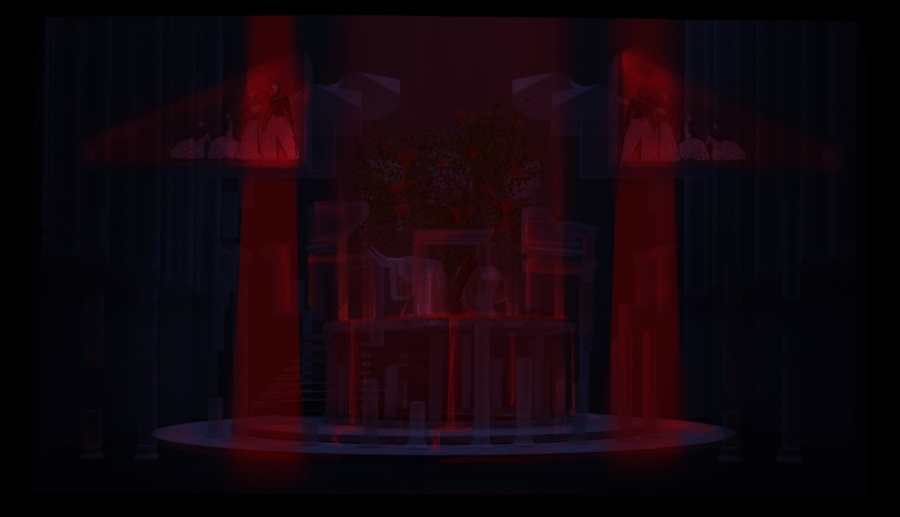
Scene sketches 5–8
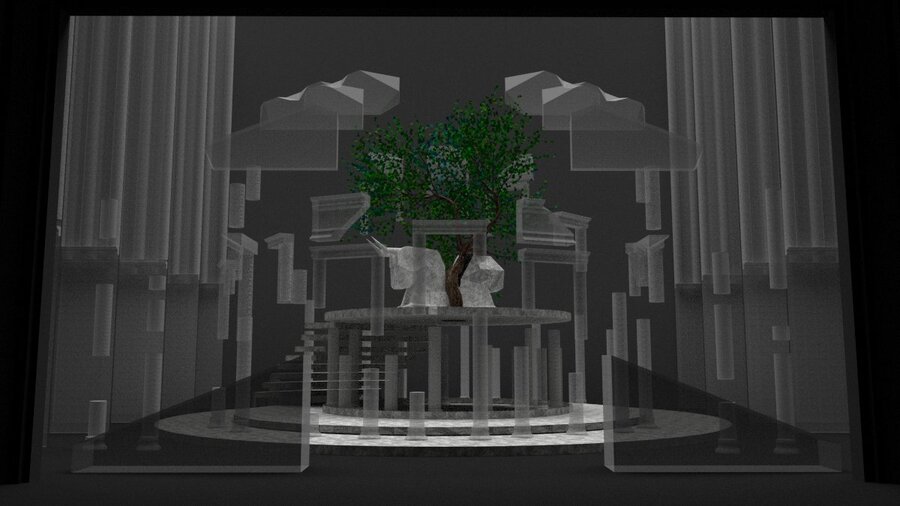
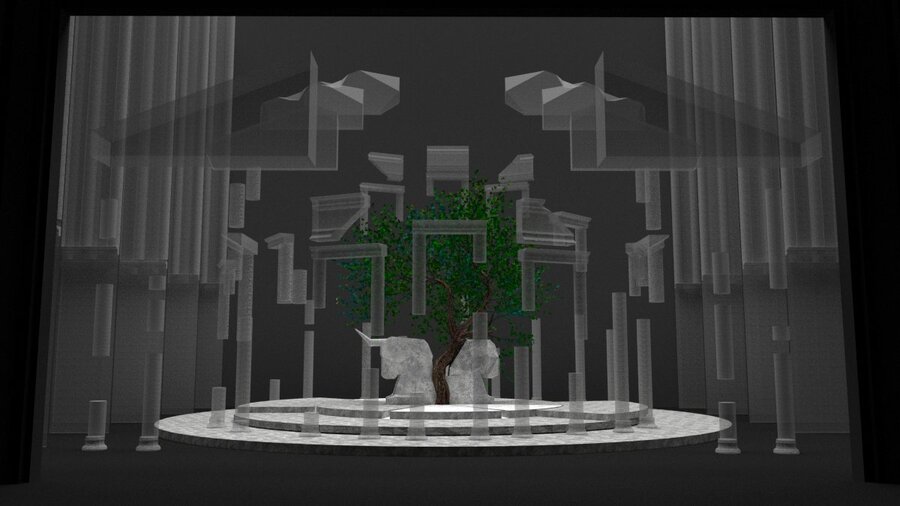
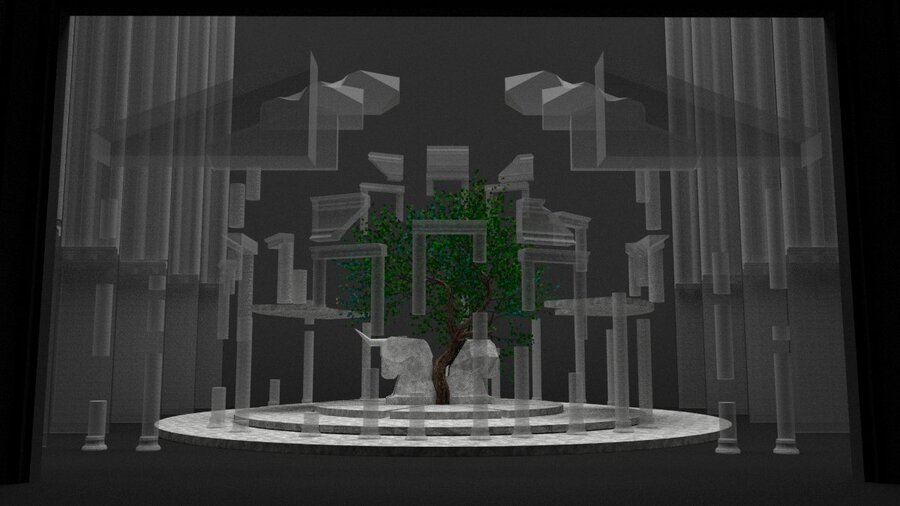
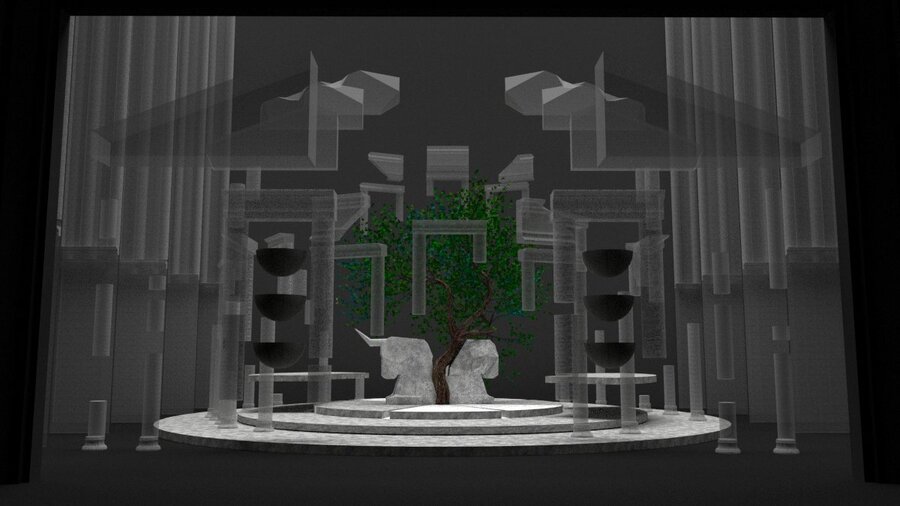
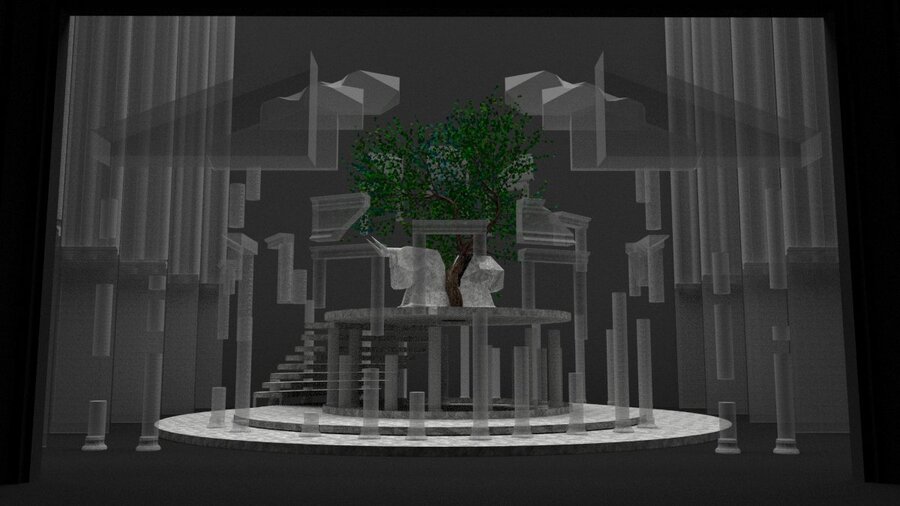
3D model (scenes 1–8)
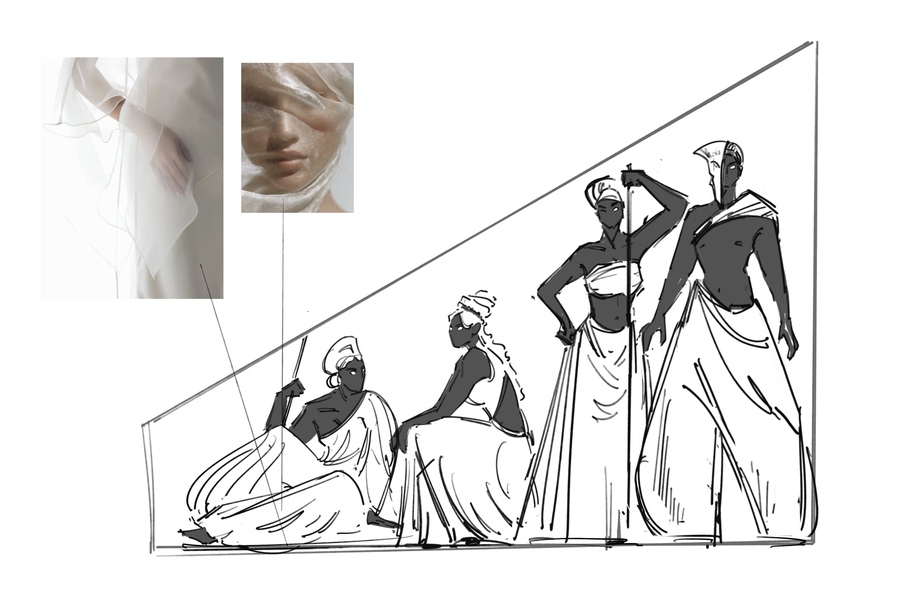
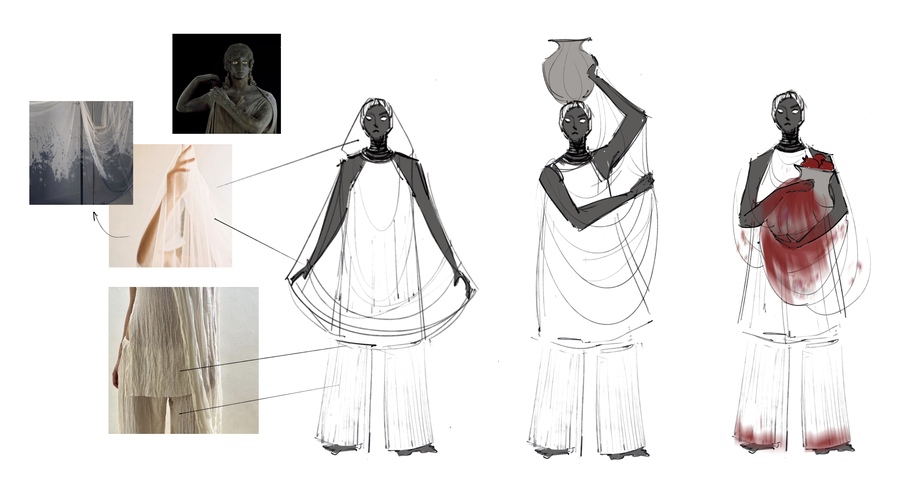
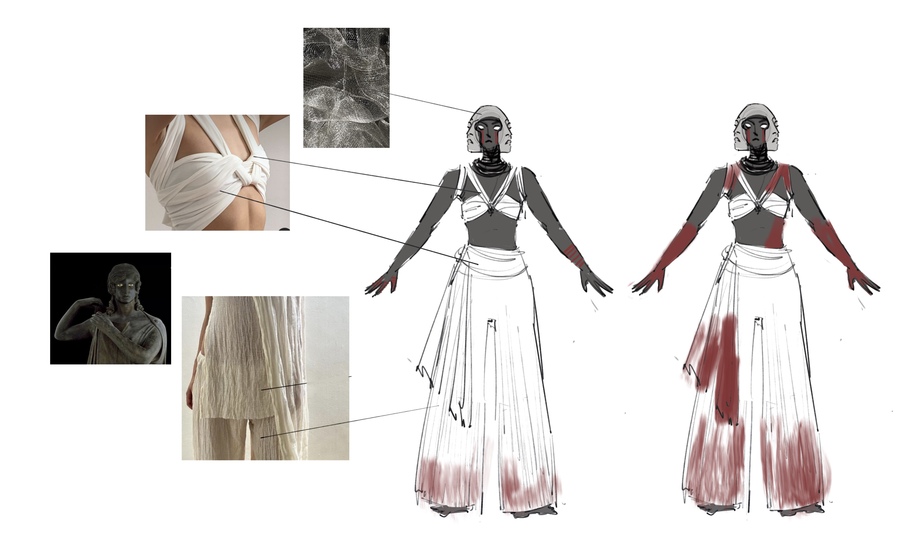
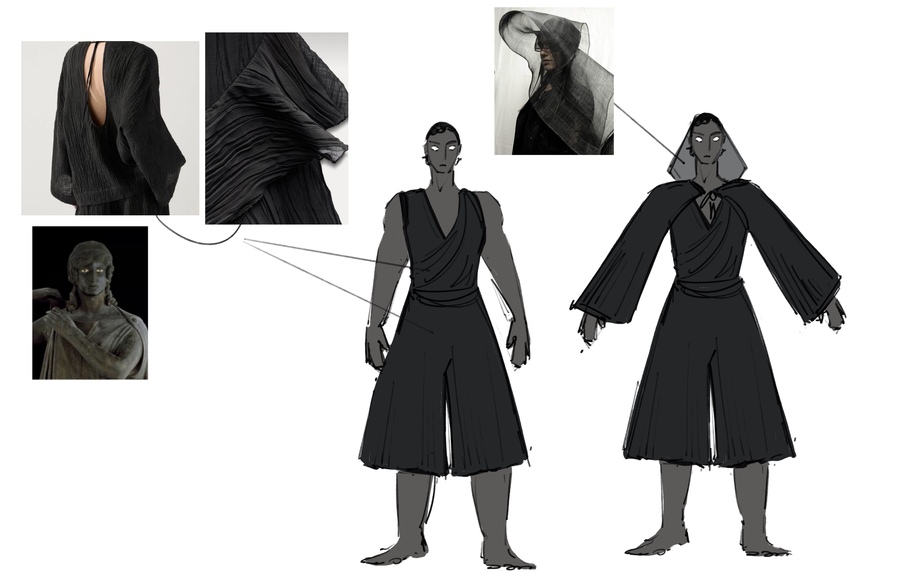
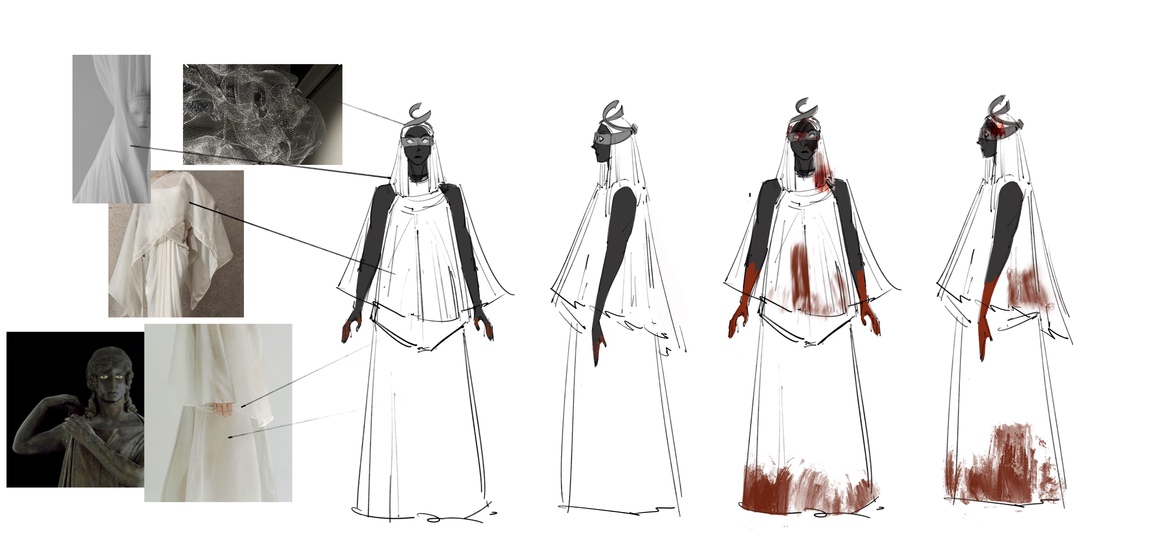
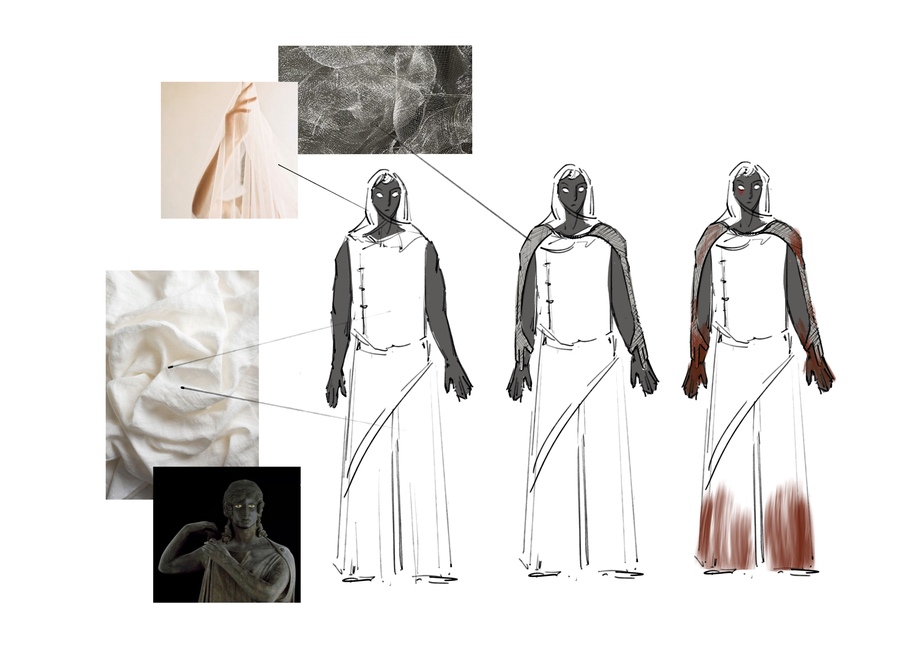
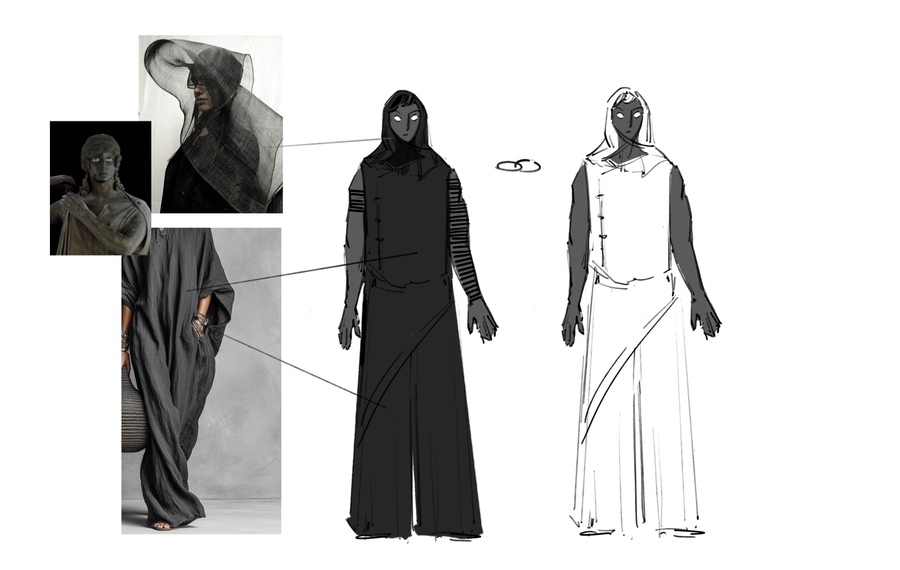
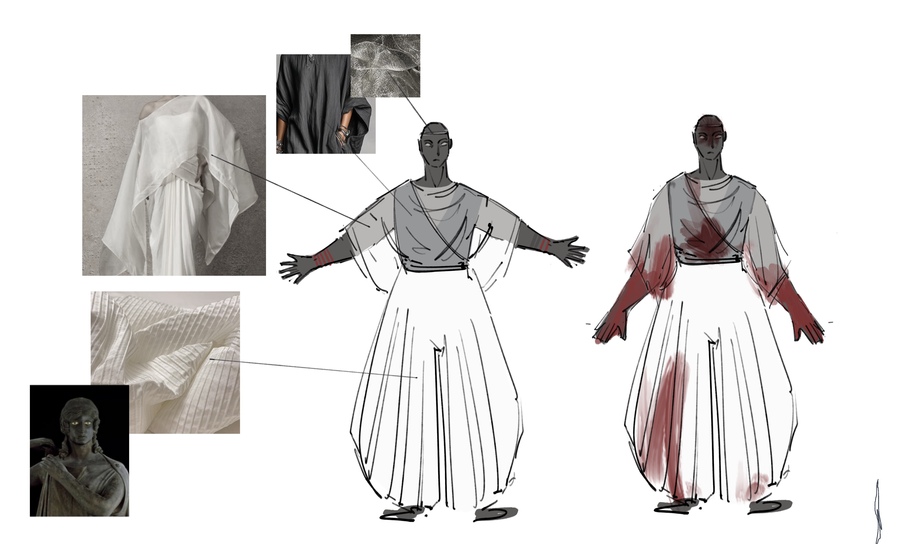
costumes
Costumes