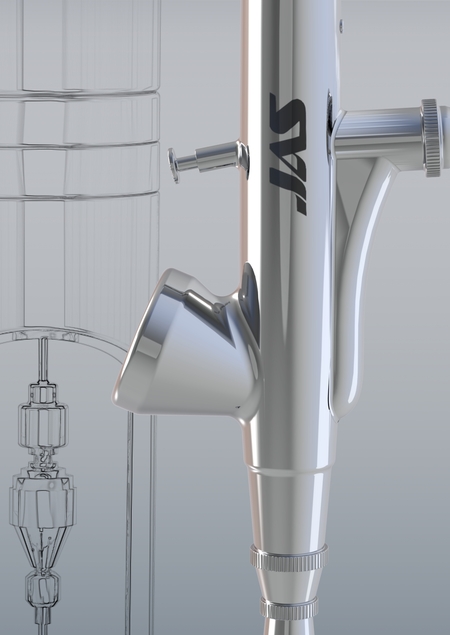
The Aerographer is a symbol of a desire for an impeccable surface and a pure detail in industrial design. Its working principle, which combines the fineness of the artistic gesture with that of technology, has become an archetype that has laid the foundations for modern methods of finishing and casteing products.
Development history
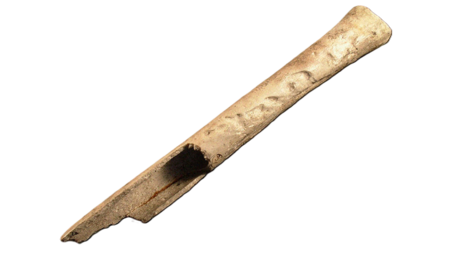
The origin of aerography dates back to ancient people who over 35,000 years ago used hollow cane tubes or bones to spray plant dyes. This primitive method made it possible to create palm prints on the walls of caves by spraying paint around the hand.
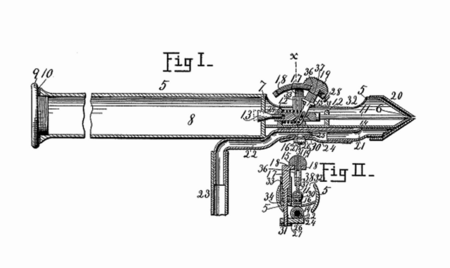
The principle of modern aerographer was developed in 1879 by American jeweller Ebner Piller, who created a «paint distributor» of handmade materials. The technology was further developed in 1893, when Charles Berdick patented a device similar to modern aerosols and resembling the author. Modern aerosols, even more than a century later, have almost identical shape and pattern.
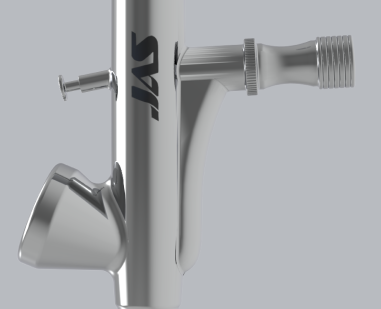
The JAS Aerographer inherits the principles that Charles Berdick laid down as early as the 19th century. The task of the developers was to adapt this sophisticated technology to the mass market, making it available to beginner artists and modelers. The main difficulty of production was to accurately calibrate the miniature components — needles and nozzles — for stable dissipation without defects. At the time of the creation of JAS, the trend was functionality and minimalism, which was reflected in JAS' concise design, which focused exclusively on performance for a wide audience.
Equals and competitors
An analysis of competitors makes it possible to identify their main market positions: the Award-Segment (Iwata, Harder & Steenbeck): Their philosophy is based on uncompromising quality, accuracy and durability. These are tools for professionals, where the price goes second to reliability and the result. They’re not competing functions, they’re competing with the manufacturing standard. Medium price segment (JONNESWAY): These brands offer an optimal price/quality ratio. They seek to provide good performance, sometimes at the expense of the integrity of the parts or the use of less durable materials. Budget segment (JAS): The brand philosophy is to maximize the availability and reliability of its price. It is a tool for beginners and enthusiasts that can enter the air at minimal cost, although it may have some trade-offs as polishing or threaded compounds.
Harder & Steenbeck (H&S)

- German engineering, impeccable polishing quality, reliability, modularity of some models — The cost is much higher than JAS, which makes them less accessible
Iwata Eclipse HP-CS
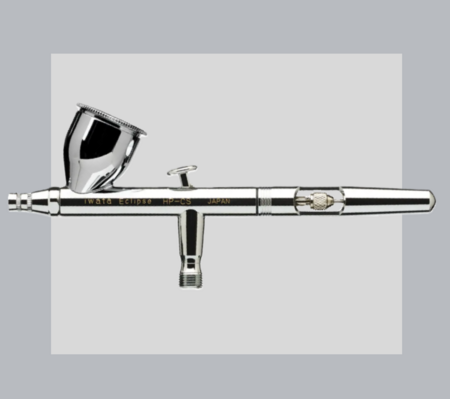
- Japan’s highest quality, accuracy of numeracy, durability, universality for professionals — High price, possible difficulty in setting for beginners
JONNESWAY JA-101
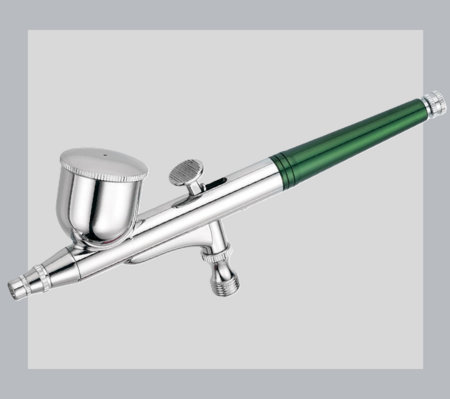
- Suitable ergonomic shell, solid steel body, quality spray — Low part processing quality (steeling), soft nozzle
Design evaluation criteria
Brand philosophy
The JAS philosophy is based on the principles of accessibility and democratization of creativity. The brand aims to provide start-up artists and models with a reliable and easy-to-use start-up tool without significant financial investment.
Financial advantage
The key financial advantage of this model is its exceptional price/quality ratio. The low price makes airography accessible to a wide audience, and the simplicity of the design reduces the cost of ownership and repair.
Weaknesses
The aerograph has trade-offs as manufacture: unreliable chrome coating and fragile salt, which can lead to breakdowns in careless handling. In addition, the quality of assembly at exit is unstable.
Consumer problem
JAS solves the problem of «first aerographer» by allowing new entrants to learn technology, develop basic skills and understand their needs before moving to more professional and expensive equipment.
Archetype analysis
The light shape of the shell, which continues the line of the arm, metaphorically expresses the idea of an extended brush. It has remained virtually unchanged since the first models. An extended shape and needle is a form of directional expression and jewelry accuracy. Float, outstretched, and current, as well as the paint that the aerographer works with.
Visualization