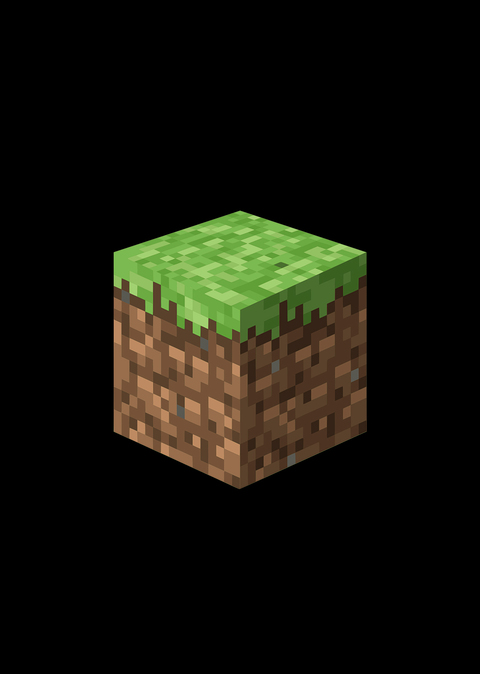
The purpose of this study is to show why Maincraft is not just a game for children, but a full-fledged artistic expression that has a deep connection to the art of the 20th century.
Minecraft is a sandbox computer game created by Swedish programmer Marcus Persson in 2009. In its 13 years of existence, it has won over 500 million players. Throughout this time, Meincraft is the lead player in search engines. We’ll analyze the cultural context of Minecraft, and then we’ll see why it opens up a new view of what the world around us should look like.
Maincraft Visual World
The Meincraft Visual is a radical simplification. All objects — mountains, rivers, trees, houses, animals, and characters — consist of cubes. This language is perfectly scalable, allowing the creation of worlds that have no borders. A wide audience saw Meincraft in 2011. At that time, more and more realistic games appeared every year. However, Meincraft went a different way. It caused him to fail, but instead he became the most popular game in the world. How exactly did Maincraft get into the audience’s expectations? The answer can be found in the art of modernism. We’ll go from Cesanne to Cubism, from Cubism to Bauhouse, and then we’ll look at the minimalism and see how the logic of each current is reflected in Minecraft. Then we move on to where Maincraft finds its place in today’s cultural context and how it helps the architect design areas and cities.
Cézanne
It is very brave to say that without Cesann there would be no Maincraft, but this painter has launched mechanisms in European art that have made it possible. Cézanne was guided by one simple idea: to present the world objectively. The mission statement of his art, «Travel nature through a cylinder, a ball, and a cone», is well embedded in the Myincraft logic. Cesanne tried to structure his senses by introducing the module into the painting, in his case a special swab that smooths the space of the painting. Myincraft also has this module, the cube. Because of this landscape of Cezanne and the Maincraft graphics, they have a certain relationship.

«Honor of St. Viktoir» written by Paul Sezanne in 1904 and a screen shot from Mayncraft
«The roofs. Ravnina in Provenza, written by Paul Sezanne in 1885 and a landscape from Maincraft.
Mountains in Provenza, Paul Cesann, 1890 and a screen shot from Maincraft
Cubeism
Cubism appeared around 1907, influenced by the geometry of the African sculpture and painting of Cesanne. Picasso said that cubism «is an art that deals primarily with forms, and when form is realized, it begins to live its own life». The same can be said of Meincraft, where a geometrical form, which at first glance may seem too formal, takes on organic strength and lives its own life, forming a complete system as part of the game.
In 1907, Picasso was inspired by African sculptures, so it is worth starting a story about the impact of cubeism on Maincraft.
Head restraints, Baluba culture, 19th — 20th century end and a camel from Minecraft
A girl’s sculpture. Aku aba. Fanti culture. The beginning of the 20th century. Enderman from Maincraft.
The resemblance of the African sculpture to the Maincraft graph suggests that it implements the universal human principles of visual perception.
Picasso. A woman with a fan. 1907: Steve (base game character)
The painting «Woman with a fan» shows how Picasso interpreted the plastic of the African sculpture. Formation in Picasso and Maincraft is similar.
Picasso. A brick factory in Tortos. 1907. The village in Maincraft
Georges Marriage. At home in Estek. 1908. Screen shot from Maincraft
Jean Metzenje, Buyers, 1912 Screenchott from Maincraft
A man’s portrait. Juan Gris. 1923. Steve’s portrait, Maincraft.
Bauaus
Many of Meincraft’s principles are consistent with Bauhaus’s policy statements. Decorative elements in both systems are strongly rejected (many of them cannot be reproduced in Maincraft, because of the logic of the game), but design solutions are not hidden, but displayed. Everything emphasizes the beauty of pure forms. Johannes Itten, professor of Bauhaus, said: «In order to develop a sense of unity of shape, I have given a typed exercise… using the principles of square, triangle or circle.» This statement is related to the principle of Cesann and the constructive logic of Minecraft.
The likeness of Meincraft and Bauhaus is proved by the fact that the Myincraft methods make it possible to make an almost accurate copy of the school building, which does not require generalization and probation. That’s probably why players often reproduce modernist buildings in Maincraft.
Bauhaus building in Dessau. Walter Gropyus 1928, copy of a building in Maincraft, unknown
Farnsworth House in Illinois, Ludwig Mis van der Roy, United States (1945–1951). A copy of the building in Maincraft, author: Arqui Blend, 2020.
Willa E-1027, Eileen Grey, 1930. Free copy in Maincraft, unknown
chess by Joseph Hartwig, 1923–1924. chess in Maincraft, unknown
Hartwig’s chess has a clearly identified structure. chess in Maincraft, though not a copy of them, shows that during their construction, Minecraft pushed the player into structural thinking.
Charles and Ray Imsa, Stellag, 1946-1950. Blocks of shelves in Maincraft