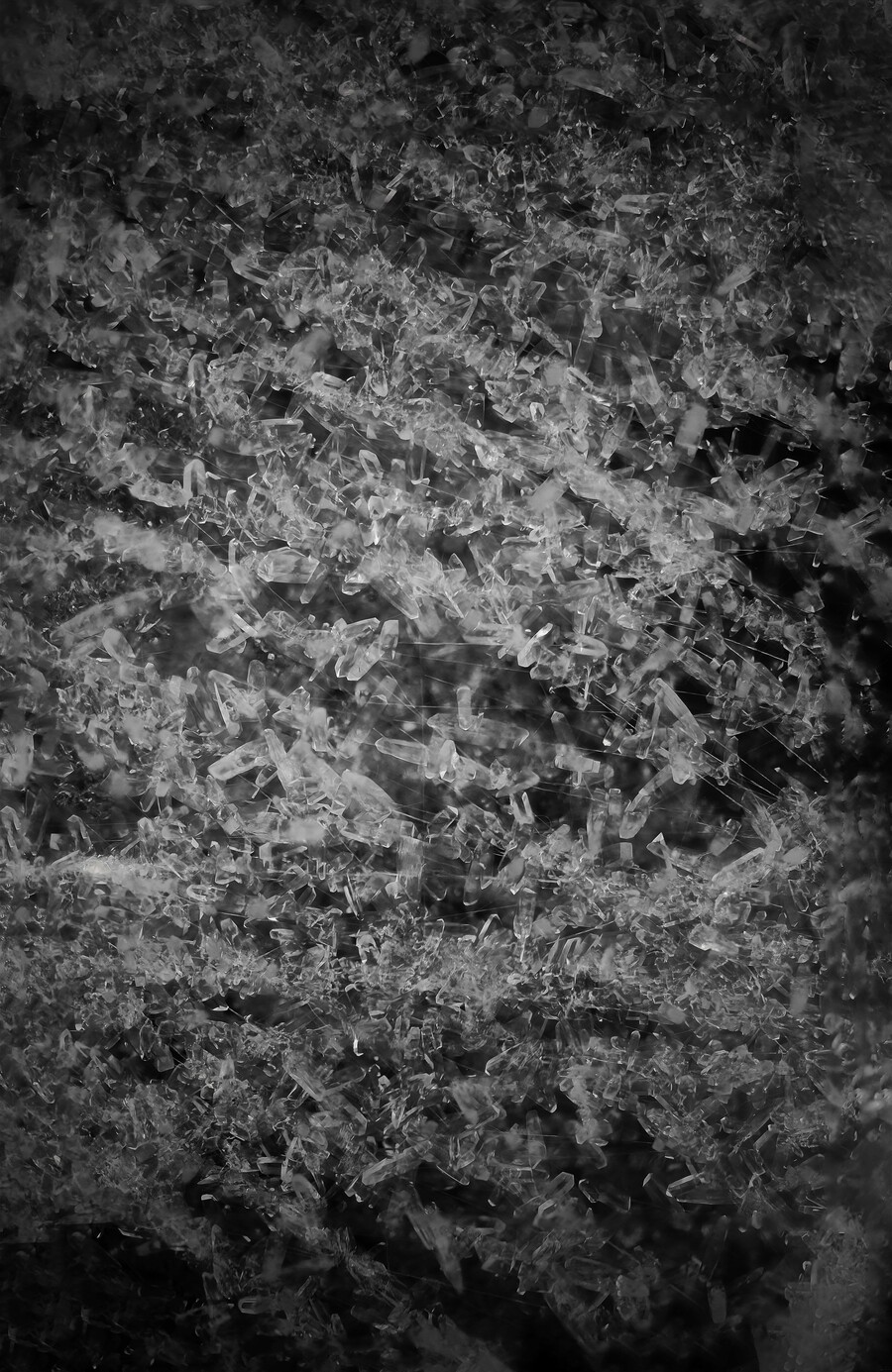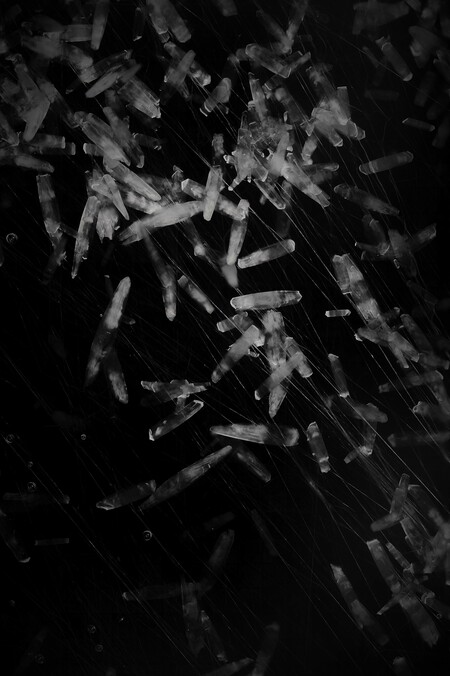
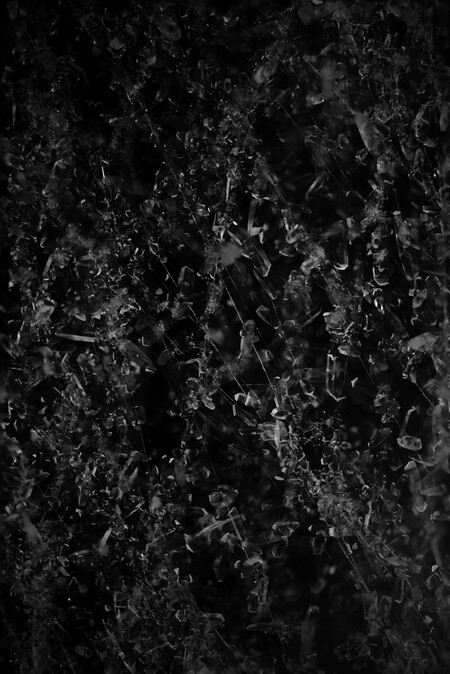
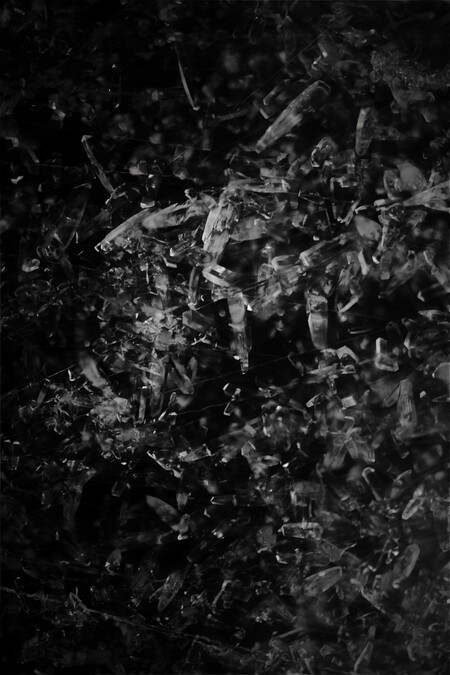
It was a small experiment I conducted last summer using potassium dihydrogen phosphate solution and silk. When I was a child, I once mistakenly believed that crystals were alive because they would grow bit by bit. I also mistakenly thought that silk was artificially synthesized rather than coming from the larvae of silkworms. Years later, I suddenly recalled this misunderstanding and decided to make an attempt at a role reversal: allowing crystals to grow on silk and turning them into photos. To be honest, the entire process was very uncontrollable, and there were very few samples that successfully crystallized, but it was still very interesting to me.
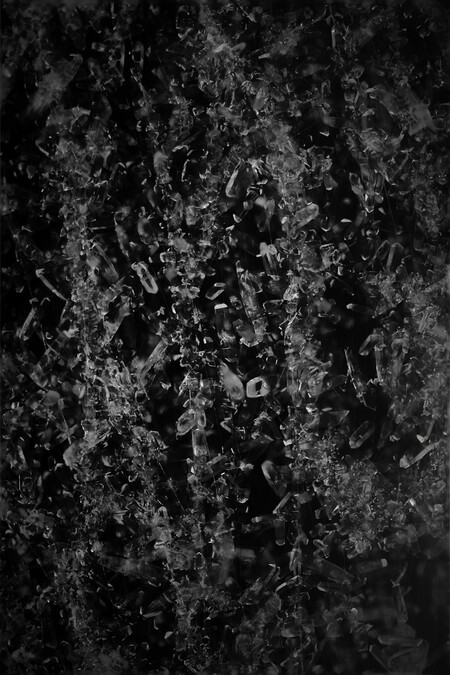
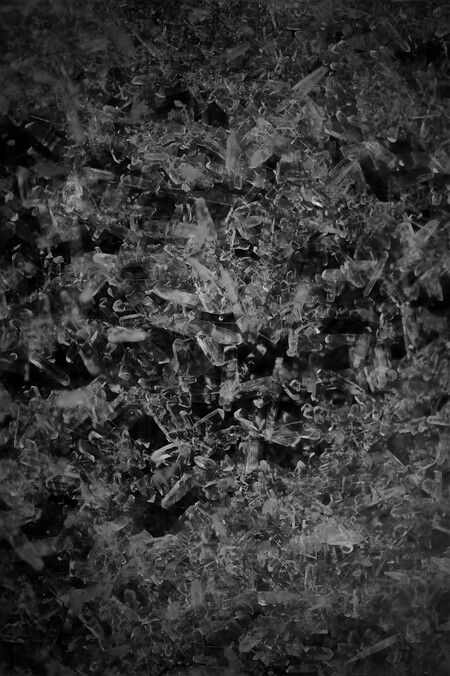
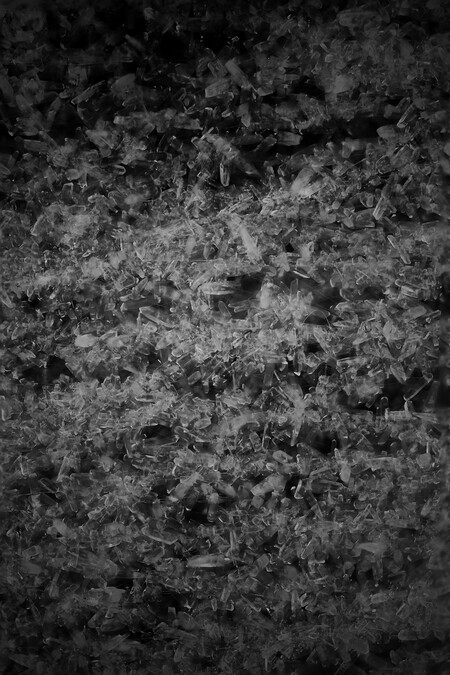
Phosphate and silk are intertwined. Phosphate, a life-forming entity, provides silk with a robust outer layer. Silk, serving as a cradle for phosphate, offers it a foundation to grow. The interplay of phosphate and silk blurs the line between life and non-life, representing the intimate contact between inorganic and organic matter, and under light, they undergo a transformation from non-living to living.
In the lamplight, the shadows of phosphate and silk merge and shift, forming plant-like silhouettes. This interplay further obscures the boundaries of life, highlighting the interconnection of inorganic and organic elements and the identity swap between non-life and life.