Concept
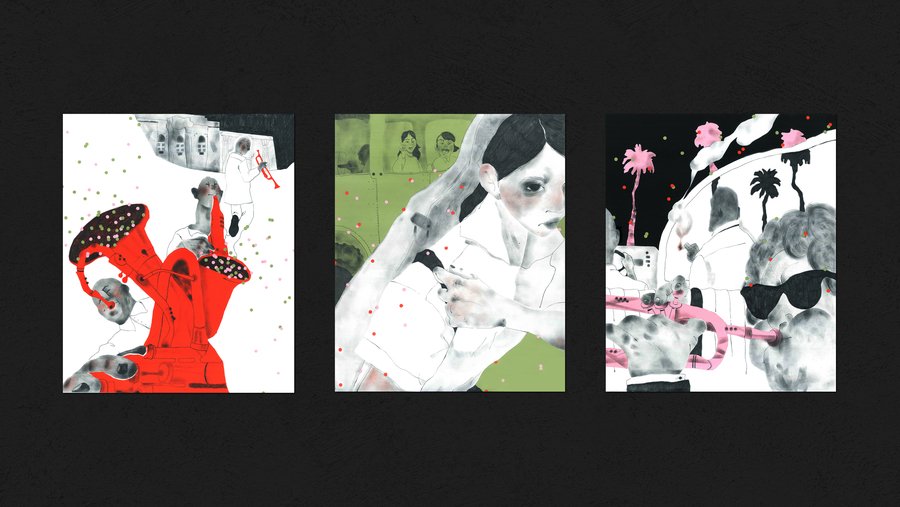
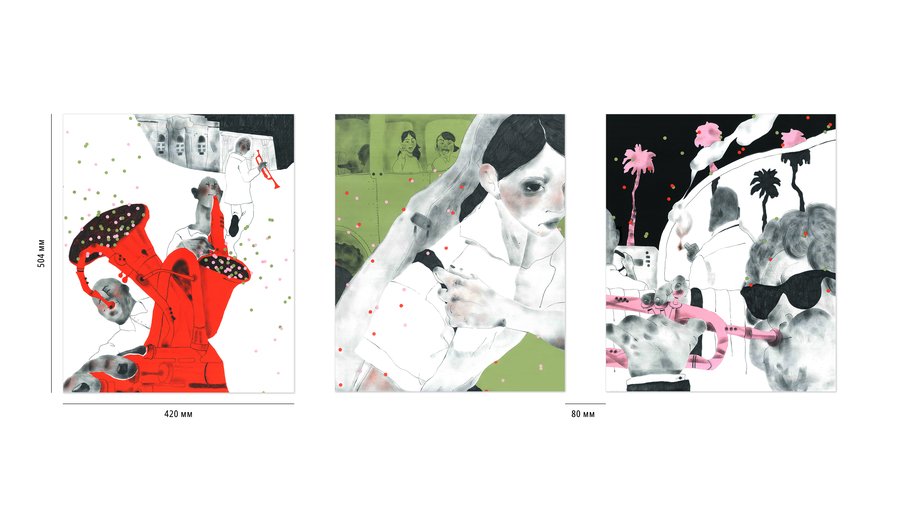
The series of large-format illustrations, «Man-Orchestra, ” investigates the subjective perception of what people in the metropolis have become accustomed to labeling as auditory noise. We live in an environment of constant sound saturation: everything that appears as chaotic external pressure is transformed by the musician’s talent, acquiring a new form and melody.The visual narrative of the series is structured as a movement from the external pressure of the urban environment to the inner world of the characters. Buses, city buildings, and car interiors are the barriers through which the individual human voice breaks through.At the core of the concept is the physical experience of sound—synesthesia. Thus, music generates an inner space, transcending external auditory interference.
Illustrations
The project is based on my personal experience spanning a decade of rigorous academic work and playing the cello. After hours of rehearsal in an isolated classroom, stepping out onto the city streets felt like a jarring collision with an aggressive external environment. The city seemed gray and lifeless—its spaces were devoid of emotion.In this series of illustrations, I explore how a musician uses their internal experience as a shield against urban noise. The works demonstrate an attempt to overcome the city’s sterility, where musical instruments become an extension of the body, and the sounds of the streets are transformed into a safe, personal space.
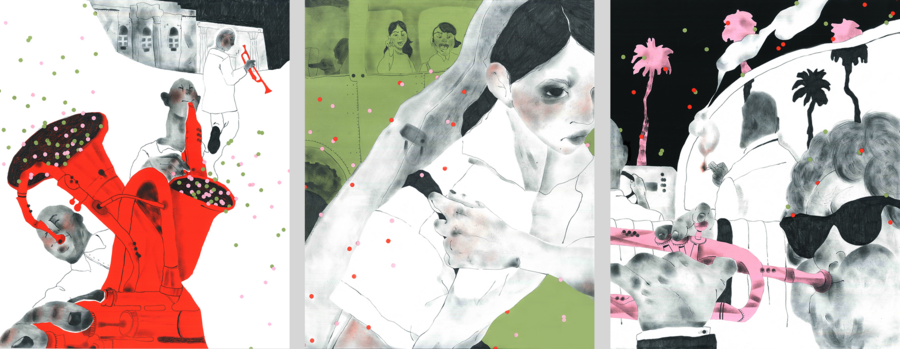
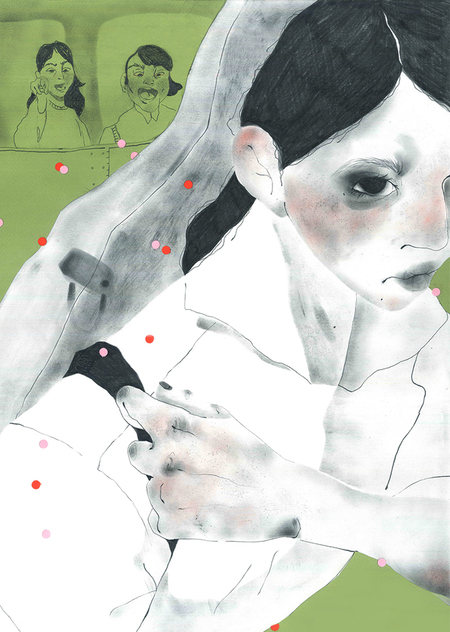
420×504 mm Graphite pencil, colored paper, dry pastel Appliqué, stencil
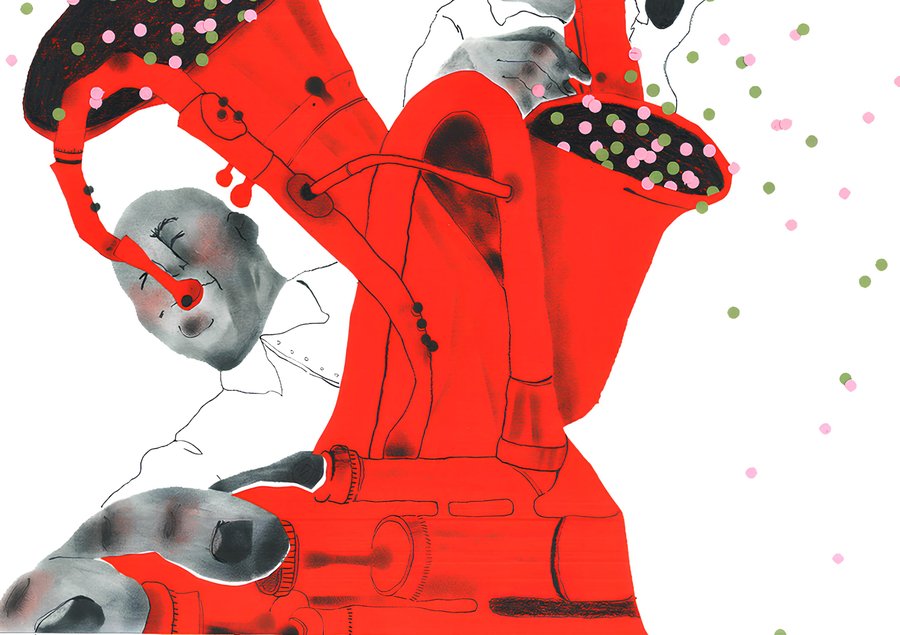
The city functions as a rigorous environment interacting with human inner drive. The architectural backdrop is the urban reality of each individual, which transforms under the influence of sound. Urban space allows auditory noise to materialize visually—the music of performers disrupts the city’s familiar austerity.
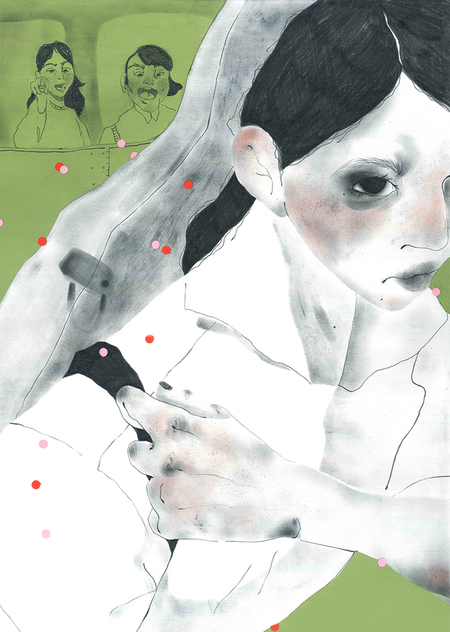
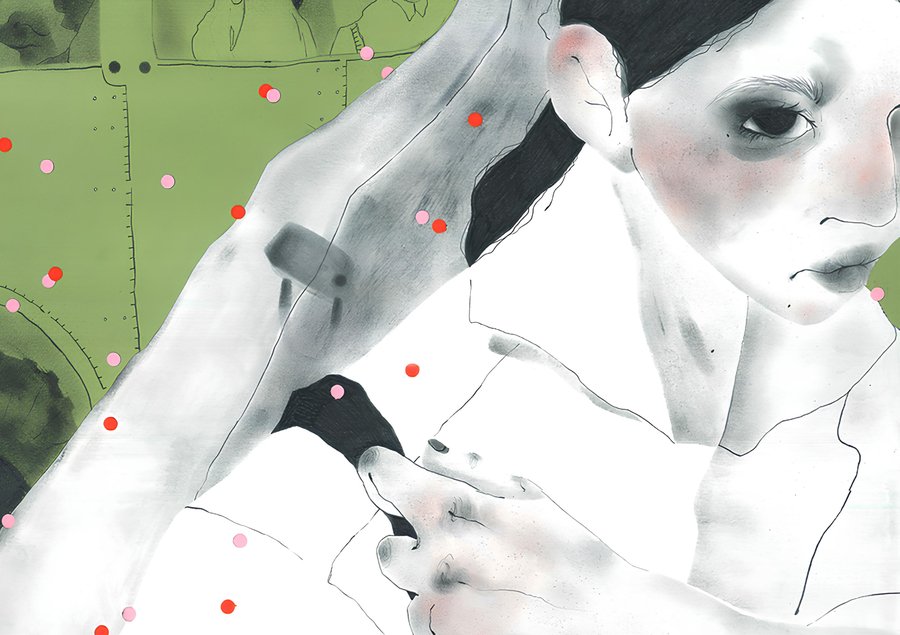
In the next piece, the city is a hostile and oppressive social environment. The figures in the background symbolize the urban reality that the heroine distances herself from, fully immersing herself in her inner world. The urban space allows the auditory noise to break through: a mental musical barrier protects the subject from external stimuli, transforming the city into a safe environment.
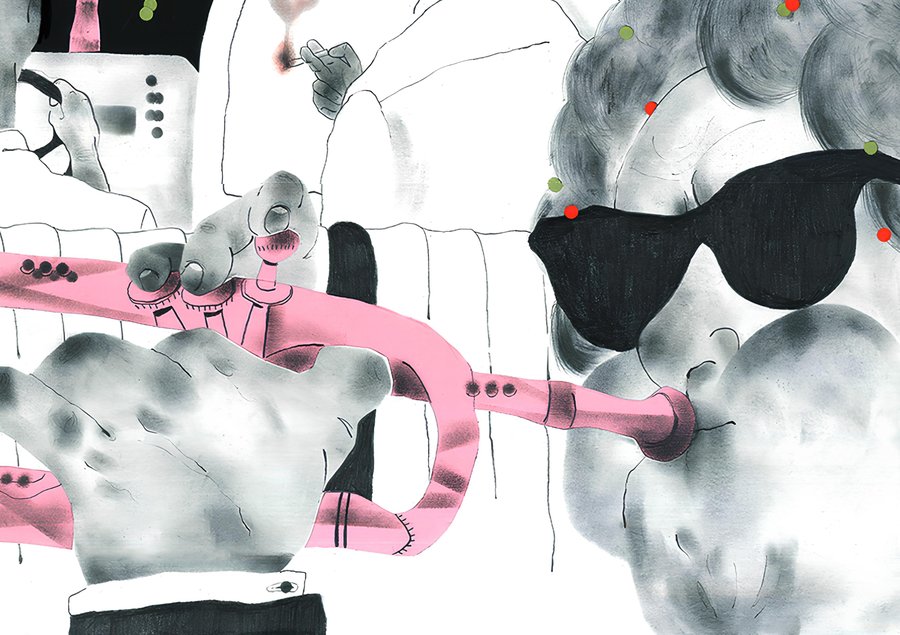
In this work, the city is an elusive nocturnal space. The urban environment juxtaposes auditory noise with a transitional reality: the flow of traffic rumble reassembles within the protagonist, disrupting the city’s usual dryness and transforming the external chaos and the entire space.
Fragments
Exposure Sketch