Prologue: Colony after Crah
Date Note: Events on Lacuna are dated by local calendar. The local 2121–2123 corresponds to the Earth ~2400–2403, i.e. ~50 years after the protection of the Protectorate (2350). «New Dawn» is the local name of the events «Day X» and the transition to the AsteraNexus.
In 12 hours, New Dawn turned off the planet: the air went out, the keys and the exact time were intercepted, and the logistics gates were closed. The centres were controlled under the guise of the Protectorate, and the distant worlds fell into separate «islands» living through rare short communication and supply windows. On one of these islands, the Lakuna colony decided on the relocation that had begun in advance. On the eve of Day X, the settlement ship Herbarius 27, a typical large transport with people and equipment, left. A «creature of new life» was carried on board — seed banks, collection of useful microbes, mycels, and kits for the production of living houses. Since Crah, communications and courier flights have been cut off: without confirmed colony codes legally «no one» and with no help waiting anywhere. The ship moved to a stand-alone plan: it unloads supplies and deploys the Gaia Archive, all it takes to build and treat the environment on its own. This logic is referred to in «Crah» as a simple word for preposition: first, base and reserve, then improvisation on the ground.
On Lakuna, «Crah» came as a corner of the old Helios Net programs: the relay nodes, once controlled by AsteraNexus, went into «silent mode», part of the Three Rings of Supply collapsed. The Gerbaria 27 team found in the archives instructions from the Protectorate for the autonomy of colonies and supplemented them with the «Gaya Archive», a semi-civil heritage of the old supply arenas. So «New Dawn» from Earth’s history became the domestic word here, «disabled the center — live by ourselves».
Biology went on to take over the Iron. Without the center, the usual dry chains — steel, concrete, and sophisticated electronics — quickly ended. But what you can grow is growing itself: mushroom supports, glowing cables, sheaths that extend the cracks. In one generation, Lacuna formed three sides of the force: Biotechnocracy, a city and a state of biologists with a bio-finished economy. Dry industries are remnants of classical engineering that do not want to depend on enzymes. Communaires are green communities that recognize living structures as «kinds» with rights.
Introduction: War in the Age of Living Cities
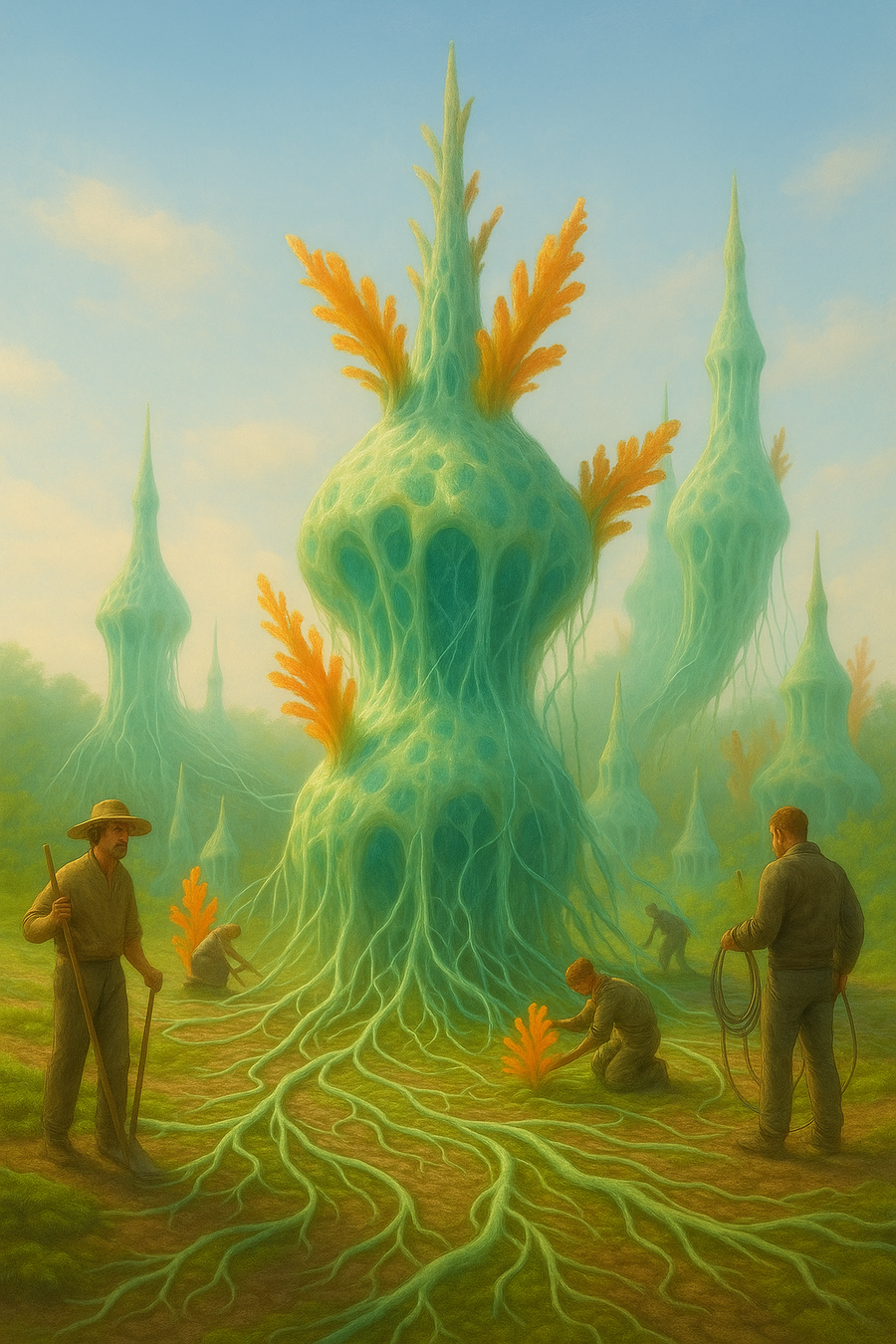
The process of growing a living building
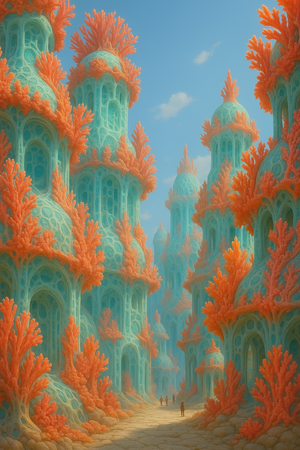
In the colony of Lakuna, houses are not built; they are raised. The living pillars are based on mycelic farms, the facades are breathing, and engineering networks are microbial tracts that transmit energy and signals. The world first saw this logic on Earth: used mycelium and cellulose bricks proved that biomaterials can be strong, easy, and self-rehabilitating. In the colonies, it became a day-to-day, and thus a theatre of war: when every home is an organism, an attack goes through a genome and metabolism, and the result comes «like a disease» — days and weeks later. The first model bioblocks have come since the arenas and the «war games», with the cut-off of 2084–2095 robot frameworks on Lakuna dissecting the farms and reactor hosts, and lifting the mycelyl envelopes on top of them. «Gelezo» from the old arenas became the root for the new living quarters.
Parties to the conflict and causes
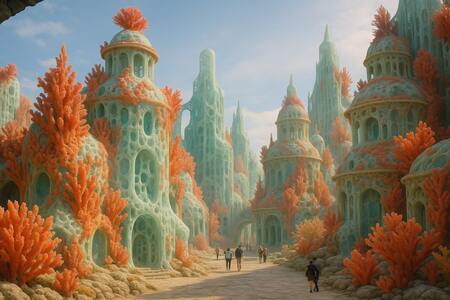
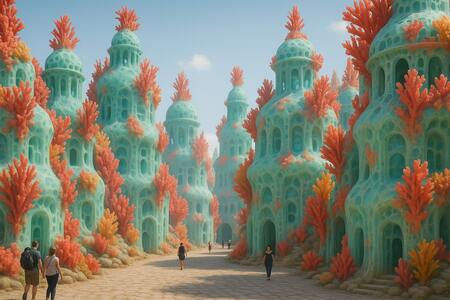
Their weakness is a monopoly on «life’s fuel»: enzyme tapes and matrices. Their strength is the rate of growth and self — healing. Ethics is extremely utilitarian: urban fabrics are property, even if they sing at night.
Dry Industries and Green Communal Coalition
The dry industrialists on the outskirts are marked by arishite line clans, the distant heirs of Prometheus Point. Their ethics grew out of mining charters: «to keep the net in the metal,» «not to get on the enzyme needle.» They remember that access to energy was once defined by the arenas and the AsteraNexus contracts, so they react painfully to any monopoly of life’s fuel.
The Communists blame Biotechcratics: «You hold on to the slavery of tissue.» The «dry» blames us differently: you keep us on an enzyme needle. However, the power of the «food» for the living cities is the same as that of the two.
Causes of the conflict
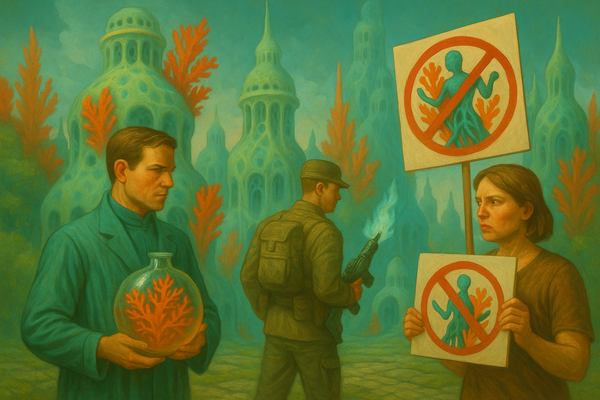
We see a representative of Biotechnocracia with an enzyme-type bulb, in the middle, an armed coalition soldier with a biosilencing device, on the right, an activist with a billboard on the rights of living creatures.
The Shadow of the Protectorate is still on the border: the old Helios Net inspection drones, which are left without a center, are always waking up and closing channels. For the dry, it’s proof that any distributed monopoly of access is the way to a new embargo; for Biotech City, it’s the reason to hold control over enzyme tapes «in the name of stability».
First incidents and outbreak of war
Among the «garden refugees» are former engineering equipment: they remember the protocols of fair play, but they now apply skills outside regulations. There are records of old matches and instructions for «robo carcasses» in the underground, learning how to collect biosilencing devices and portable symbiote filters.
Biofarm contamination scene: an elderly worker with signs of symbiosis in orange swells, a researcher scientist and soldiers in protective gear are accompanying him through a shiny landscape of living mushroom structures