
Refrigerator
Concept — youth 80s — 90s — youth 00s — 10s — youth 20th Conclusion Sources
Concept
Music has a special place in the human life is not a it’s just a background, a an important part of personal and a collective identity. The group <laquo; Kino&raquao; represents a unique phenomenon in this context — their music continues to appear in the the hearts of millions for four decades. Modern research shows that for 92% of young people, music is the most important part of everyday life, and songs & laqua; Film&raquao; are always part of the tops of the striming platforms. This study aims to expose the mechanisms of " forever youth» legendary group through analysis of its visual presentations in diverse media forms and epochs, a also to understand why this music continues to resonate in the new generations.
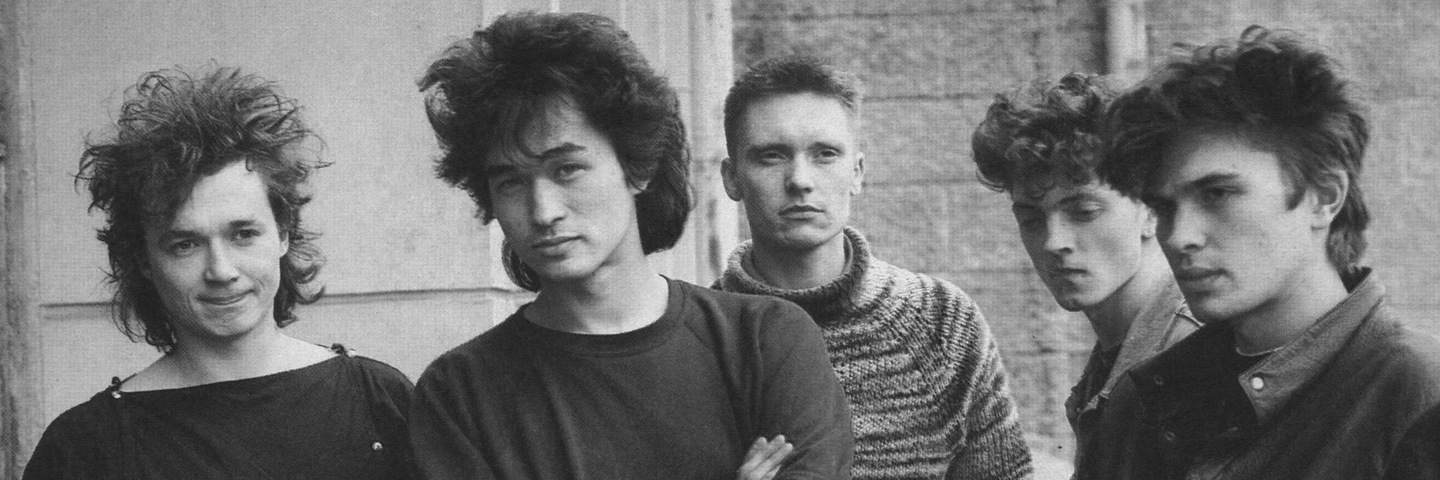
The central issues of the study are:
How did the visual perception of the band change from the epoch of tape recorders to digital platforms? What elements of the visual style <laquo; Cinema» have turned into `nbsp; universal memes and cultural codes? Why does Victor Zoe’s image continue to inspire modern artists and designers? Of particular interest is the analysis of the role played by music <laquo; Kino&raquao; in <nbsp; in generational thinking, and how modern patterns of music consumption affect the perception of classical rock. An important aspect is the study of why it is precisely in the broken moments of life people especially often turn to the songs of Zoe.
The study is divided into three time blocks.
The first section of 1980-1990 analyses the formation of the group and the relationship of young people to a phenomenon such as the « Film» group. The second section, 2000-2010, studies the reason why the other generation’s young people are still so .nbsp; is also attracted to a group popular with their parents. The third section of the 2020s is devoted to another new generation and modern phenomena.
The results of the study will be widely applied in various areas
From music therapy to creating urban cultural spaces. Educational programs on mediogramaticity can use these data to analyse the mechanisms of cultural memory. Musicians will gain valuable knowledge about long-term success factors, a social scientists — new tools for research on youth subculture. The work is of particular value to music exhibitors and the producers of media projects about the Russian rock, offering a scientifically sound approach to the presentation of musical heritage.
1980 — 1990
The popularity of the group ' la quo; Film» in the 'nbsp; 1980– 1990s among young people ' s — is a complex combination of music, texts, the charisma of Zoe and the spirit of time. Their success cannot be explained only by talent or luck — they became the voice of a generation that sought truth, freedom and meaning in the era of stagnation and reconstruction.
& quo; Film&raquao; played a minimalist, but powerful rock, which differed from the heavy Soviet rock of the 1970s. Simple and energy — guitar riffs, melodies, rhythmic bass line (thanks to Kasparian and Tithu)
Synthesis of genres — in they included elements of punk, post-punk, New Vienna and even electronics (especially in later albums). Laconity — the songs were short, but short, with no extra ' laquo; powers ' ; which made them > nbsp; ideal for street sounding.
Text: Intergenerational poetry
Choi wrote not songs, a stories that spoke with youth on her language: O freedom — <lakuo; Change!&raquao; <lako; Good night&raquao; < <Want change!&raquao. O love and loneliness — < < hao; pack of cigarettes» < < 8th grader» << 8th grader» <> <<brong>O wars and bs–— < < < < < blood&br/raqo; > > > > >
Context of the era
1980's — time of stagnation, then restructuring — young people felt that the old world was falling, but the new was not yet. < <Kino&raquao; played in the basements, their n wripped according to TV, but they became the main group of streets. >>In their 1990's songs sounded like a rug for the when the country collapsed, it was the songs that helped people not the spirit (» star by names of the Sun»).
Alexander Burlaca, in his book Rock Encyclopedia: «Kino», explores in detail the history, creativity and influence of a religious Soviet rock band. I would like to highlight the impact on culture, namely, the phenomenon of «Kinomania»
The scale of the band’s popularity was incredible: the concerts were gathering stadiums. The band collected the ashlags despite the the lack of extensive advertising. The symbol of the generation — the texts of Zoe (» Change!» &laqua; We Waiting for Change») became the anthem of the young people of the Rebuilding era.
The cult of Victor Zoe
The image of his own boyfriend» — Soy was not was « star» in Western sense: modest, little word, no paphos. It made him close to the audience. Cinema and «Igla» (1988) — Rachid Nugmanov’s film with Toy in his leading role enhanced his status as icons of style. The death in 'nbsp; the car crash turned Zoe into 'nbsp; legend. The phrase « Zoi is alive» has become a symbol of memory.
The songs <laquo; Cinema&racuo; sounded like the voice of a generation tired of stagnation and yearning for change
The book also says that all subcultures listened to <laqua; Kino&racuo; which was rare for the then stage. #strong>&laqua; Kinomania» — is not just fanatical hysteria, a the cultural code of an era where music, politics and the artist’s identity merged into a single myth.
2000 — 2010