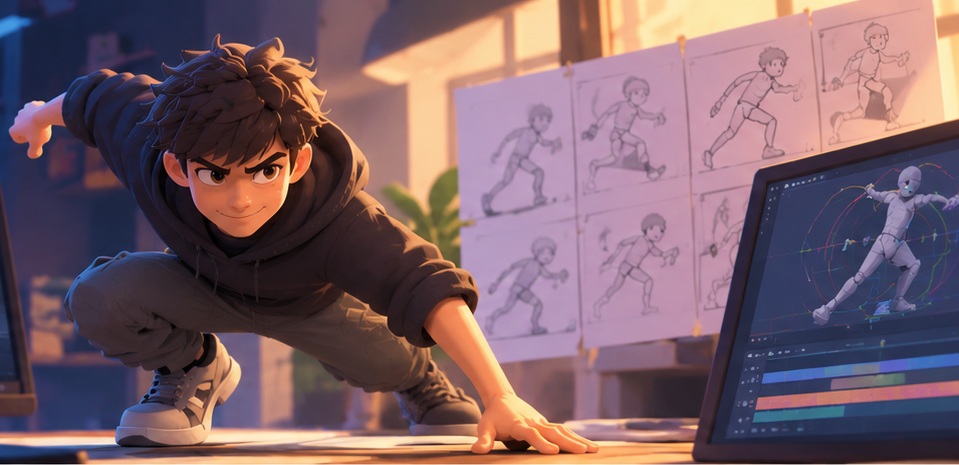
Основы 3D-анимации: от позы к движению
An introductory course on bringing a 3D character to life: from the initial pose to smooth and expressive movement.
What is this course about?
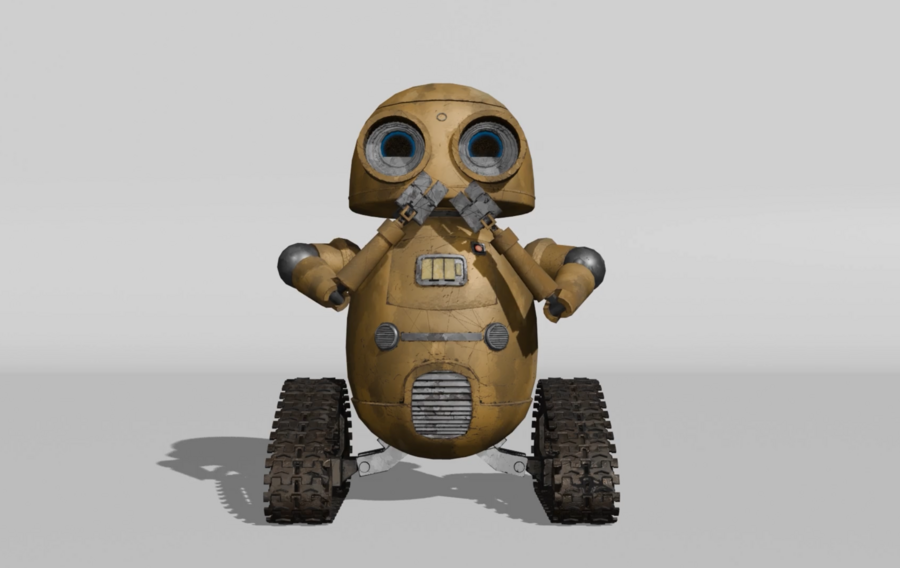
Animation transforms a static model into a living character—and it is this animation that determines whether the viewer or player believes what is unfolding on screen, whether it is a film, a series, or a game. The principles formulated by masters of classical drawn animation are relevant today in 3D as well: they form the foundation of animators' work in the gaming industry, cinema, advertising, and animated series production. The demand for animators remains consistently high, and the small character work showcased in the demo reel often becomes the key prerequisite for joining a professional team.
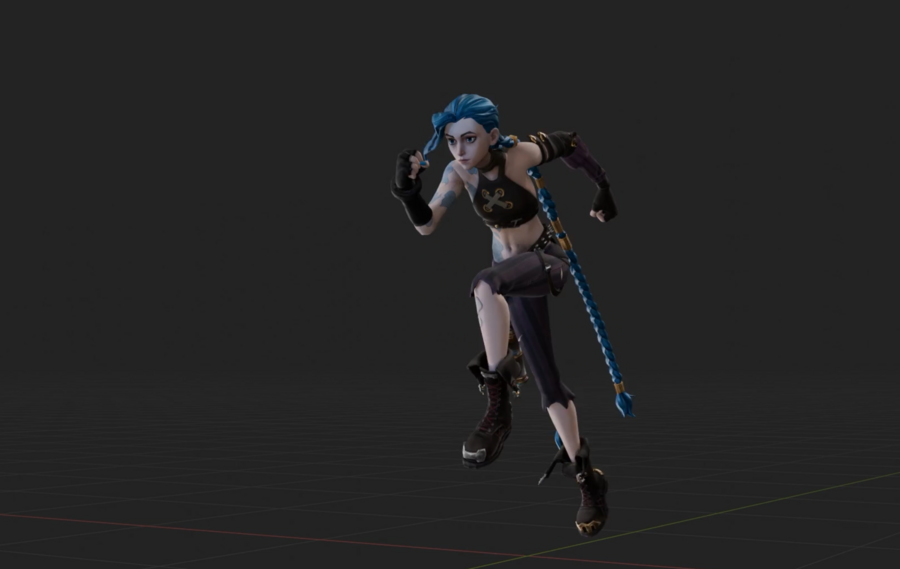
The course begins with a theoretical block: students will learn what animation is, how it functions in 3D, how it differs from other animation types, and the principles upon which compelling movement is built. They will then become acquainted with essential animator tools, master the use of keys, poses, and timing, and gradually move from simple exercises to character animation.As a result, every student will create a short character animation with a clearly readable action and mood that can be included in their first portfolio.
Who is this course for?
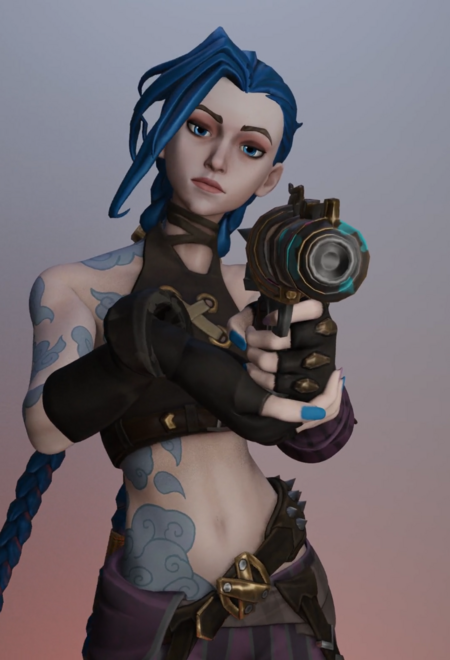
✤ Beginners with no experience in 3D animation who dream of entering the profession as an animator in games, film, or advertising. ✤ 3D artists and modelers who want to bring their own characters to life, not just create them. ✤ Illustrators and 2D animators who wish to master animation in three-dimensional space. ✤ Students in creative and technical fields (design, game development, media) looking for practical specialization.
Course Duration: 8 weeks.
Contact Hours: 40 academic hours.
Classes are held in an online format, including synchronous sessions for work critiques and deadlines.
What will students learn in this course?
✤ Apply fundamental animation principles (timing, spacing, squash and stretch, anticipation, and inertia) in personal projects;
✤ Work with keys, curves, and the timeline;
✤ Create expressive poses and construct movement sequences from them;
✤ Animate basic actions: a bouncing ball, a walking cycle, a simple character gesture;
✤ Analyze references and translate observations of real motion into animation;
✤ Prepare and export animation for portfolio presentation.
What practical assignments will the students complete in the course?
✤ Analysis of several animation pieces based on the principles of animation;
✤ Animation of a bouncing ball with different characteristics (light, heavy);
✤ Creating a walk cycle on a pre-built rig;
✤ Animating a character in action (push, jump, lifting an object) using personal video references;
✤ Final Project: A short character animation (5–10 seconds).
Prerequisites
✤ Confident computer skills;
✤ Interest in animation, film, or games;
✤ A computer capable of running animation software (Blender, Maya, or equivalent)