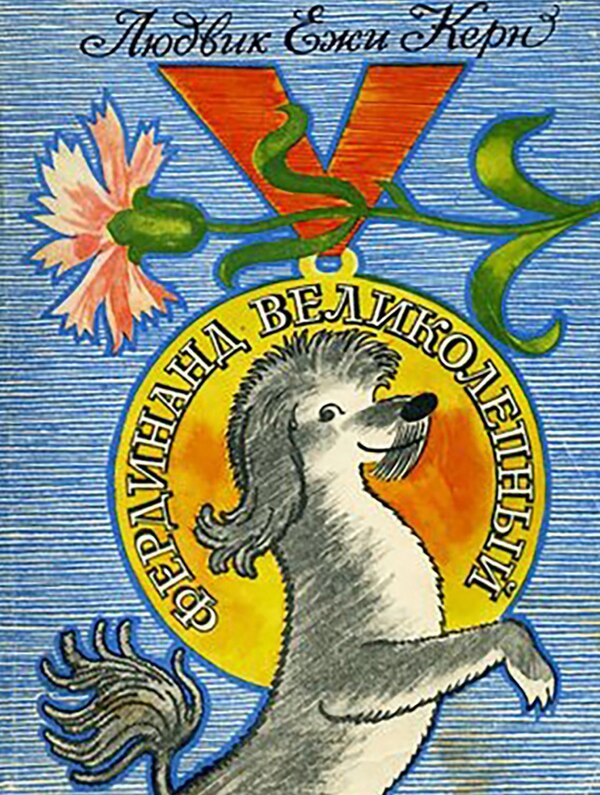
In Ludwik Ege Kern’s book, a dog named Ferdinand suddenly decides to stand on his hind legs—and begins a human life full of mishaps and adventures. Later, he willingly returns to his canine life.
Ludwik Ezhik Kern
«Ferdinand the Magnificent»
Translated from Polish by S. Sviatsky
Illustrations by V. Alexeev
Moscow, Progress, 1969
For middle school students
The first book about the dog Ferdinand the Magnificent was published in Russian in 1969 by the rather adult publisher «Progress» (it appeared six years earlier in its original Polish language). It was written by Ludwik Eży Kern—a man of many talents.
For over thirty years, he worked at the legendary Kraków satirical magazine, Przekrój, where he edited various sections, created columns, published his own poetry, reports from other countries, translations, and reviews—in short, he commented on the reality surrounding him to the best of his ability, and there was plenty to comment on. He also wrote librettos for musical theater and songs—one of his lyrics became a hit for the band Tropicale Tahiti Granda Banda (whose records sold in the USSR). He was a screenwriter and host for television programs… and he also wrote children’s books.
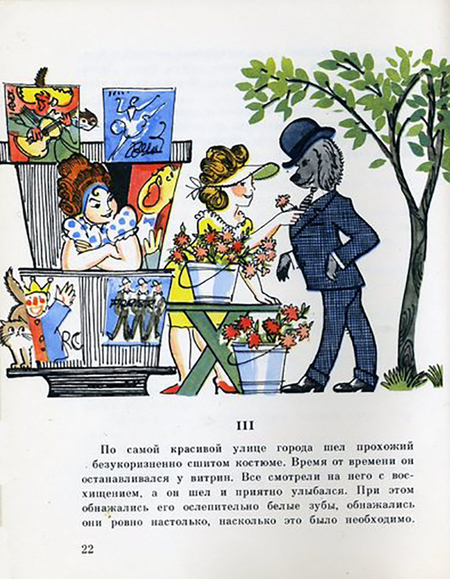
Farsa, his boxer dog, inspired the creation of «Ferdinand.» «…In her sleep, she bared her teeth, shifted her paws, and growled. One day I thought that maybe she was dreaming she was human. I took up a pen. And I wrote down what I imagined the dog was dreaming of.»
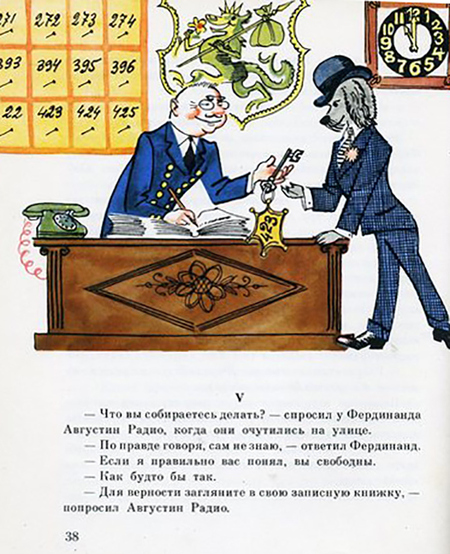
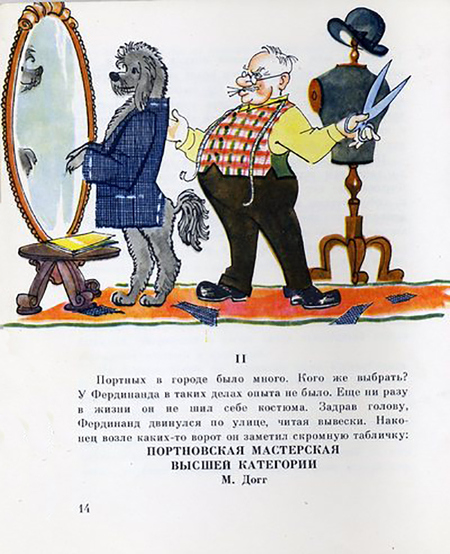
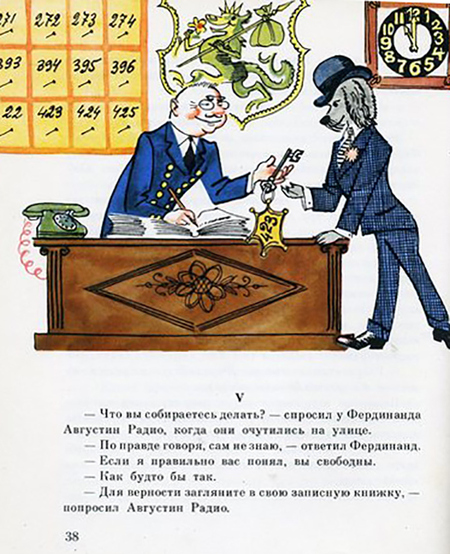
Once, a dog named Ferdinand suddenly thought: «What if I get off the sofa, walk to the entrance door, step onto the stairs, and try to stand on my own legs. On two of my own legs!» Said—done: taking advantage of the mail carrier’s presence, Ferdinand sneaks past him and the hostess, descends the stairs, and… begins a human life. He looks so naturally human that he instantly acquires a fine suit, a hat, an umbrella, and checks into a hotel…
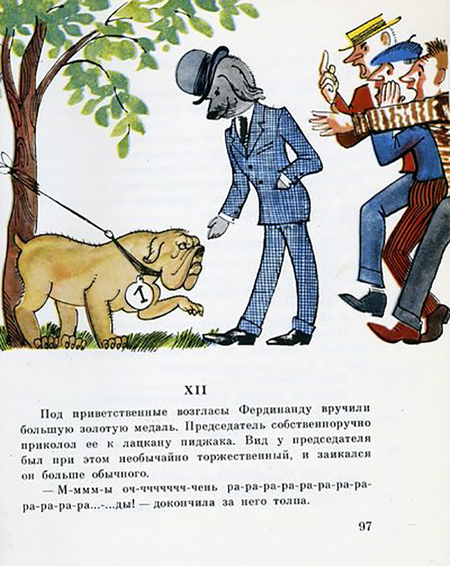
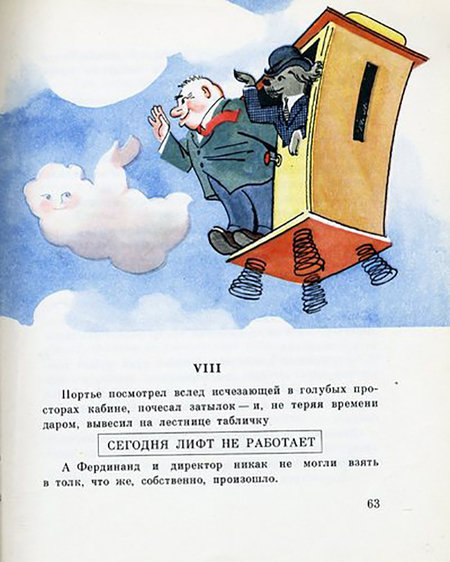
But it is foolish to assume that a dog who has been humanized will begin a routine human life. Ferdinand, who became Magnificent, manages to fly into the sky in a lift cabin, become a star at a dog show (though not as a dog), win a medal there, catch two robbers, and finally get a gold crown made from that very medal fitted on a chipped tooth.
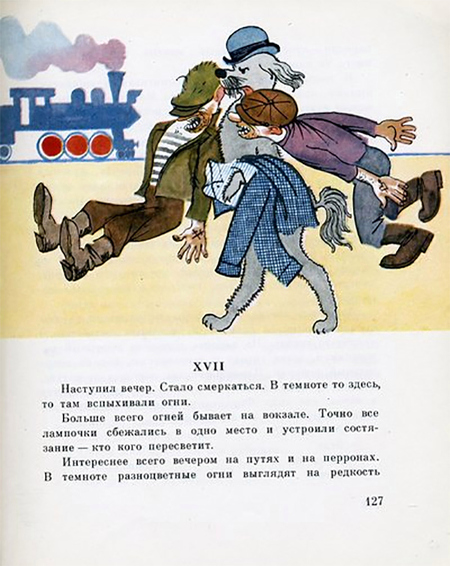
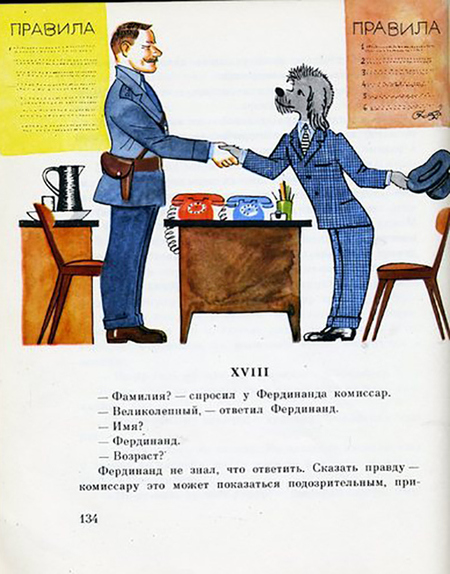
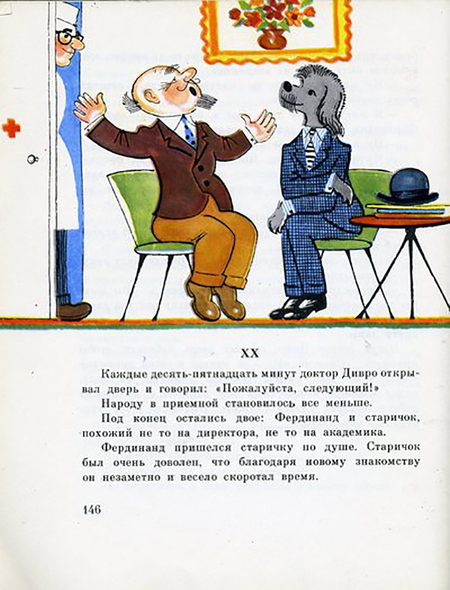
It must be said that as a person, Ferdinand gains a lot compared to most of those around him: he is kinder, smarter, and more tactful, and even if he sometimes appears quirky, this inspires delight and endearment in the reader rather than any other feeling. Moreover, returning to his canine form, the dog is not so much disappointed—the experience is over, the result has been achieved (the crown!), and he can live a peaceful dog life.
However, the adventures of the man-dog did not end there: in 1965, Kern wrote a continuation of the book—"Wake Up, Ferdinand!"—and subsequently expanded upon it in 1970 and 1983. In the new book, each of Ferdinand’s dreams transforms into another foray into «human society,» and in each one, he bewilders ordinary people once more. He might take out a loan to buy an umbrella, start a lawsuit calling Donald Duck as a witness, get a job at the circus, or attend a parade in a general’s uniform, having dialogues with his own uniform and causing the Mouseketeer corps to scatter across the parade ground. Alternatively, he might go hunting, which fails spectacularly on his account, leading the hunters and the game—rabbits—to enjoy a convivial meal by the campfire instead… In short, Magnificent Ferdinand makes routine things extraordinary, amusing, and, it must be said, deeply humanistic.
As a true satirist, Lyudvik Ezhi Kern was honest with his readers and himself. «I do a fair amount for children, ” he said, „but I can’t imagine living in a house with two or three babies. I wouldn’t be able to write anything for them; I need absolute peace for that. So, there is some kind of emotional and psychological contradiction within me.“
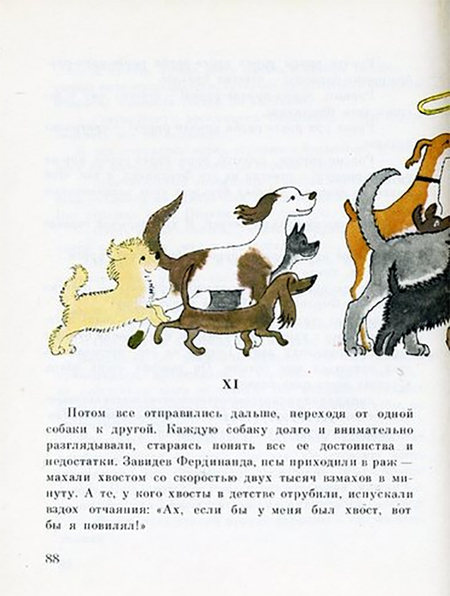
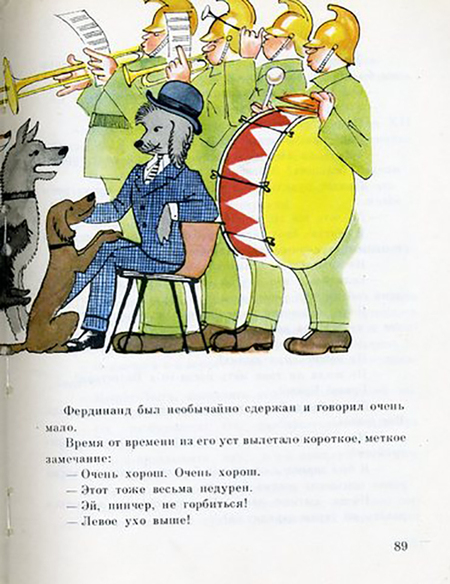
This in no way prevented «Ferdinand» from glorifying its creator. The book has been translated into many languages; it brought Kern wealth and prosperity, and even the title of vice-cancellor of the Smile Order Chapter—an international award given to notable individuals who bring joy to children. And joy is a scarce commodity in these times. If you want to delight a young person aged 8 to 13, give them a book about Ferdinand the Magnificent.