History
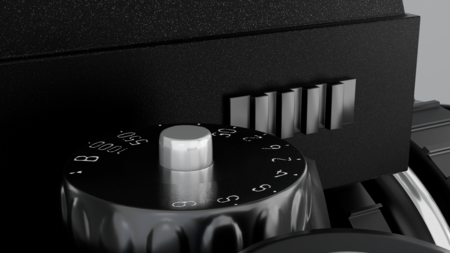
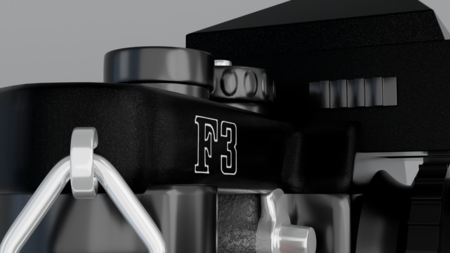
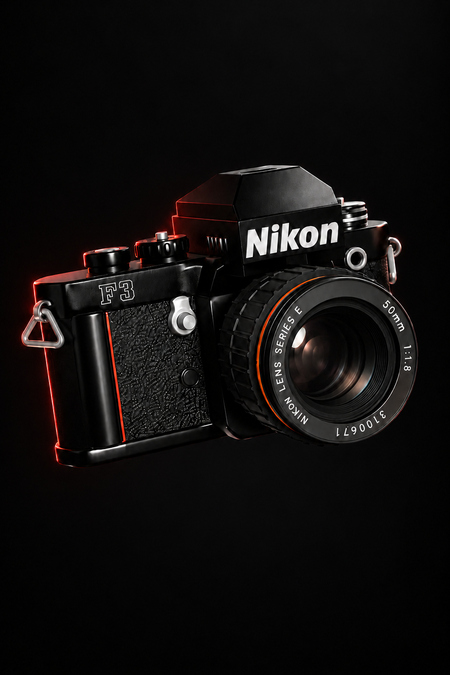
Nikon F3—a professional film SLR camera introduced in March 1980. It continued the Nikon F and F2 series, merging the systematic approach of its predecessors with electronic shutter control and aperture-priority automatic exposure. Italian industrial designer Giordhetto Dujarro was responsible for the camera’s exterior design.
The photographer needed a tool that allowed for quicker reaction to changes in lighting and required less time spent on settings. Automatic shutter speed selection at a fixed aperture simplified shooting while preserving the ability for manual control. Furthermore, the camera needed to be reliable and suitable for various professional tasks.
Why did I choose this subject?
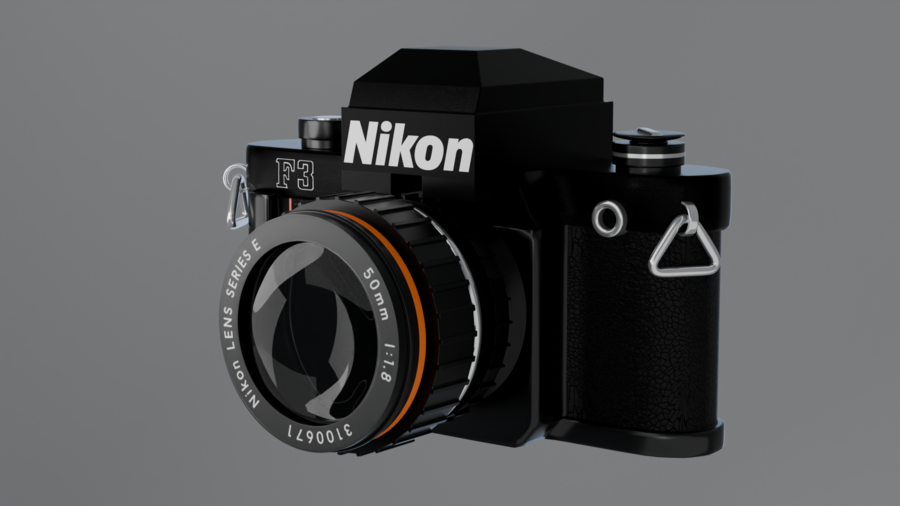
I work in photography, so I am interested in exploring the camera not just as a tool, but also as an object of industrial design. I am drawn to the clear geometry, the combination of various textures, and the expressive details of the Nikon F3. For 3D modeling, this camera is interesting because of its transition from simple basic volumes to a complex system of elements: the lens, the viewfinder, the control dials, and the mounts. Working with its form helps to examine more closely how construction and usability define an object’s appearance.
What was trending at the time?
In the 1970s, camera automation was developing: electronic exposure control made photography more accessible and convenient. Manufacturers strived to reduce camera sizes and expand their capabilities. The Nikon F3 reflects this transition from a predominantly mechanical device to an electronically controlled instrument.
New or an improvement on the old?
Nikon F3 — an evolution of an existing system of professional cameras. The model maintained continuity with previous generations while incorporating new electronic features and a redesigned exterior. This update affected both the shooting process and the photographer’s interaction with the body.
What’s new?
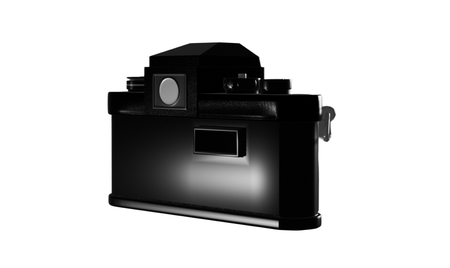
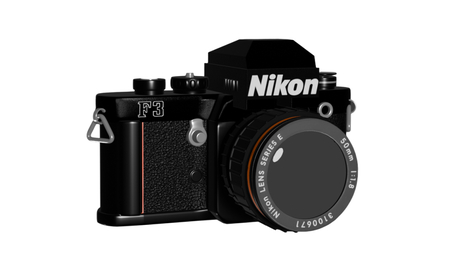
As part of the Nikon F professional line, key changes included electronic shutter control and aperture-priority mode. The viewfinder incorporated a liquid crystal display showing exposure data. The approach to form also shifted: the grip protrusion and the refined contours coordinated with the motor drive made ergonomics a prominent feature of the design.
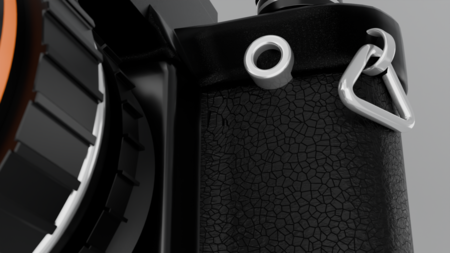
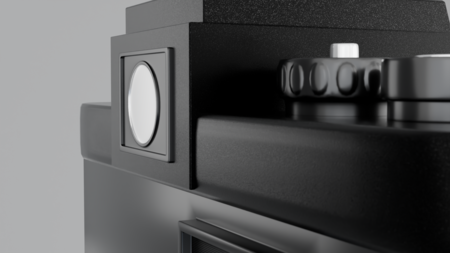
In the F3 design, one can see an aspiration to merge instrumental precision with the convenience of daily use. Form is related to action: the protrusion helps stabilize the camera, the knurling eases the rotation of the rings, and the placement of the controls reflects the sequence of shooting. The external appearance emphasizes the object’s functionality.