
Основы процедурного моделирования: ноды, сети, параметры
Introductory course on how to create 3D models not manually, but using flexible settings, and import them into Unreal Engine.
What is this course about?
The procedural approach allows for modeling to be described as a set of rules and parameters, rather than being sculpted manually; therefore, any change can be implemented in seconds without starting from scratch. Houdini by SideFX is considered the premier tool for this approach and is used in the film industry, game development, advertising, and architectural visualization. The ability to think in terms of nodes and parameters enables the creation of numerous object variations in seconds.
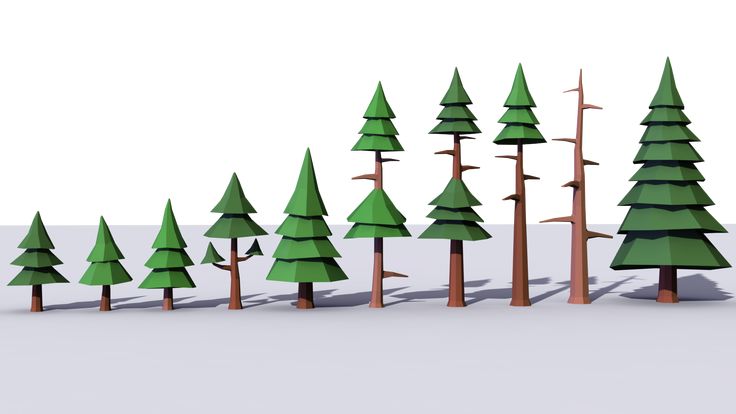
At the beginning of the course, students will learn what procedural modeling is, how it differs from classical modeling, what Houdini is, and how nodes and the connections between them are structured. They will then be introduced to the interface, learn to build node networks, control them through parameters, and gradually progress from simple shapes to more complex objects. As a result, each student will create their own procedural model with customizable parameters and export it to Unreal Engine to place it in a scene.
Who is this course for?
■ Beginners in 3D interested in mastering a modern technical approach to modeling. ■ 3D artists and modelers working in Blender, Maya, or 3ds Max who wish to expand their toolkit and accelerate their workflow. ■ Motion designers and technical artists looking to explore Houdini as a foundation for further studying effects and content generation. ■ Students in creative and technical majors (design, architecture, game development) seeking promising specializations.
Course duration: 7 weeks.
Contact hours:
35 academic hours.
Sessions are held online, featuring synchronous work reviews and deadlines.
What will students learn in this course?
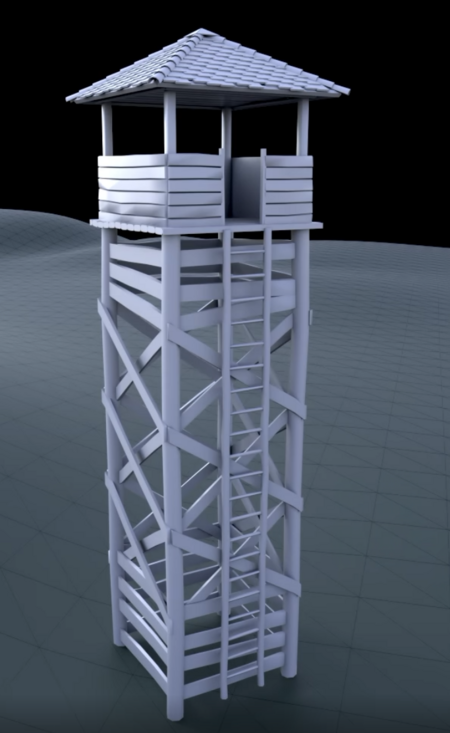
■ Determine in which tasks procedural modeling is more efficient than manual methods; ■ Navigate the Houdini interface and work with the main windows and networks; ■ Create and connect nodes to build the logical structure of a model; ■ Control geometry using attributes, groups, and parameters; ■ Create customizable parameters and expose them in the asset interface; ■ Apply copying, distribution, and transformation of objects to create repetitive structures; ■ Analyze and debug errors within the node network; ■ Prepare and export the model to Unreal Engine.
What practical assignments will students complete for this course?
■ Creating simple forms using basic nodes and configuring their parameters;
■ Building a procedural object with variable dimensions and element counts;
■ Exercise in distributing and copying objects across a surface and a curve;
■ Designing custom parameters and preparing the asset for reuse;
■ Exporting the test model to Unreal Engine and placing it in the scene;
■ Final Project: A procedural model with configurable parameters, exported to Unreal Engine.
Prerequisites
■ Confident computer usage;
■ Understanding basic concepts of 3D graphics (polygon, vertex, transformation);
■ Installation of Houdini and Unreal Engine 5
■ Computer meeting the system requirements for Houdini and UE5 (video card supporting DirectX 12/Vulkan, at least 16 GB of RAM).