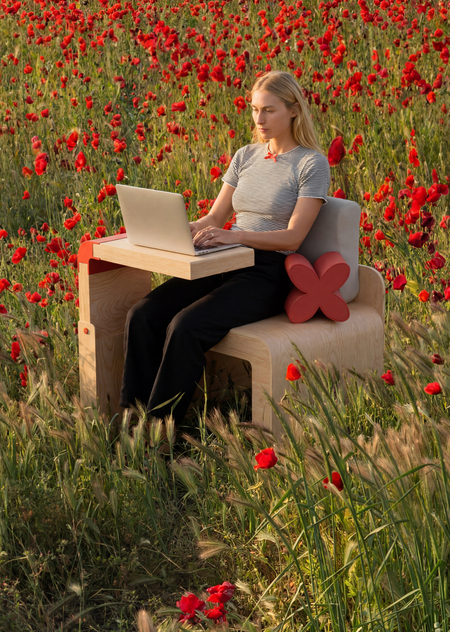
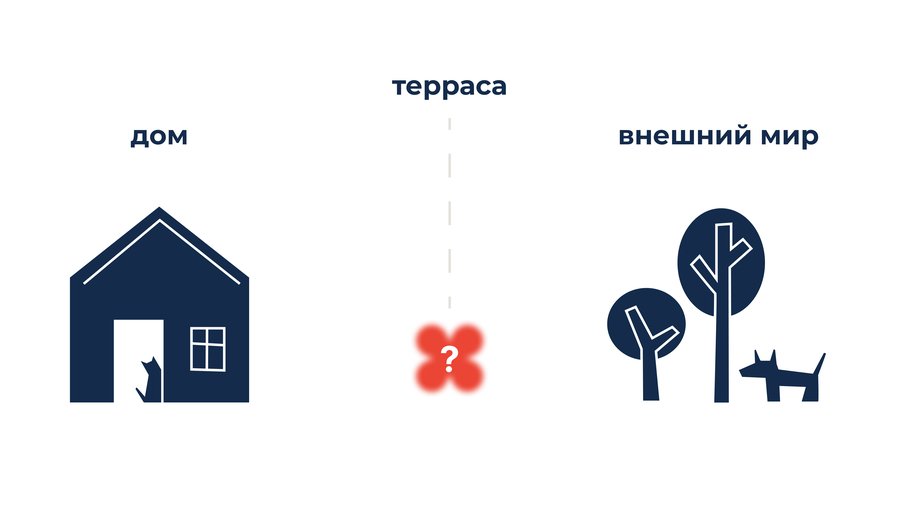
The terrace is an extraordinarily interesting space—essentially, the boundary between home and street. Numerous scenarios unfold on this often small piece of land: it can be social interaction, where people direct their attention toward one another; it can be dining; or it can be solitary use of the space—contemplation or work.
This space is limited not only by its territory but also by time, as in our country, the window to truly enjoy the atmosphere outside is quite brief. It is this temporal and spatial limitation that generates the demand for the terrace to be used as efficiently as possible—for its multifunctionality. Ideally, one should create an object that could reconfigure itself for the user based on their needs.
Concept A variable furniture piece that reconfigures depending on the intended use scenario.

During the project, it is important to overcome technical limitations, such as part weight, and ensure comfortable postures. Complex constructions should be avoided.
Search form
A design whose operating principle relies on the fundamental physical properties of the object—on factors that will never fail, such as gravity. Modularity that allows for diverse scenarios: raising or lowering the table, rearranging elements.
Beyond functionality, the final product must be pleasing to use and comfortable. Textiles and soft cushions are incorporated into the project to achieve a sense of coziness, which users can purchase separately based on their needs. Each cushion is housed in an individual cover that can be removed and washed, simplifying the care of the furniture item.
The comfort cushion is more than just a functional object—it is an element that creates an atmosphere of warmth. The user selects the shape and quantity of the modules themselves, defining their own position on a scale ranging from asceticism to abundance.
For a chair, the generally accepted seat height is around 42–45 cm from the floor, and the average seat width is approximately 50–55 cm to ensure a more relaxed seating experience than a standard chair. The height difference between the seat and the table is usually about 27–30 cm—this provides a comfortable arm position and reduces strain on the shoulders and back while sitting.
Materials: FSF plywood (high moisture resistance) Steel elements with powder coating (matte finish) Textiles of varying textures with high wear resistance, selected in brand colors.
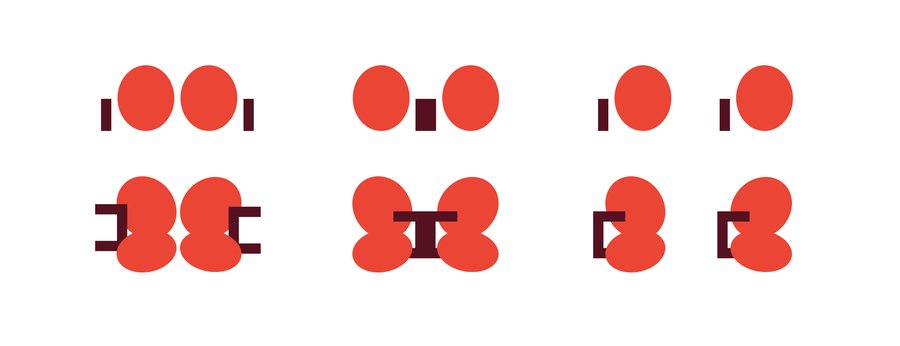
The table lift mechanism does not require bearings, and the design itself is symmetrical, allowing the furniture to be assembled so the table can be placed on either side of the seat.
Element independence allows for the creation of unique color combinations.
The simplicity and modularity of the furniture system allow the user to adapt the piece to the required scenario and easily maintain it, while enabling businesses to use it for various tasks and tailor it to brand identity requirements.
the color palette of the Annki Studio brand