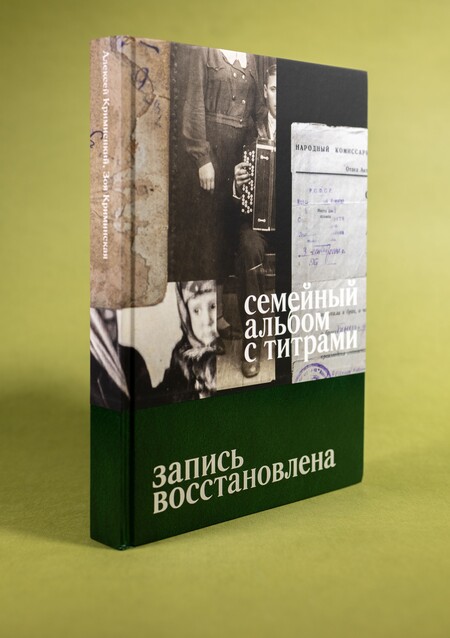
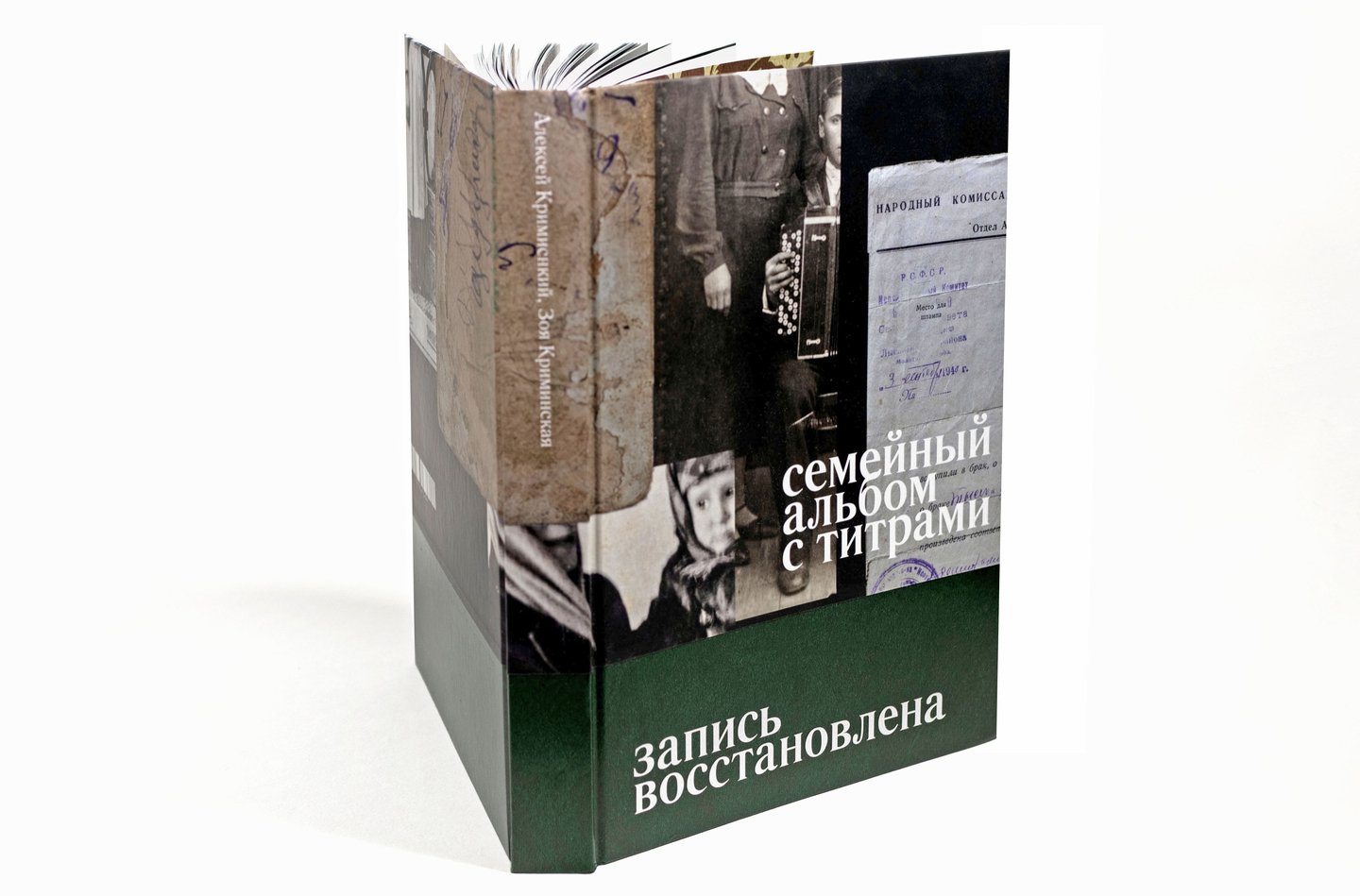
The history of a country within the context of one family’s history. Such a book exists on every family shelf—sometimes it is simply harder to unearth and put in its proper place.
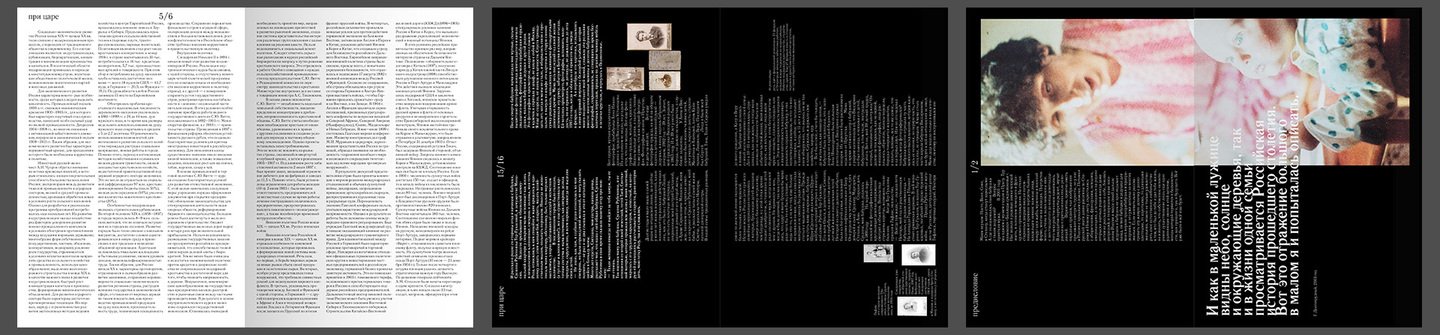
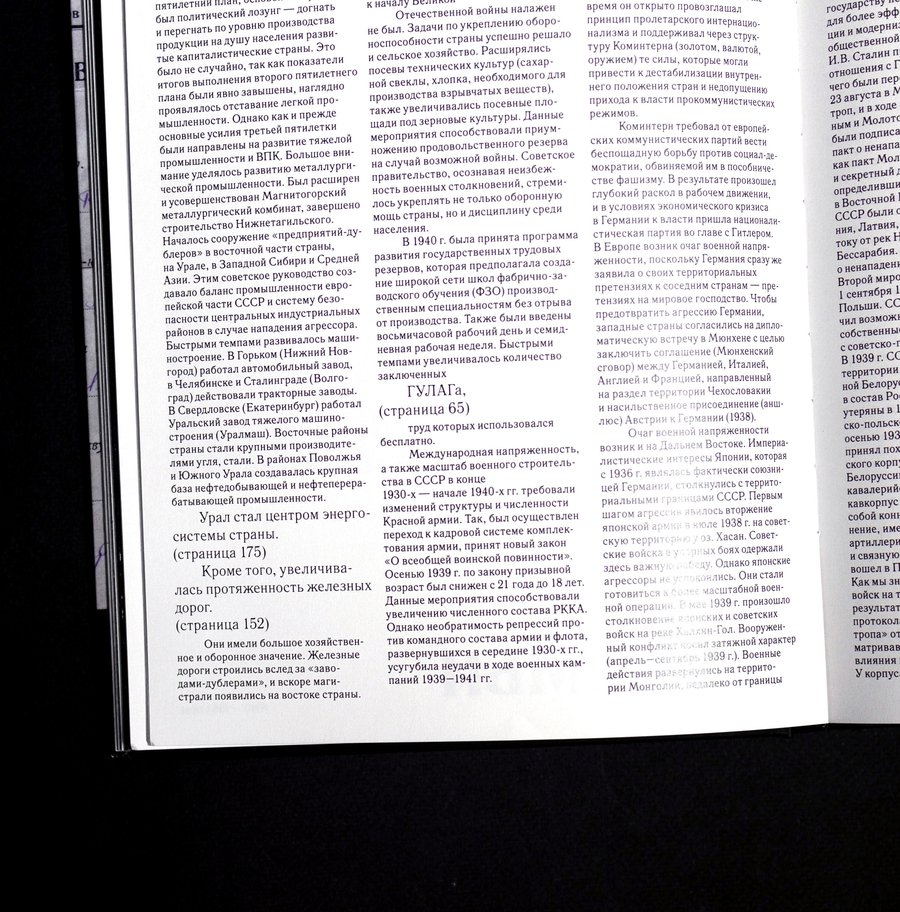
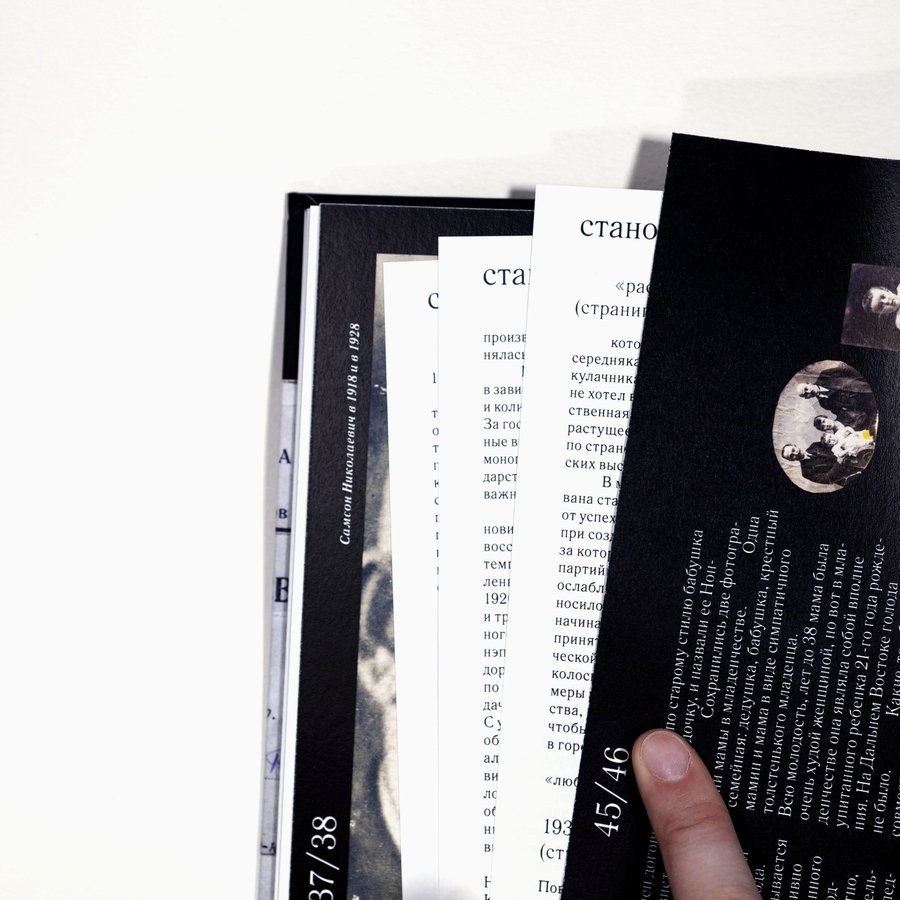
In the book, there are two types of text spreads: historical notes—white, three-column layouts; and family archives—black, four-column layouts.
Each column on the black spreads represents a branch of the family tree.
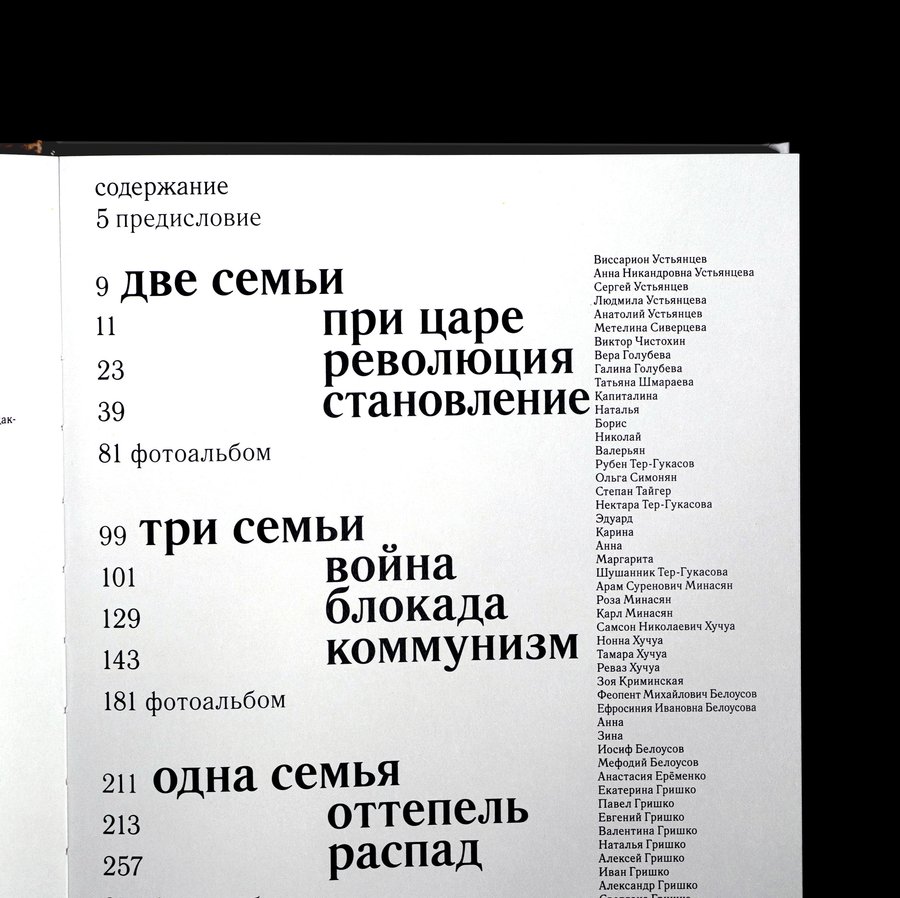
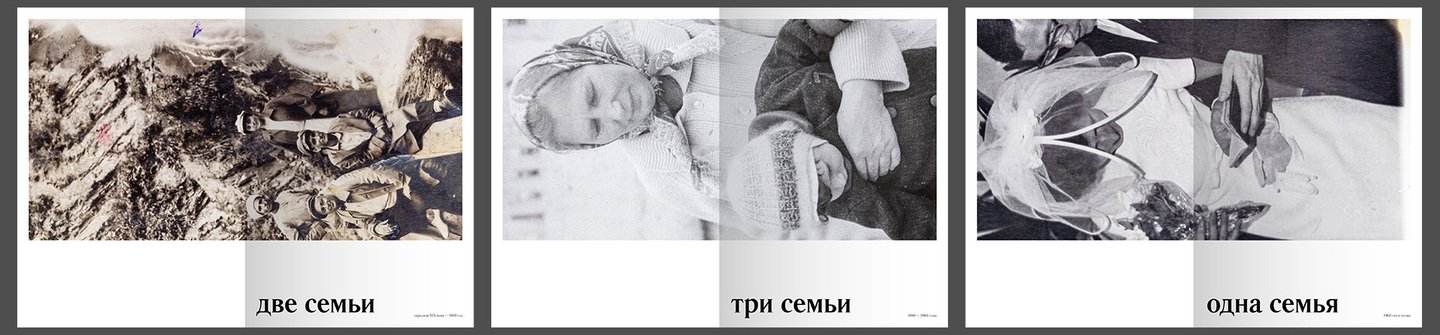
Shmutz-titles and section names relate to family history: two families—a narrative solely from one author’s perspective; three families—text from both sides, but the author practically did not know the father; one family—the history is from after the authors' marriage.
After each chapter, there is a photo album with archival photographs and original documents. Additionally, occasionally within the text, the narrative pauses to feature images.
In addition to the main chapters with original narrative, the book includes an excerpt from the real diary of a woman who survived the Siege of Leningrad—this chapter is presented differently from the others.
The book contains textual footnotes and image captions. Since each column may have its own supplementary information, the four-column layout can easily be adapted (without disrupting the overall grid) into a three-column, six-column, or eight-column format, depending on the situation.
Format: 210×280 mm
Volume: 320 sheets
Block binding: Saddle-stitched
Color: 4/4
Paper: BioTOP, natural white, 120 g/m²
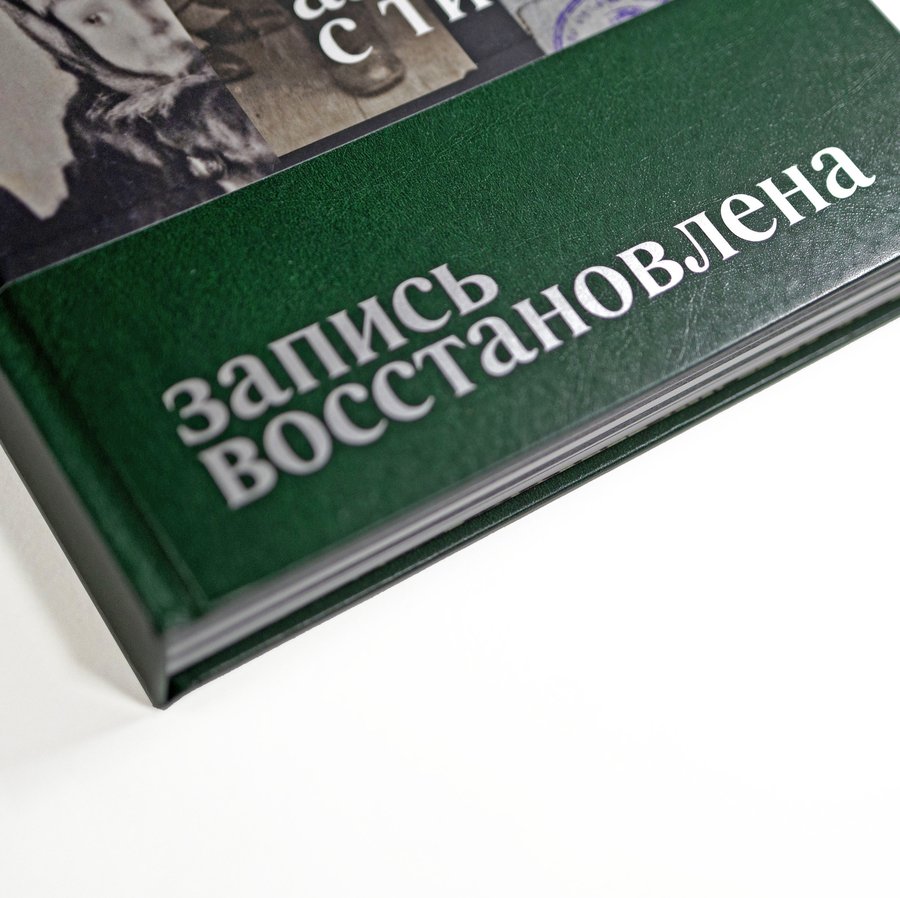
Hardcover No. 7
Combined edition with bumvinyl and silver foil stamping
Font used: Liternaturnaya
Academic Project Lead: Maxim Rodin, S. G. Stroganov State Academy of Arts