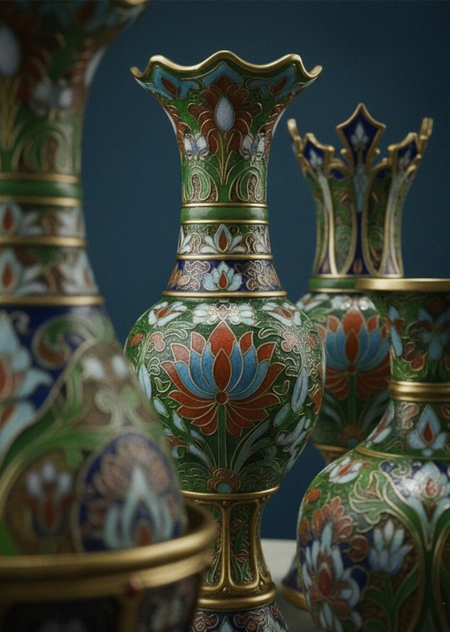
Jingtalan Digital Cloisonné is a series of vases that can be printed on a 3D printer. The vase models are presented in primary forms and styled to the traditional Chinese partitioned enamel.
Concept
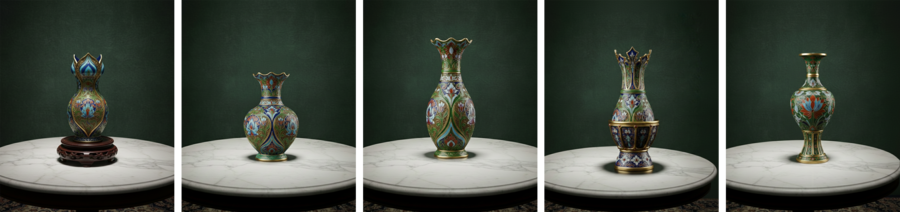
All vase collection
The project is based on Chinese partitioned emalia (Kluasone, or Zintailan). Traditionally, patterns are formed by thin metal wires (cloisones), filled with enamel and burned many times at a temperature of about 800 degrees. The technology flourished in China at the Min Dynasty, and the Jintais (1450–1457) gave it the name Jintailan.
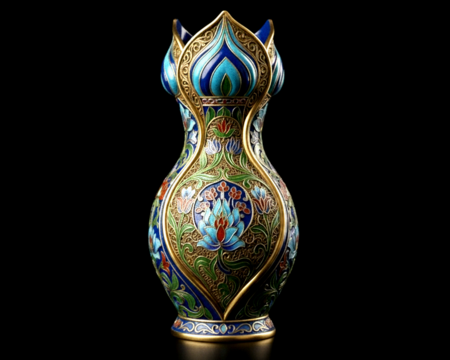
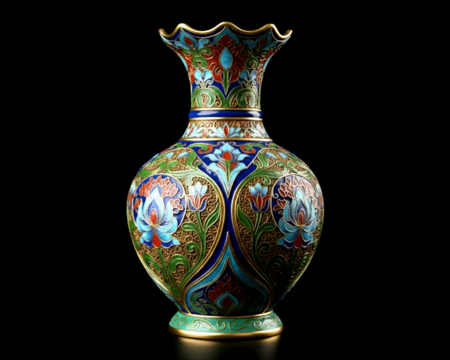
Paints of vases
The vase designs were created in Ideogram and are based on the original vases of the 15th century. Promise: 1. A high-detail, stilized China Cloisonné vase (Jingtailan style). The shupe is a sleder hourglass with a flared, tulip-like clown mouth. The enamel is predominantly deep cobalt blue and turquoise on the upper section. Features inter-triticate gilded wirework form Lotus and cloud motifs. Highly detailed, artistic rendering, dramatic lighting, Rich color saturation. 2. All right, all right, okay, okay, okay, okay, okay, okay, okay, okay, okay, okay, okay, okay, okay, okay, okay, okay, okay, okay, okay, okay, okay, okay, okay, okay, okay, okay, okay, okay, okay, okay, okay, okay, okay, okay, okay, okay, okay, okay, okay, okay, okay, okay, okay. A classic, wide China Cloisonné vase (Jingtilan style) with a bulbus 'Gourd' shupe and ruffled rim. The body’s occupationals naturald green enamel as the primary background colord, Richly decorated with dead red and light blue Peony and Lotus Flowers. Datailed gilded metal wirework. Studio Shot, fine art photographi style, deep shadows. 3. A toll, slender and elegant China Cloisonné vase (Jingtilan style) with a ruffled mouth. The surface is controlled in a uniform vertical note of stilized protections and Lotus floorers in soft green, pink, and light purple enamel. Fine, interdicted gilded wirework (cloisons). Highly policed, high-level re-endering, self-reported view on a duck background. 4. All right, all right, okay, okay, okay, okay, okay, okay, okay, okay, okay, okay, okay, okay, okay, okay, okay, okay, okay, okay, okay, okay, okay, okay, okay, okay, okay, okay, okay, okay, okay, okay, okay, okay, okay, okay, okay, okay, okay, okay, okay, okay, okay, okay. A complex, multi-timed China Cloisonné decorative vessel (Jingtilan style), resembleing an ornate sensor or trepod vase. The lower, bulbus section is dominated by deep cobalt blue enamel and interticate circular geometric patterns. The top section has a Crown-like, flared moth. Richly gilded cloisons, dramatic and opulent, high control lighting. 5. I’m not sure what I’m talking about. A call China Cloisonné vase (Jingtalan style) standing on a pronounced, trumpet-slapped fluted pedestal. The body is large with a centralized, prominent red and blue Lotusflower motif on a subsidiary external green enamel background. Gilded rhymes and base details. Fine art object, Studio Lighting, photorialistic, elegant projects.
Paints of vases
The vase design uses traditional motives:
- Lotos: symbol of purity and rebirth. Pion: symbol of wealth, honour and prosperity. Cloud motives: symbol of luck and heaven.
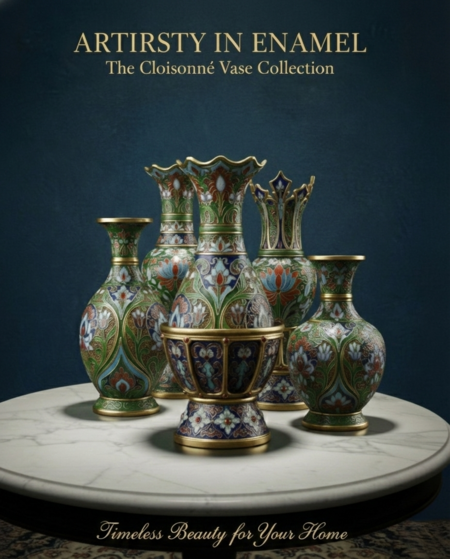
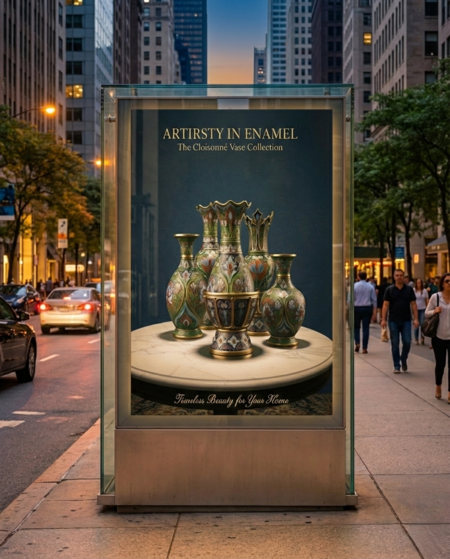
Promo poster
The key challenge in the long run is to move a two-dimensional pattern from wire to a three-dimensional, printed structure. The cloazones shall be realized as vertical walls above the vase surface. The depths are then filled with liquid coloured epoxy resin to simulate the enamel.
Target audience
The main audience is practice and creativity, for which process and innovation are important. The second key group is young collectors who perceive such works as relevant art, rethinking and modernizing traditions. They are united by the desire to express themselves through objects at the intersection of tradition and numbers, where technology becomes a tool for creating a personal culture and a unique atmosphere.
Models and TK for production
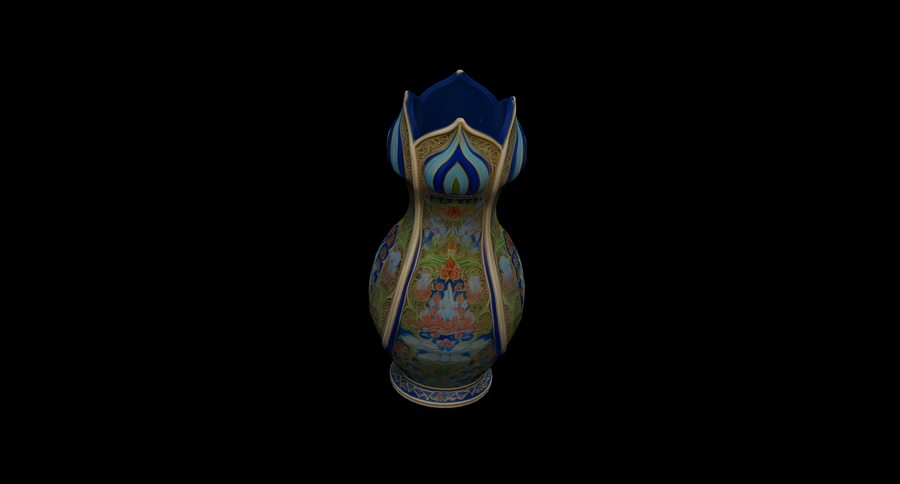
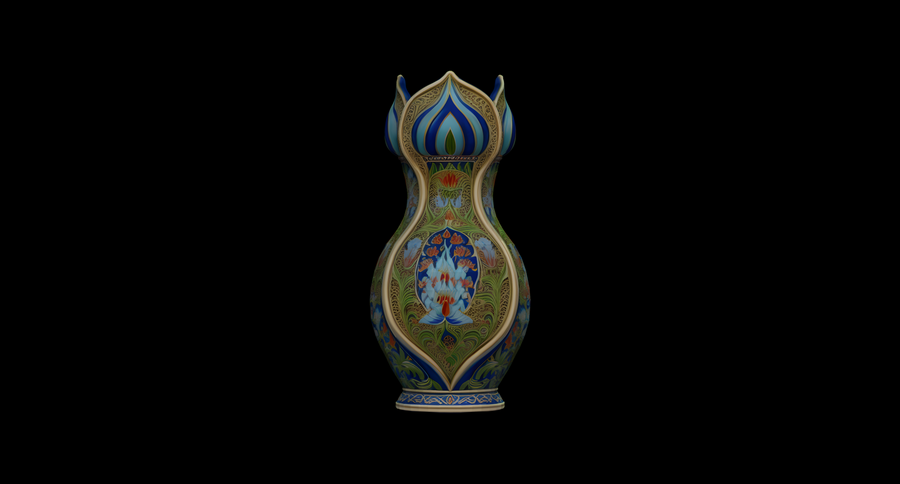
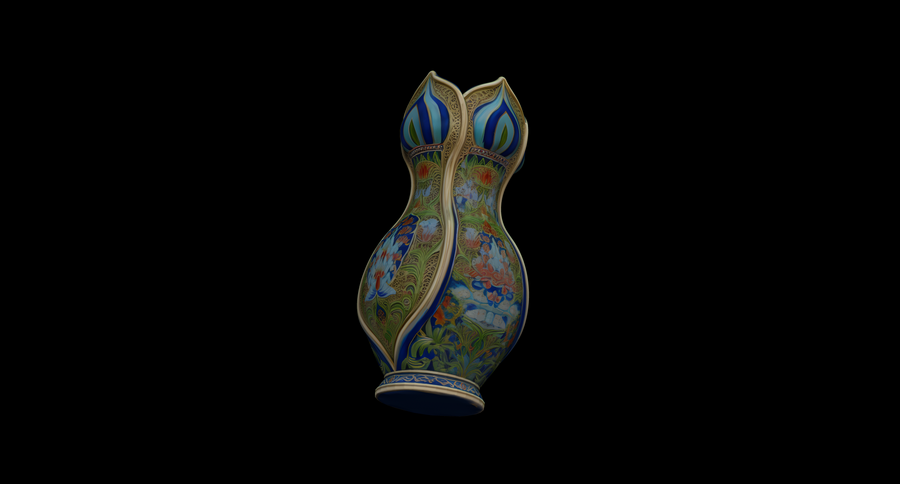
The Regal Tulip vase rendezvous
V-CL-001: The Regal Tulip
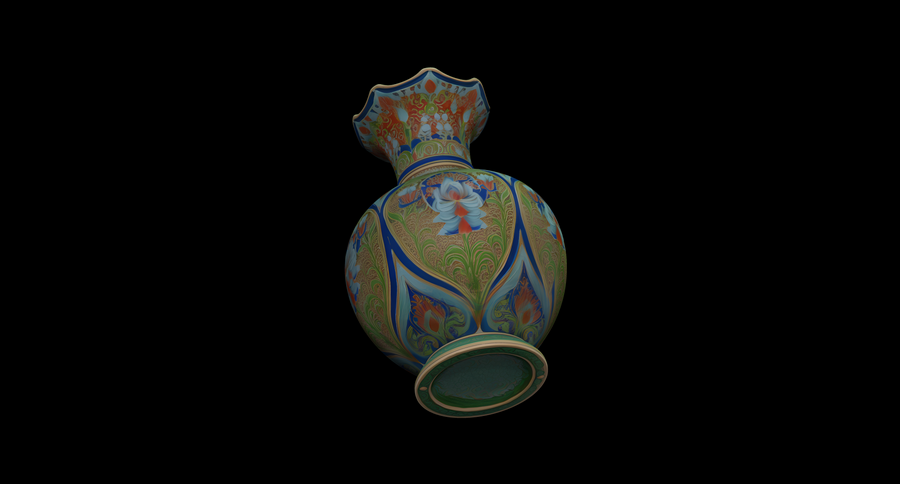
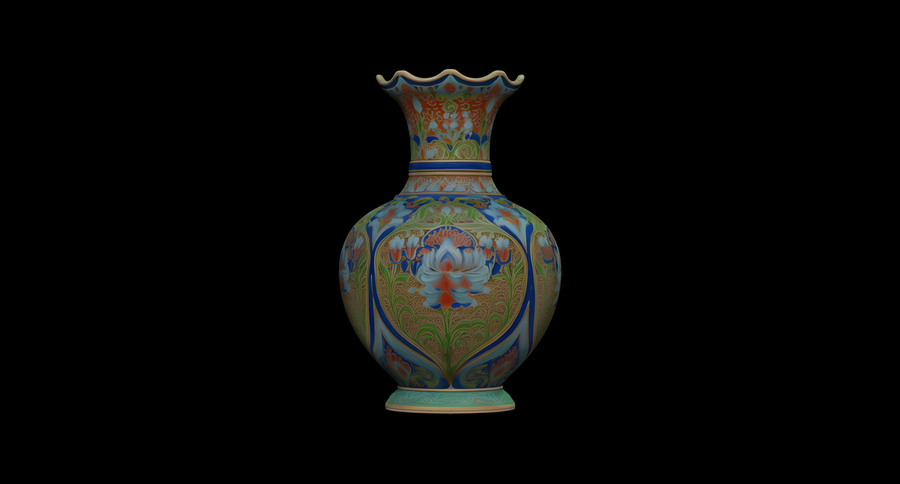
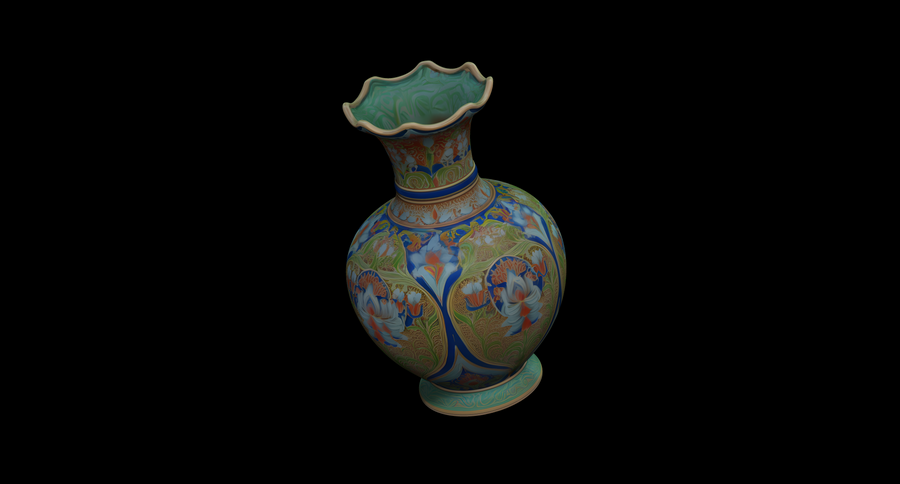
The Classic Gourd vase rendezvous
V-CL-002: The Classic Gourd
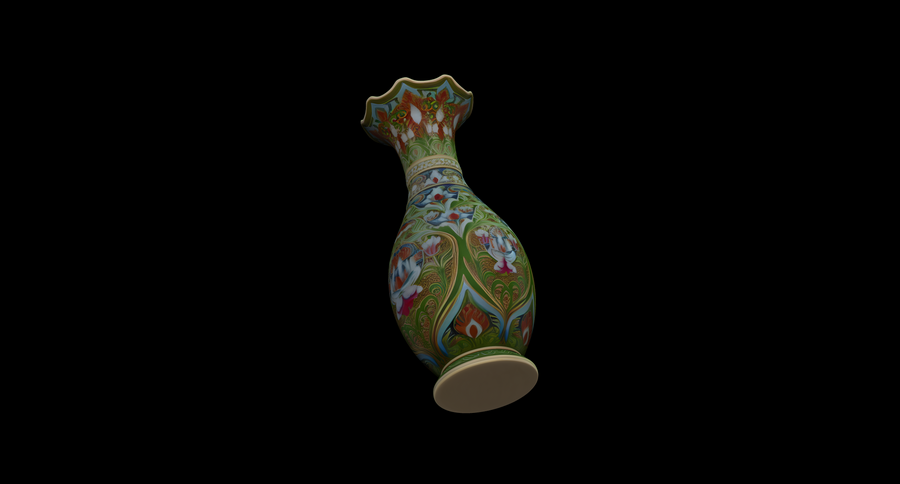
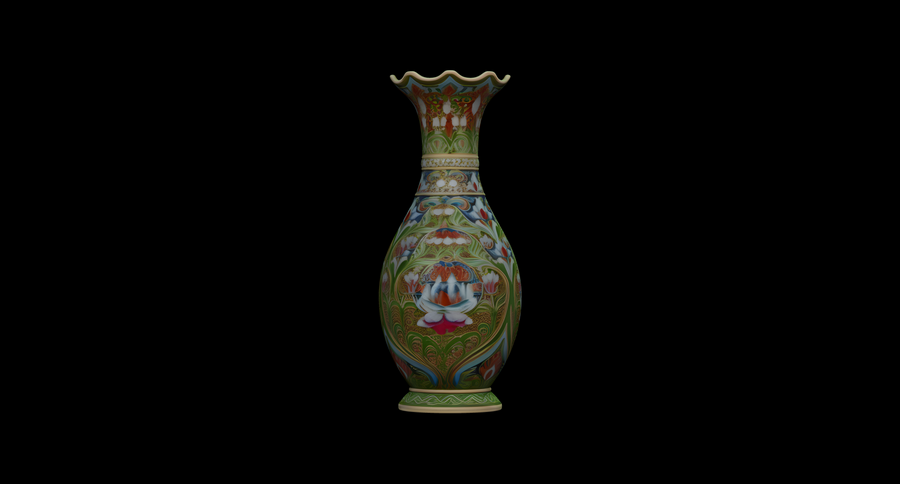
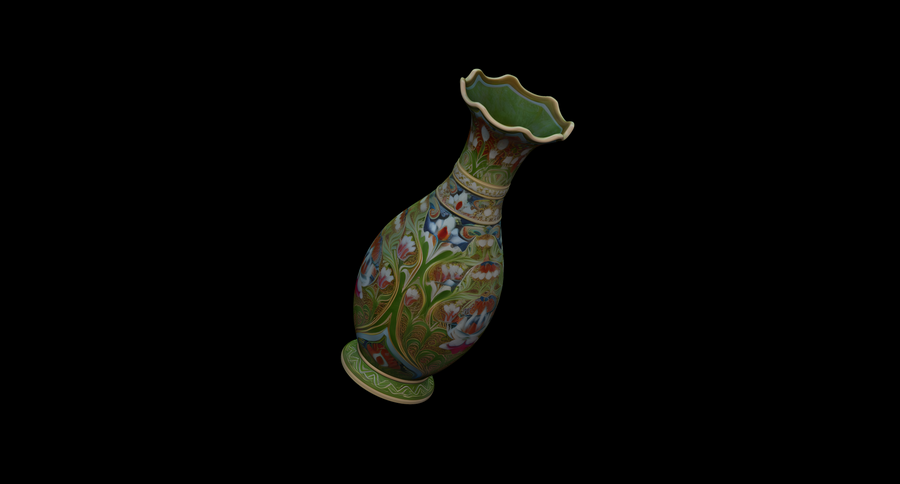
The Slender Elegance vase rendezvous
V-CL-003: The Slender Elegance
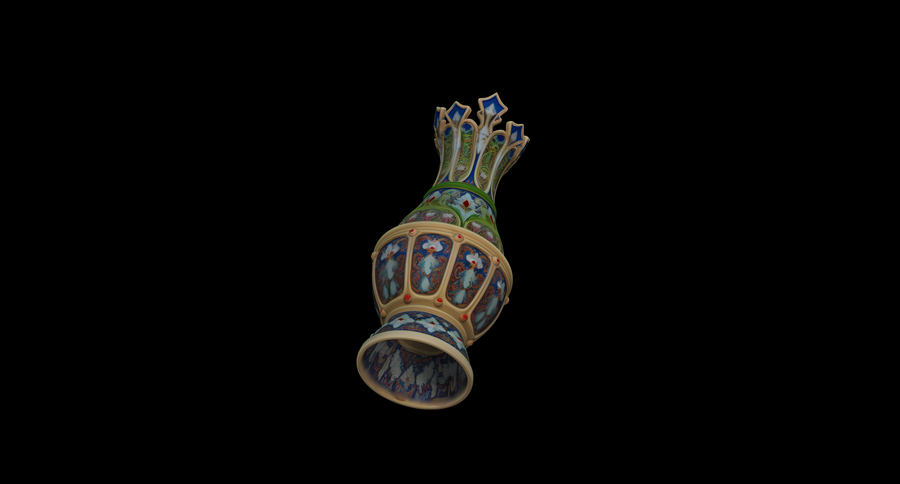
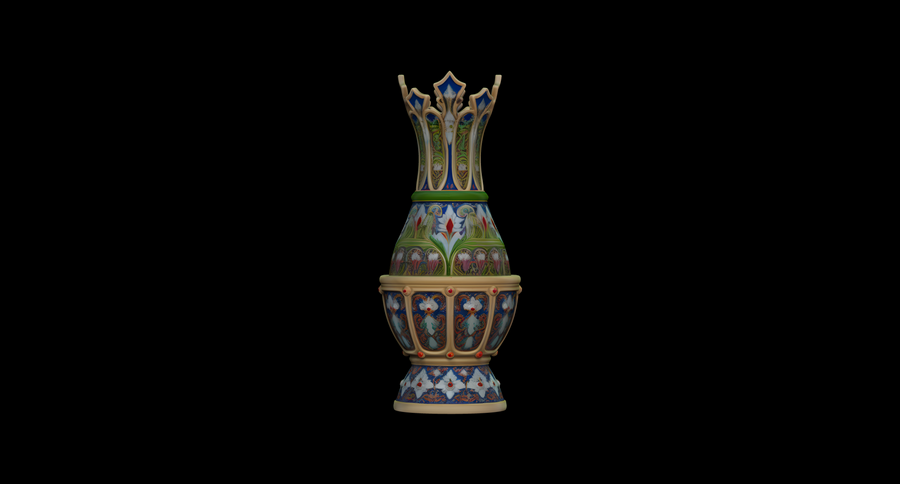
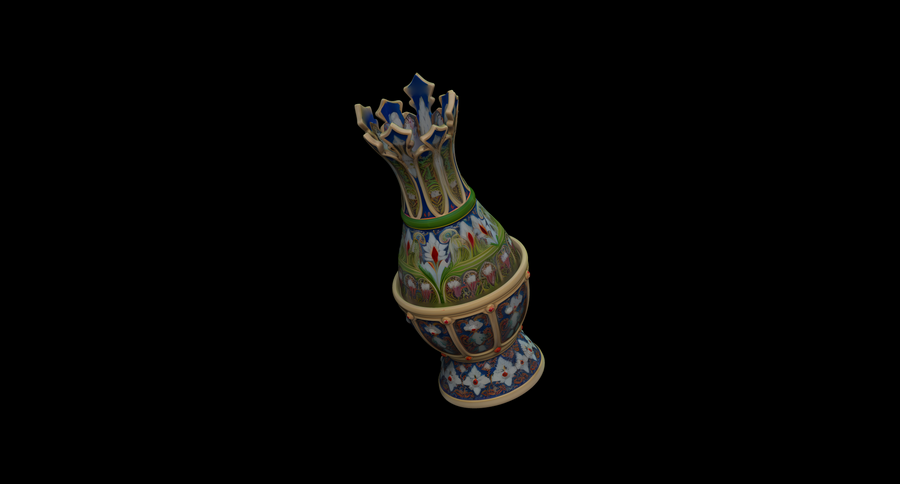
«The Tiered Censer» vase renders
V-CL-004: The Tiered Censer
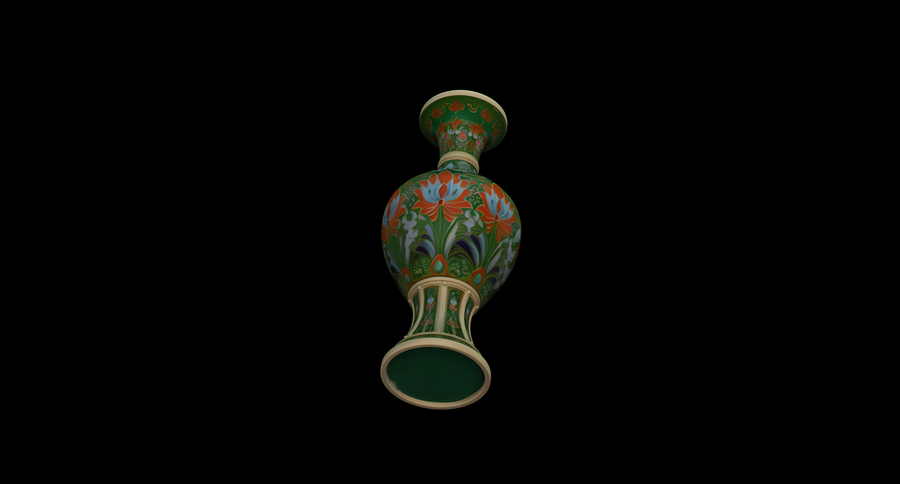
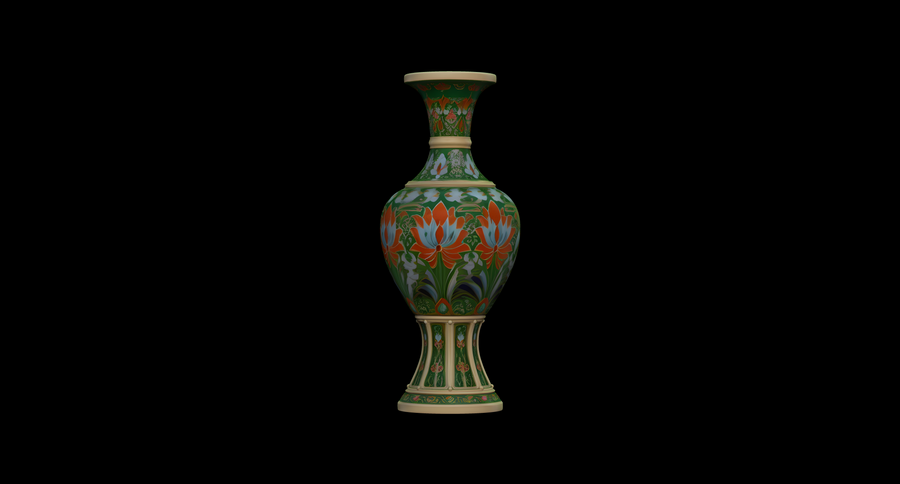
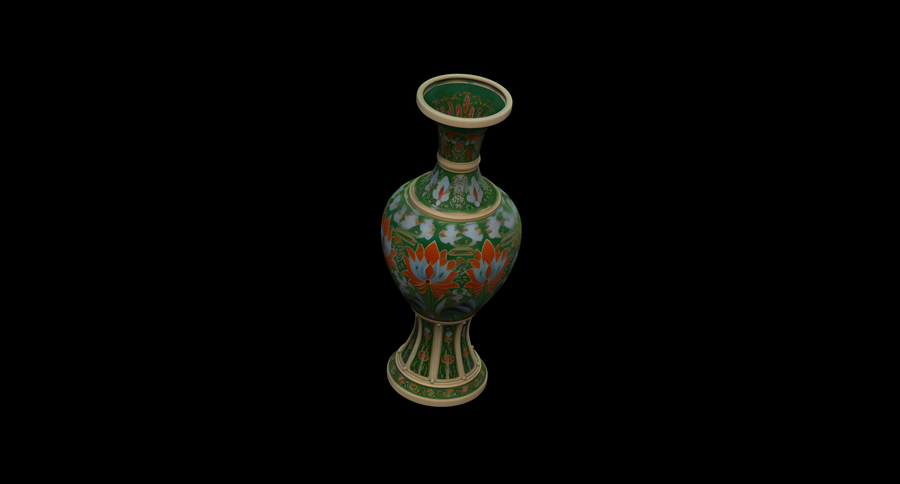
The Trumpet Pedestal vase rendezvous
V-CL-005: The Trumpet Pedestal
The vases are provided in primary forms, without simulating the cloasone, but may be created with the use of the Displacement Maps in Blender.
Detailed description of production
Preparation: It is necessary to create a complex ornament simulating the Ideogram with the use of Displacement Maps in Blender to make depths that are intended for further filling with epoxy resin. Task 1: Additive production 1. Type: SLA (Stereolithography). Selected to play the sculpture silhouette and complex geometry as accurately as possible. Mandatory condition for achieving the highest level of detail. 2. All right, all right, okay, okay, okay, okay, okay, okay, okay, okay, okay, okay, okay, okay, okay, okay, okay, okay, okay, okay, okay, okay, okay, okay, okay, okay, okay, okay, okay, okay, okay, okay, okay, okay, okay, okay, okay, okay, okay, okay, okay, okay, okay, okay, okay. Material Type of raw material: Photopolymer resin (Photopolymer Resin). Type of resin: High-Detail Tough Resin. Compromise choice to ensure that the small elements (petals, vests) are well developed with high strength, which is critical for thin partitions and after-treatment. 3. The dimensions of the product (B x H) are 250×100 mm, depending on the product. Ply thickness: 0.03 — 0.05 mm (30 — 50 microns). It is necessary to create smooth, invisible surfaces for the eye, especially on rounded elements of the bouton and petals. Filling: 100% (full model). It is required to give weight, monolithicity and to prevent possible cracking at temperature loads from epoxy resin. The thickness of the shell is 1.0 — 1.2 mm. The thickness of the partitions / thin elements is at least 0.45 mm. This is a critical minimum for the resin. The thinner elements may prove to be excessively fragile. Chapter 2: Final post-treatment and emalia simulation. 1. Surface preparation: Wet grinding to remove the printing layers and create a smooth surface simulating a polished enamel. 2. All right, all right, okay, okay, okay, okay, okay, okay, okay, okay, okay, okay, okay, okay, okay, okay, okay, okay, okay, okay, okay, okay, okay, okay, okay, okay, okay, okay, okay, okay, okay, okay, okay, okay, okay, okay, okay, okay, okay, okay, okay, okay, okay, okay, okay. Golding: Application of greasy gold or electrical laying on protruding partitions for simulating a golded metal frame. 3. Simulation of emalia: Manual fill of cavities with coloured epoxy resin. The boulder should freeze with the gold partitions, replicating the effect of polished emalia.
Sequence description
Task 1: Conceptual research and technical planning. This stage defined the aesthetics of the project, created designs using a neuronet and imposed critical technical limitations. Tools: Perplexity AI, Ideogram. Action: Study of the aesthetics of Zintailan, technical data collection for 3D seals, creation of vase concepts. Cap 2: Generation of basic 3D geometry. Creation of primary forms of vases corresponding to classical Chinese silhouettes based on derived concepts. Tool: 3DHunyuan Tencent. Action: Generate five unique classic vases in Image-to-3D mode. Cap 3: Validation test. Addictive production suitability test. Instrument: Blender. Actions: Printability test using 3D Print Toolbox: minimum wall thickness control, grid error correction, assembly tolerance verification for multiple models.
Conclusion