
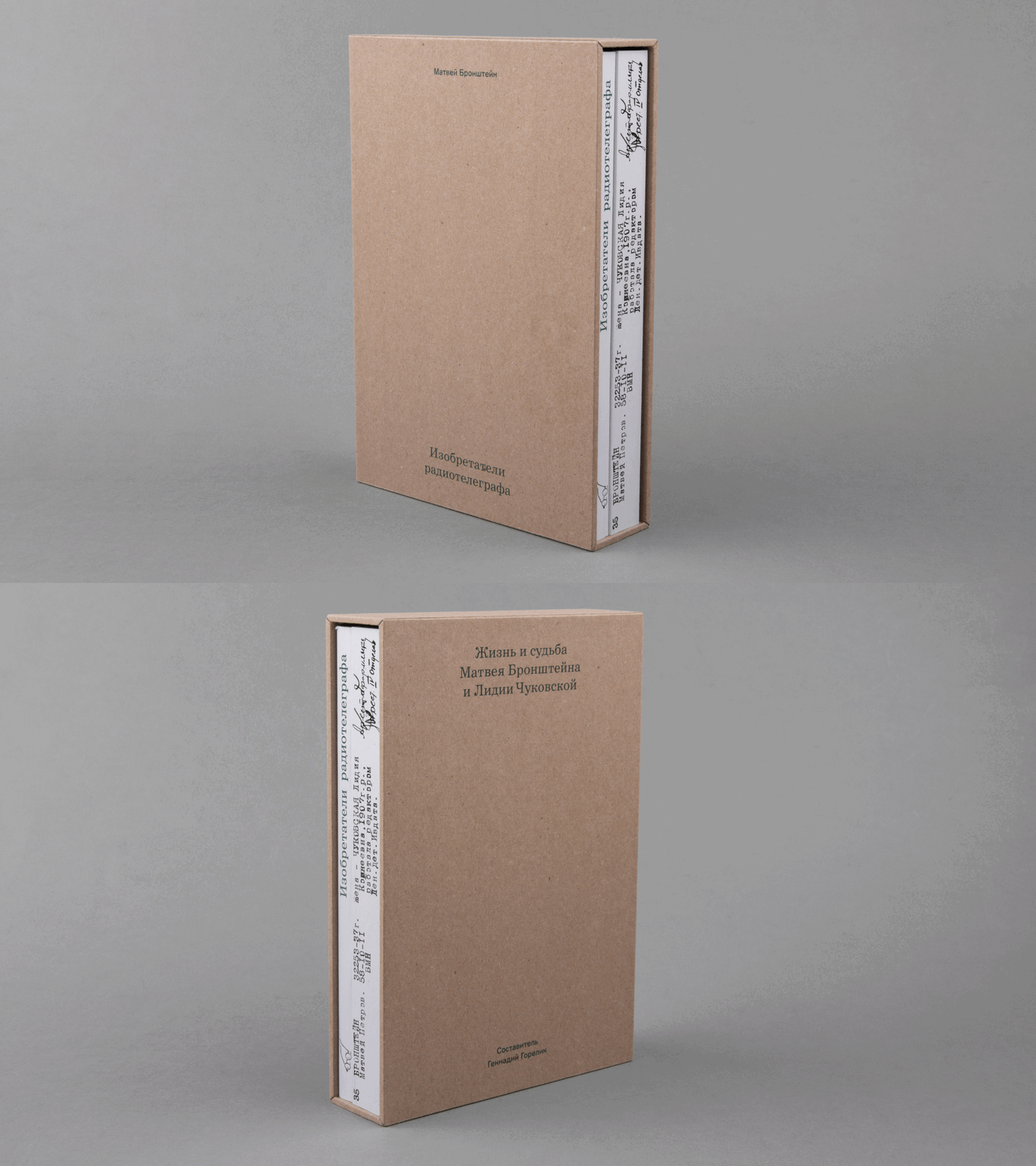
«The Life and Fate of Matvei Bronstein and Lidiya Chukovskaya, ” G. E. Gorelik (2018) and „Invenitors of the Radio Telegraph, ” M. P. Bronstein (1937)
Matvey Bronstein—a Soviet theoretical physicist and author of the popular science stories for children «Solar Matter» and «X-Rays.»

I was preparing the third book, «Inventors of the Radio Telegraph» about Marconi and Popov, for release, but in the spring of 1937, the entire print run was destroyed before it could go on sale. The reason was Bronstein’s refusal to write about Popov as the sole inventor of the radio.
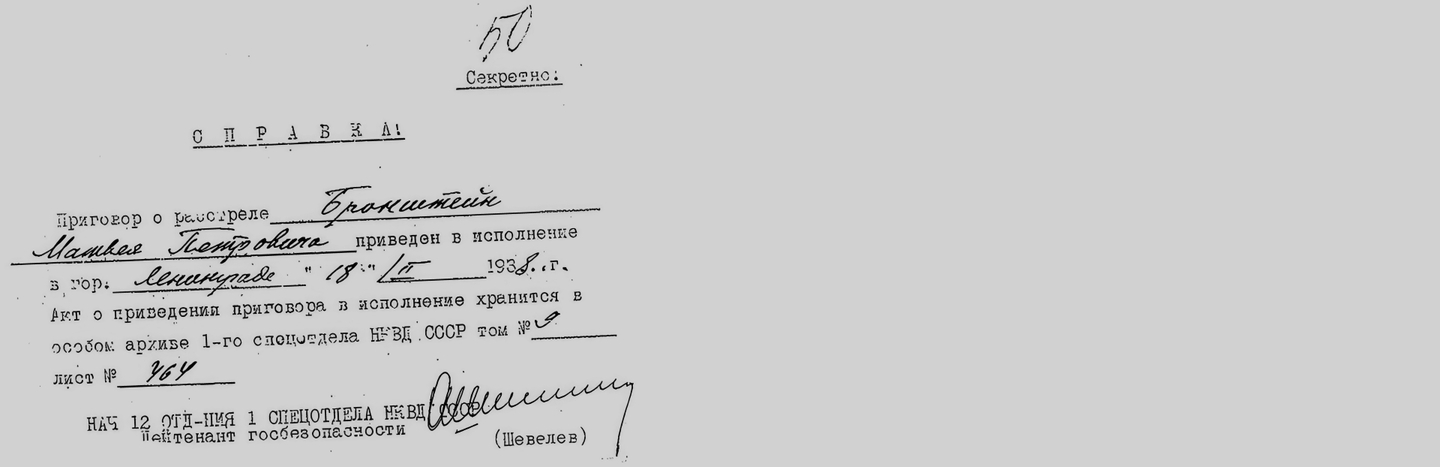
In August of the same year, Matvey was arrested and charged with counterrevolutionary activity. A trial was held on February 18, 1938, which lasted 20 minutes. On the same day, Bronstein was shot.
«The Life and Fate of Matvey Bronstein and Lydia Chukovskaya, ” G. E. Gorelik (2018)
On the cover of the documentary book is a family registry, signed after Bronstein’s death, in which the fates of the relatives of the repressed, including Lydia Chukovskaya, who miraculously avoided arrest, were «planned» in ink.
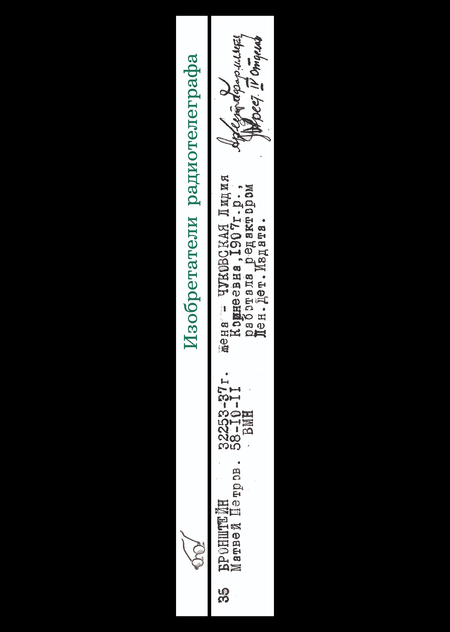
On the spine, the line with the surnames Bronstein and Chukovskaya is exactly what appears—a literal embodiment of life and fate.
«Inventors of the Radiotelegraph» was never published as a standalone book. The project consists of a monograph and that fateful novella.
«Inventors of the Radio Telegraph, ” M. P. Bronstein (1937)
The cover of the novella features two illustrations by Nikolai Lapshin—an electrical spark, which marked the beginning of the invention of radio, and glasses placed in the author’s name slot on the spine.
When combining the two spine designs in the slipcase, the glasses are positioned directly above the surname Bronstein.
«The Life and Fate of Matvey Bronstein and Lydia Chukovskaya”
G.E. Gorelik, 2018
The book opens with the earliest photograph, showing Matvey and his twin brother Isidor, both six years old.
The composition titles mirror the cover art
The book’s main feature is placing the document across the page, which helps separate the transcription from the main text while presenting the document at a size approximating the original.
The scale of the documents was determined based on the size of a standard death certificate form (14×20 cm) and the height of a typewriter character.
Vertically oriented labels also serve as interpretation markers.