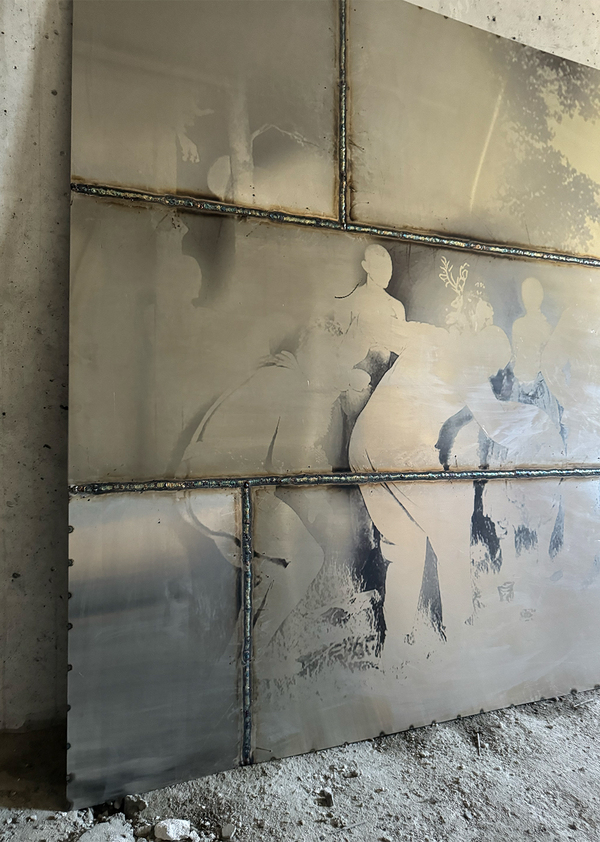
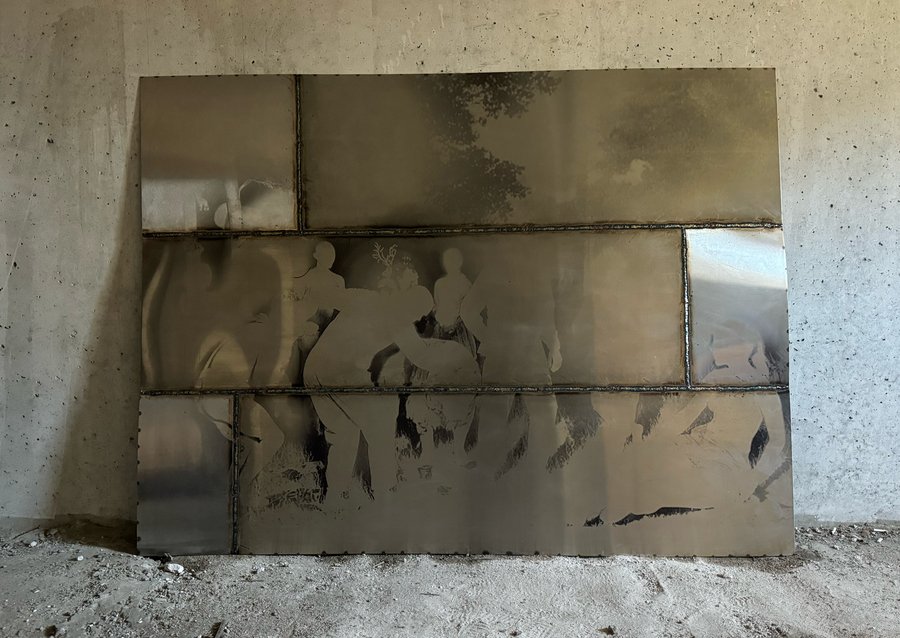
A scene of bacchanalian revelry, transposed onto mirrored steel, addresses the historical archetype of collective ecstasy as a mode of temporary escape from social order.
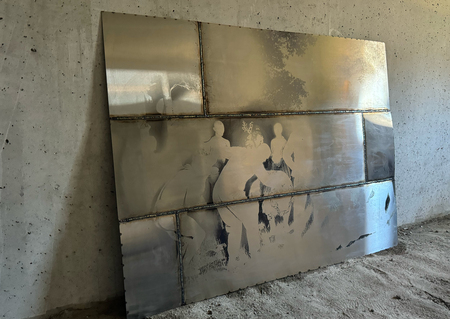
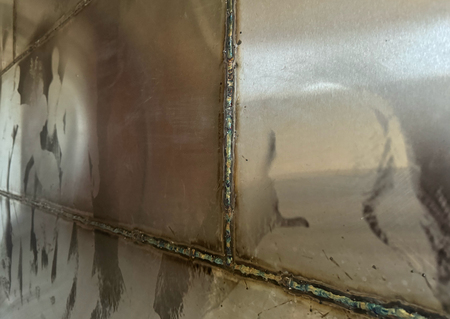
However, the viewer does not occupy a safe, observational position here: the reflective surface incorporates them into the composition, placing them inside the event where their own image mixes with a fragmented depiction—the scene dissolves into fragments, and the welded seams of the metal sheet cleave the visual field.
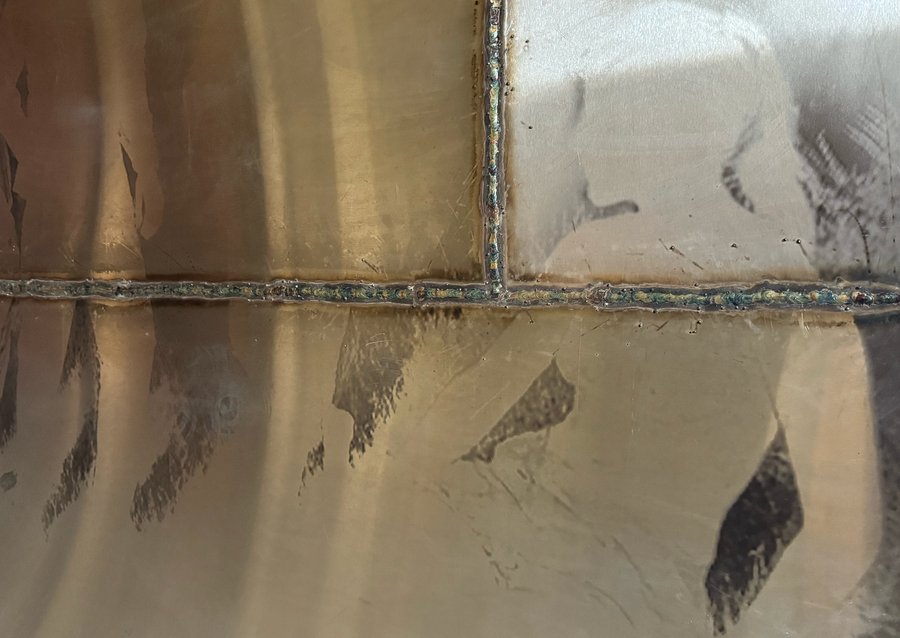
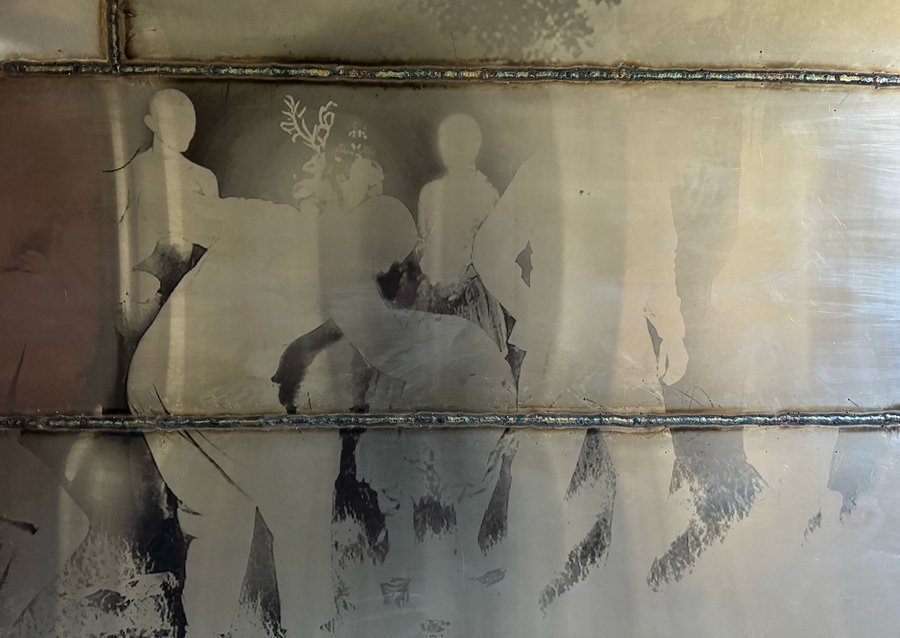
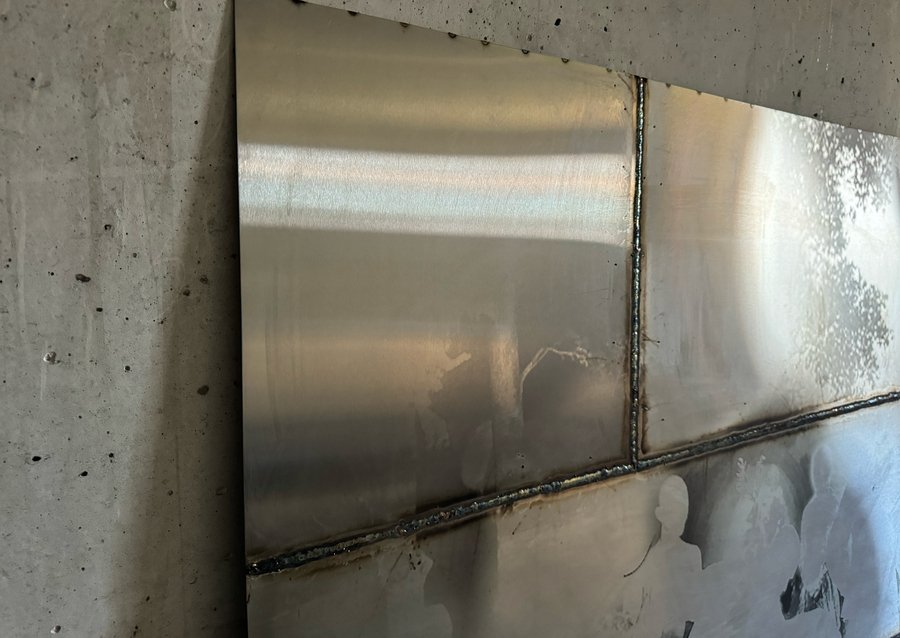
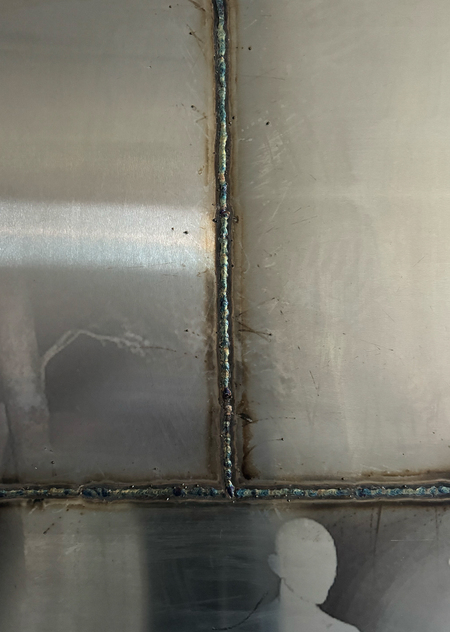
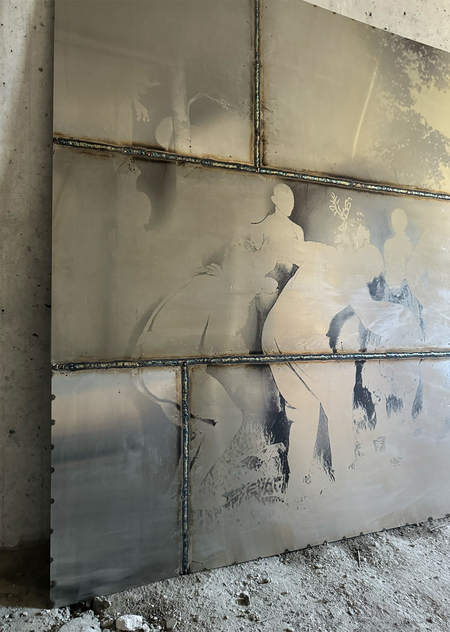
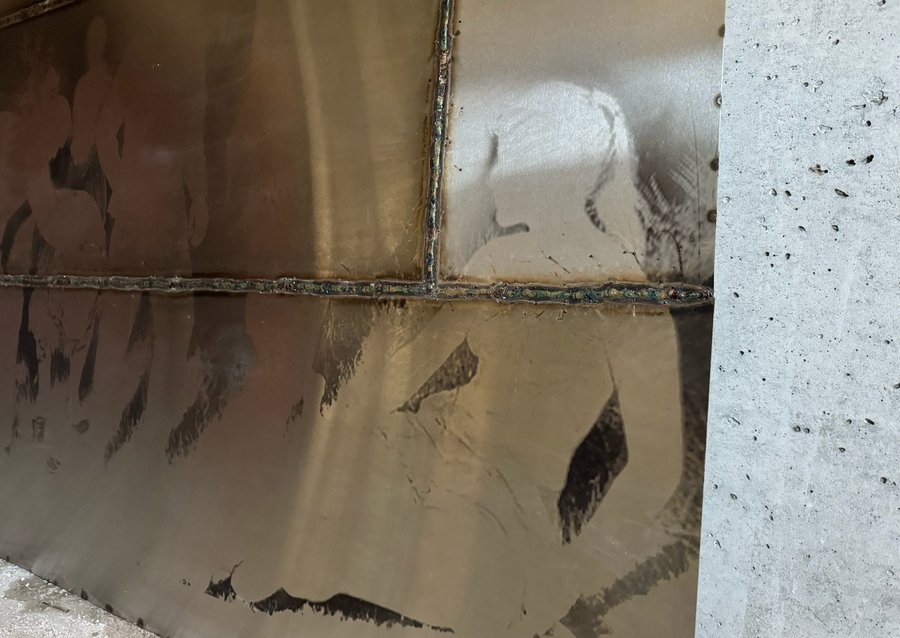
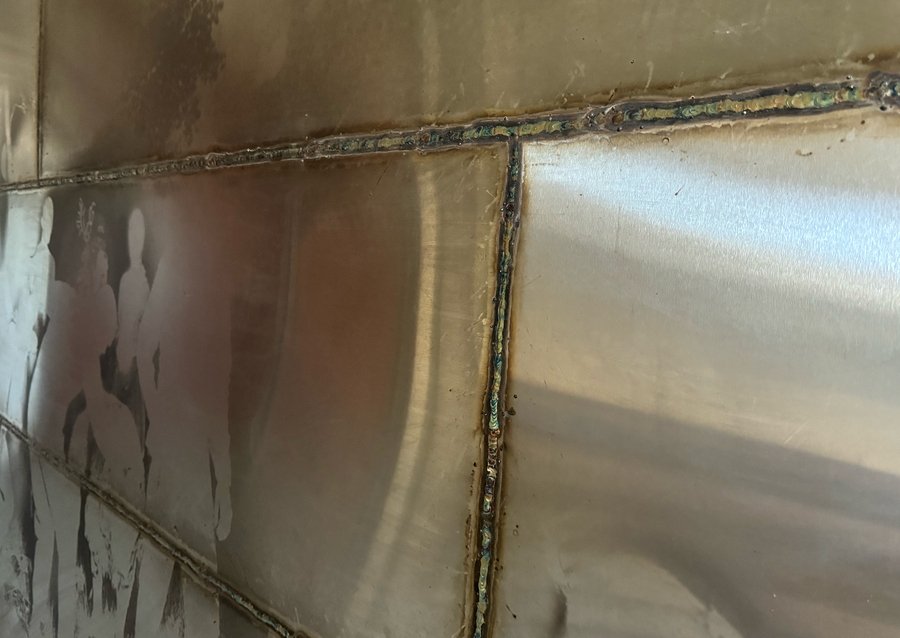
The choice of steel sets a different register: the material of production, infrastructure, and the military craft associated with the theme of collision as one of the fundamental forms of human organization. The subject emerges as a state of extreme vulnerability for a subject who has lost a stable position in the world. The work relates to the sensitivity wherein a person can no longer maintain the role of a central point of perception; instead, they become embedded in an unstable system of reflections, ruptures, and external forces.