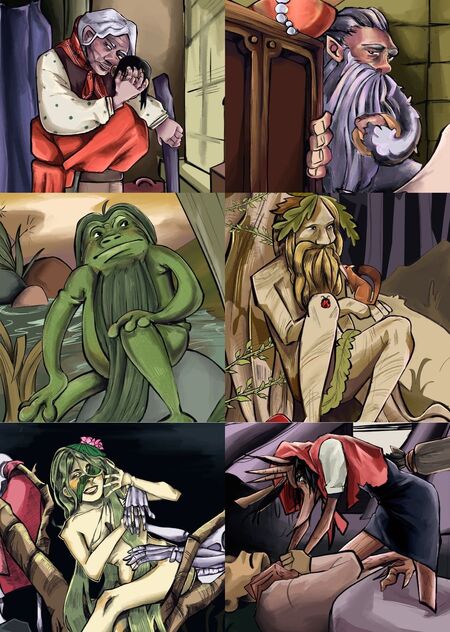
HSE X ITS ILLUSTRATION: SLAVIC MYTHOLOGY
Rusalka
The Water Spirit
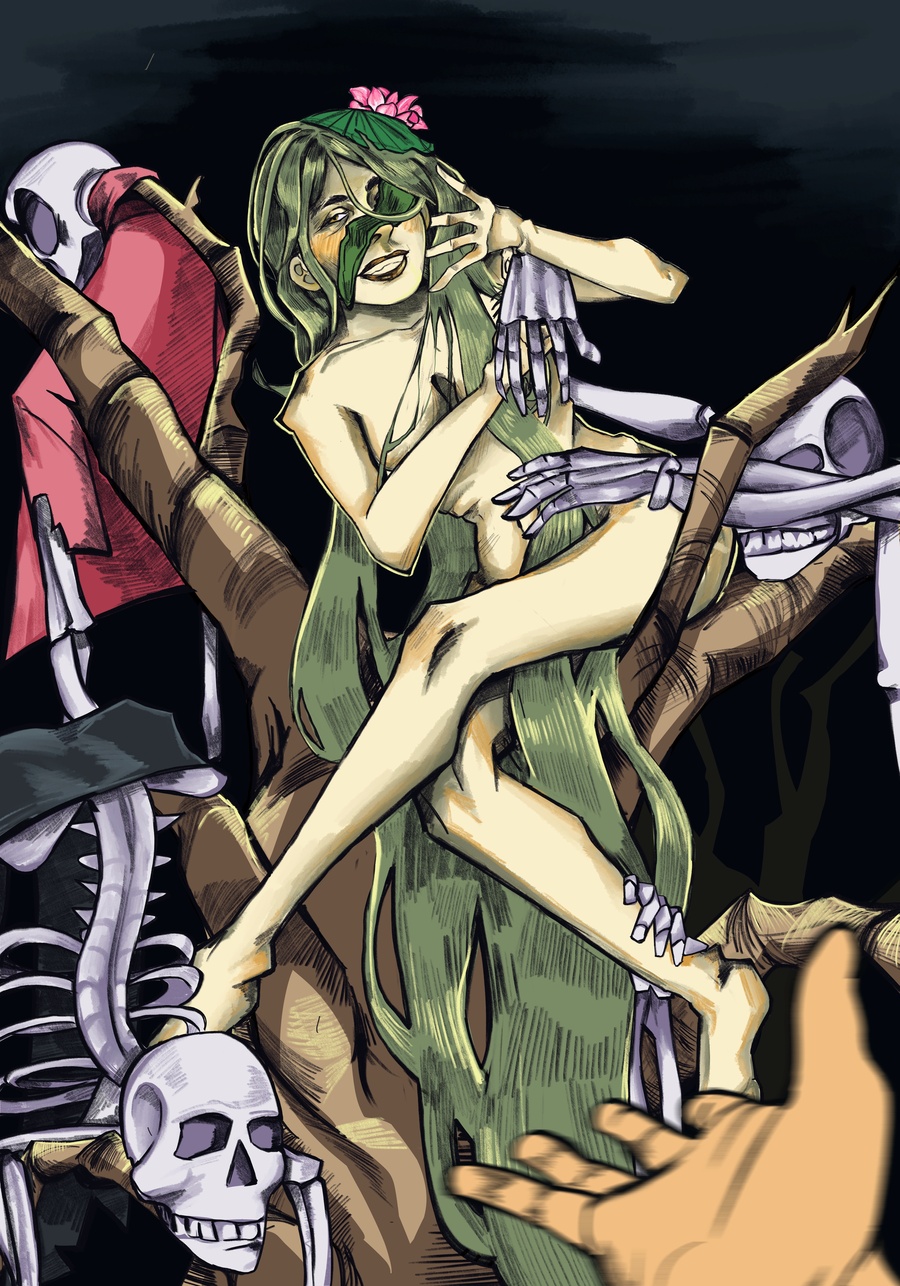
A village girl drowns after being betrayed by her fiancé. In the weeks following, villagers hear a mournful song near the willow by the river. Young men, wandering home late, vanish beneath the waters after answering the song. An elder remembers that the girl received no proper burial. The priest blesses the riverbank, and the community places a simple wooden cross where she died. One night the singing stops, and when a willow leaf drifts into the water, the villagers know she has finally found rest. In many stories, Rusalka appear as beautiful young women with long, often wet hair; in others, they are pale, sometimes green-tinged, with a corpse-like quality. They may wear white dresses or bridal garments and occasionally show plant-like traits.
Leshy
The Shapeshifting Forest Spirit
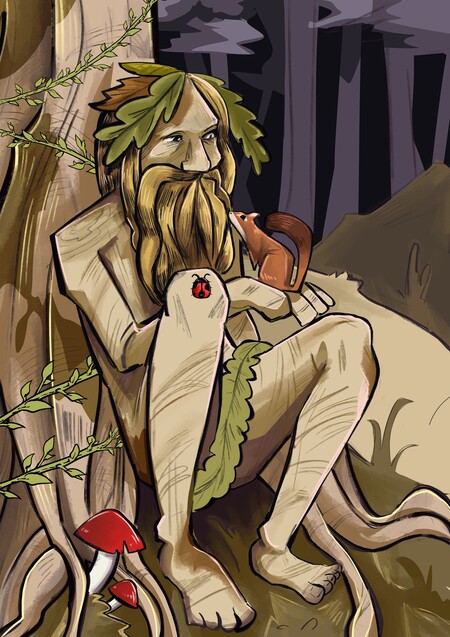
Common imagery portrays him as a tall humanoid, sometimes as tall as trees, other times as a small, old man. He can alter his size at will, appearing either enormous or as minuscule as a blade of grass. He causes disorientation (leading people astray), steals or swaps human children (replacing them with changelings), tangles horses, or conceals hunters' prey. He may erect signs to mislead or challenge those who enter his domain. Leshy myths encode communal rules regarding natural resource management, respect, and humility toward untamed landscapes.
Watery
Guardian of the Depths
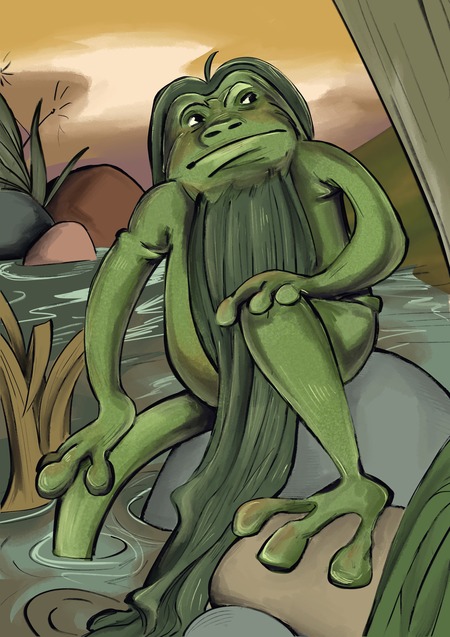
He rules rivers, lakes, ponds, and other standing water, often viewed as a powerful, dangerous, and sometimes capricious guardian of the depths. Descriptions frequently depict him as an old, frog- or toad-like merman with scaly, greenish or bluish skin, a frog-like face, webbed hands and feet, a long beard, and sometimes a fish tail. The vodyanoy is often portrayed as evil and vindictive, delighting in drowning swimmers, capsizing boats, and dragging people or animals into his realm. He functions as a moral punisher; tales caution against greed, disrespect for nature, careless swimming, or violating religious taboos surrounding water.
Kikimora
The Household Spirit
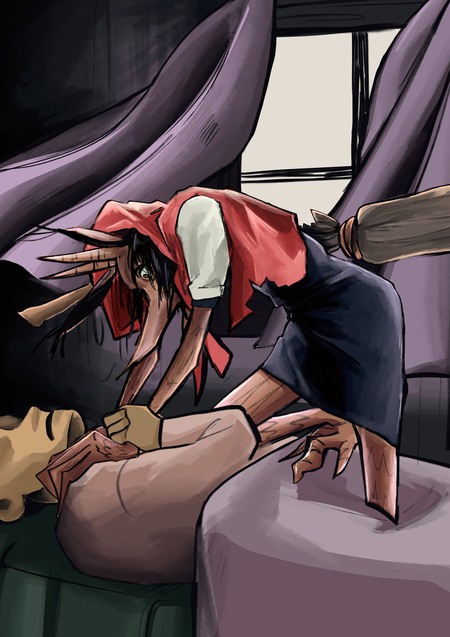
She is typically described as a small, female, often sinister creature that resides inside or near people’s homes—especially in dark corners, behind the stove, under the floor, or near the hearth. She is often associated with bad luck and misfortune; folklore claims she appears when a household is unbalanced, neglected, or filled with cruelty or sorrow. She also serves as a warning: keep the house clean, respect family bonds, honor religious customs, and treat children and servants kindly, or you risk attracting a restless, hostile spirit of the night.
Domovoy
Soul of the House
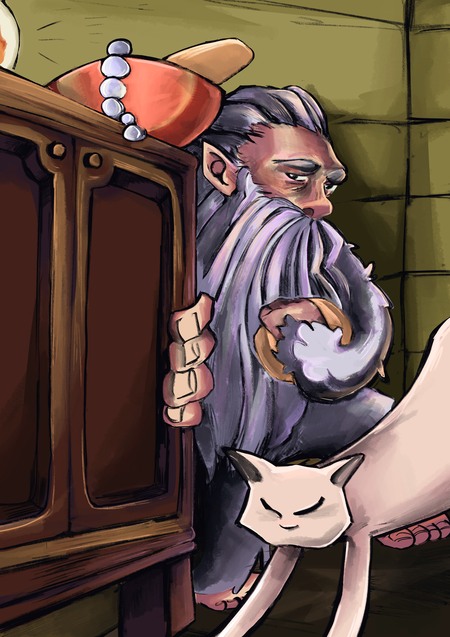
He is described as the guardian of a specific home and its family—living invisibly within the house and overseeing the welfare of the household, livestock, and hearth. He is commonly imagined as a small, elderly man with long white hair and beard, sometimes completely covered in shaggy fur, possessing glowing eyes, and dressed in peasant-style clothing, often squatting near the stove or fireplace. Unlike Kikimora, the domovoy is fundamentally a protector; his primary role is to keep the family safe, prosperous, and in good order, provided the family respects him.
Baba Yaga
Ogress of the Woods
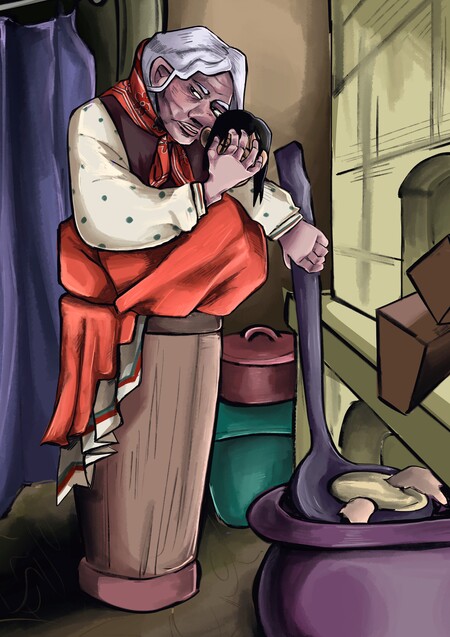
She is often called a terrifying ogress or witch; she eats children, guards dangerous secrets, and tests heroes with cruel tasks. At the same time, she can also be wise, helpful, or even maternal, sometimes giving guidance, magical items, or protection to those who show courage, politeness, or respect. Baba Yaga is usually pictured as a very old, thin, bony-legged woman with a hooked nose, wild hair, and tattered clothes. In many illustrations, she rides in a giant mortar, propelling herself with a pestle and steering with a broom.