Экранный образ как символическая форма
Эрнст Кассирер и вызовы новых медиа
The purpose of this report is to show the relationship between the philosophy of symbolic forms of Ernst Kassirer, the sevenotics and the theory of media, and to highlight those aspects of the neo-Ocantian teaching that are most relevant to the study of the aesthetic possibilities of the key symbolic form of modern-day images.
Roland Bart, Michelle Fuco, Marshall McLuhan, Jean-Louis Bodri and other philosophers who reflect on the role of language, the power of knowledge and the «sight points» of different media often quote the work of Cassirere, although their ideas have a direct bearing on his thinking of the forms we then create, and in this article we will briefly reproduce the key messages of the Cassirer and show how they have evolved in terms of the theoretical understanding of the screen image. In our analysis, we will focus mainly on cinema, but at the right time we will also attract material from other forms of moving image (TV, video art, etc.).
I. Form acquired by the spirit ' s inner life
As early as the 1920s, during the flourishing period of his creative and pedagogical activities, the Cassier looked like a «pretty soulful idealist» whose thinking seemed to be cut off from the modern world. It’s like his theories don’t have a «crazyness to the real» that Budew’s gonna talk about later as the main active spring of the 20th century philosophy. This was particularly evident after Cassirera’s public discussion with Martin Heidegger.
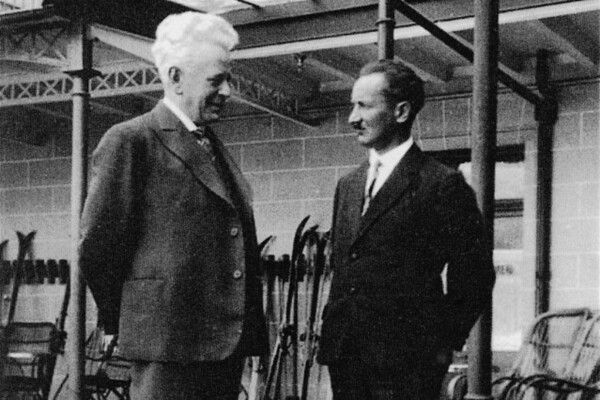
Cassirer and Heidegger (Davos) debates, spring 1929.
The 1929 Davos debate, formally devoted to the Quantian issue of the human being, was a point of intersection between the lines of structuralism and phenomenal science, the contraction of «professor» and «buntar». The outcome of this dispute was hardly encouraging to the audience because philosophers clearly spoke different languages and as if they could not hear each other. Hydegger’s speech was more passionate and aggressive, and it seemed like he had won. However, as shown by the subsequent evolution of his own ideas and the direction of the philosophers who were influenced by the Cassire’s way of thinking, it is not easy to identify the winner of this dispute.
«In any case, the young student guard’s discussion seemed exciting enough to present it in satirical form on the final evening of the Davos forum. Emmanuel Levinas, with a white ash on his head, played the role of Cassirer. For the sake of theatrics, in order to make fun of the dimness of Kassir’s idealistic educational views, during the performance, he kept pouring ash out of his pockets and stuttering and exclaiming, „Humboldt, education! Education, Humboldt!“ (If there are things in the world that a man is ashamed of all his life, it was certainly the case for a French philosopher)» (Aylenberger, 2021, 343).
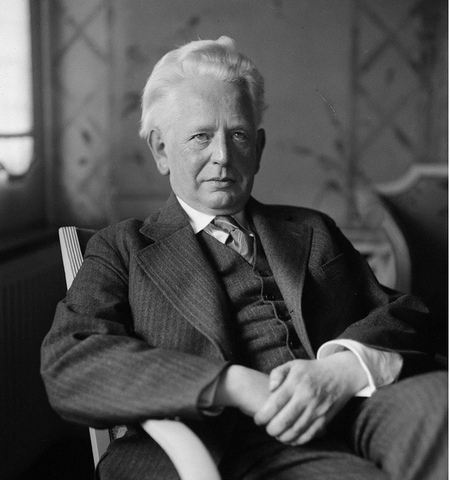
Ernst Kassierr was born in Breslau (now Vroclav, Poland), studying law, literature and philosophy in Berlin, Leipzig, and Marburg, where he became a student of the Neocant German Cohen. In 1899 he received a Ph.D. in his thesis on Decart’s analysis of mathematical and scientific knowledge, but Cassirer was equally interested in precise and humanities. He then worked as a private professor at the University of Berlin, where in 1906–1919 he developed the basic ideas of neo-canitancy in relation to the theory of knowledge and philosophy of science. In 1919–1933 he was a professor of philosophy, and in 1930–1933 he was president of the University of Hamburg; he was also head of the Varburg Institute, where research on the history of culture was conducted. After Hitler came to power, he emigrated to England, where he continued his research and teaching work. In 1923–1929, after consolidating his studies with the history of culture and science, he published the three-volume «Philosophie der symbolischen Formen» (Philosophie der symbolischen Formen).
Like his travel star, Immaniul Kant, the Cassiler worked purposefully and methodically, based on the fundamental idea that science and culture can bring a person closer to dealing with unsolvable issues of existence.
Kant’s revolutionary discovery was to shift the focus from the knowledge of the world (which cannot be fully understood) to the analysis of the characteristics of the human mind and its boundaries. These boundaries are defined by a priori categories, beyond which, frankly, we cannot think: time, space, and causality. It is therefore necessary, through philosophy, to describe these «conditions of the world’s opportunity» for human beings. In short, the Cashier added that a person also cannot think outside his tongue. And languages, as Wilhelm von Humboldt has shown, differ not only at the level of grammar and the sound of words, but also as ways of making peace. The next logical step is to go beyond natural languages and to look at other ways in which we give the world a logical, consistent and symbolic intermediate structure. There’s a feeling, maybe, and we’ll come back to that question later.
For the twentieth century, the issue of language was one of the keys, which was addressed by the main thinkers of the early century and by those who would then continue their thinking. «If, at this (and at any other stage) stage of development, Wittgenstein, Hydegger, Benjamin and Cassire agree in any way, it is that the form of life of a person is the form of his speech.» [Aylenberger, 2021, 120].
For Ernst Kassir, language is not so much a problem or a barrier (as for Wittgenstein) as a tool for human formation. By means of symbols, knowledge and experience, they are first encoded and then passed on and «packed» at the internal level, learning. The cashier formulates a new name for a person who is a producer and at the same time a derivative of culture — an anial symbolicum. And the task of philosophy then becomes research, streamlining, and perhaps correcting the symbols created in the field of culture. It is understandable why Levinas, when he was pouring the ashes out of his pocket, said: «Humboldt! Education!» is the basic message of the philosophy of education and understanding of education as Australianung/formation. The voice of rationalism is clearly heard here. But in Kassirer’s philosophy, it also sounds like a leitmotif of romance, because he, like Kant, believes that there is an indissoluble connection between our perceptions of peace and peace, a mystical connection that makes knowledge and transcendence possible. And the symbol can become a «portal» that takes a person out of a space of chaotic impressions and practical thinking to grasp absolute.
The Cashier showed that the language is at the center of spiritual life, where various forms of experience come together and make sense. [Cassiler, 2021, T.2, 204] The key question is how this happens and what is the difference between the existing forms of language, how they determine the fate of their hosts.
The Cashier identified the following categories of symbolic forms: natural language, myth and religion, science, art. These are different and inseparable ways of presenting our understanding of the world, ways of thinking about it. Each of these forms «is not just a sum or extract from individual phenomena in a given area, but a law that causes them to be built» [Cassire, 2021, T.1, 18].
II. Report of the Secretary-General on the situation of human rights in the Democratic People ' s Republic of Korea Art and its Future
While Kant spoke of art in a rather abstract sense, without going into the details of a particular historical and cultural process, Cassire, on the other hand, paid much attention to the invoice of the material he was working with. His vision of art was influenced by the work of his friend, Abi Varburg, who, in his library project and in the Atlas of Menemozina, sought to identify the structures of recurring, «brotherly» stories and images that took various forms in the course of the evolution of artistic styles. It was important for him to show what was under the visual fabric of the works and what defined them as «forms of the paphos».
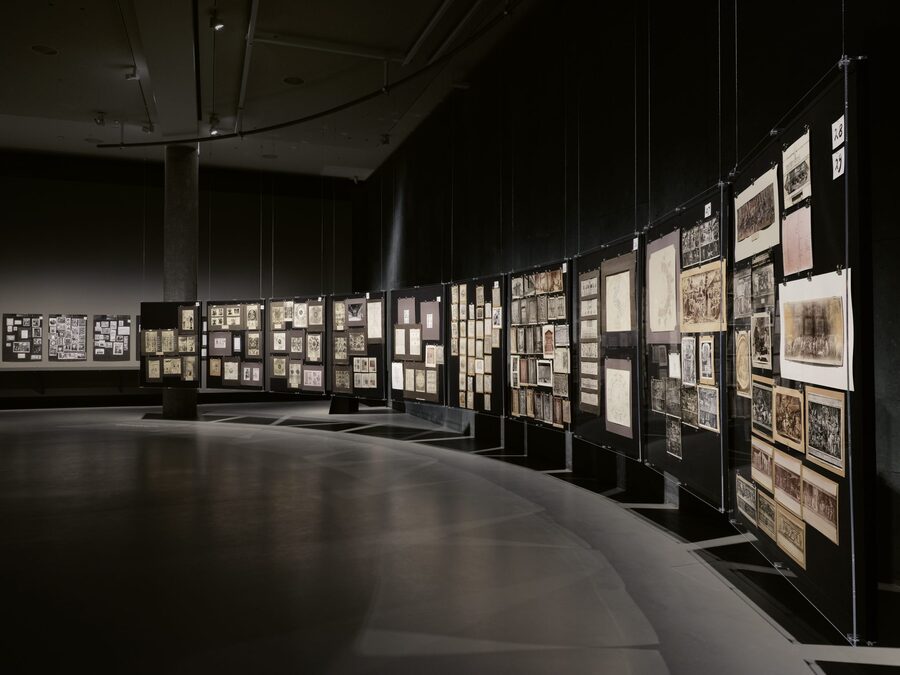
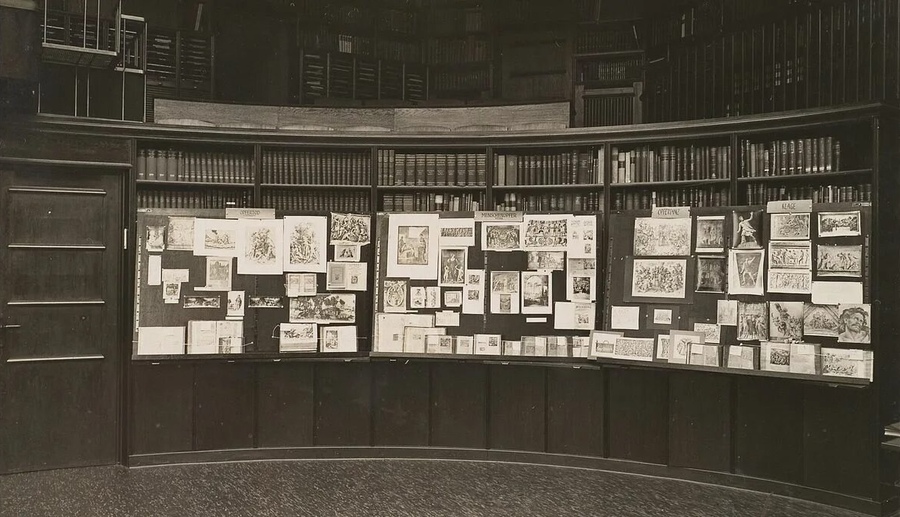
The Menemozina Atlas in the Aby Warburg Library and at the modern exhibition
Paphos forms are archetype gestures, positions and composite schemes that express strong emotions (fear, grief, ecstasy) as well as universal perceptions (e.g. about man as a microcosm). Warburg’s approach to learning art history will lead to the emergence of Ervin Panofsky’s iconology, Max Dvorjak’s «history of art as a story of the spirit», Umberto Echo’s sevenotic works, and Andre Malro’s concept of an imaginary museum. This approach has helped the Cashier to broaden the horizon of his theoretical constructions.
Abi Waburg focused on stories and visual metaphors, while Cassireur spoke about the design of the language of art, the basic structures that define the form and the content of specific works. «The Philosophical study may avoid being limited if it can find a view that is nad in all forms, but also outside them: such a view would allow for one view to cover all forms as a whole, but would identify the inherent relationship between them rather than the relationship with some external „transcendent“ existence or principle. Then there would be a philosophical system of spirit in which each individual form would have meaning solely because of its place in this system , and its content and meaning was characterized by the wealth and diversity of relations and relationships with other spiritual energies and, finally, as a whole with them.» [Cassier, 2021, T.1, 19]. If, in this concept, we replace the idealistic spirit with a more pragmatic notion of communication, we will have a zerotic.
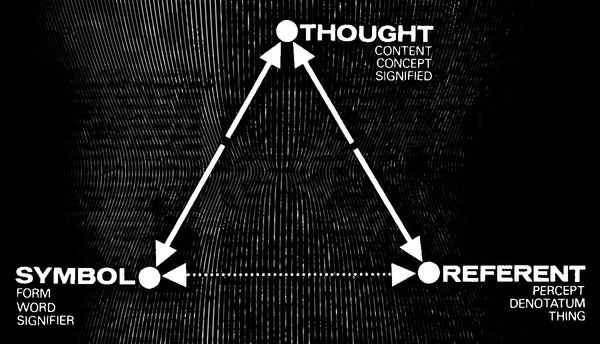
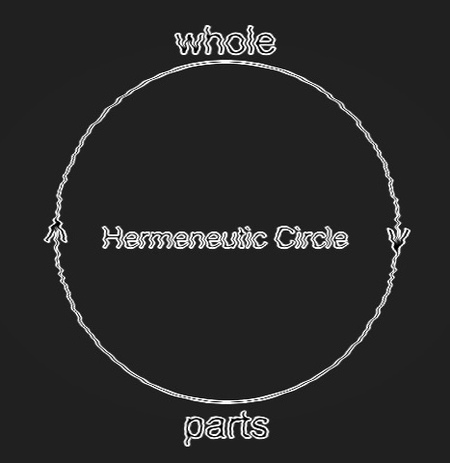
A semantic triangle with three vertices of meaning, meaning and reference. Hermeneutic circle
Semiologists study language as a structured sign system (Sussur) and as a sign exchange process (Pierce). In an effort to learn more about the design of thought, communication and key sociocultural phenomena, the chemist tries to present them in the form of specific codes and thus asks specific practical questions: What kind of links can be between the sign and its reference person (Pierce)? How does the sign differ from the symbol (Losev)? What role does the author and reader (Bart) play in the text? How do open and closed text systems work (Eko)? What are the opportunities offered by intertextuality (Cristeva)? And so on.
The media theory is also based on the concept of the Cassirere, but develops a thought in a different direction than the sevenotic, because the focus here is not on algorithms and structures, but on the technical characteristics of the different means of communication and the conditions they set for the perception of the spectator/reader/the listener. In its aphorism, «mediam is the message», Marshall McLean states that the means of communicating a message is not merely a matter of meaning, but also a condition of its emergence. Factories play a major role in communication. The thought expressed in the language exists according to the laws of the language, which simplify it, restrict it, scheme it, so it becomes a «liar» (so the Tutchev theory is seen in the optics of the mediatheory).
Marshall McLean, one of the biggest media theorists of the twentieth century.
Media as a material medium wants to be «transparent,» but that’s not possible, because its internal organization and external form affect what it can and cannot be said. McLuhan calls the media «external human expansions,» rightly noting that each of them has its own direction. They make accessible to the human being what was previously impossible, but they also change the human being. For example, when an oral word was replaced by a letter, it became an «expanding» of memory, increasing its capacity almost indefinitely. But there has also been a change in the way people communicate, and the fabric of society has been globally transformed. [Maluvan, 2023] A similar tectonic shift was the emergence of new media, the first of which was a moving image.
III. INTRODUCTION Meeting of the umbrella and sewing machine on the assembly table
What is the screen image? A moving photographic image, a greasy mixture of memesis and suggestia, under which the viewer experiences something similar to a dream.
Ingmar Bergman film «Person», 1966
Mimeticity Films and television will inherit from the photograph with which they are technically and conceptually connected. By the label definition of André Basen, screen art has the quality of «ontological realism» because it is, like a photograph, an index mark, a print of light reflected from the actual objects that have been seen by the lens [Bazen, 1972]. The photograph also seems to us to be a means of «impartial» recording reality, but when the image becomes moving and then sounding and colouring, it already claims to completely replace direct visual experience.