
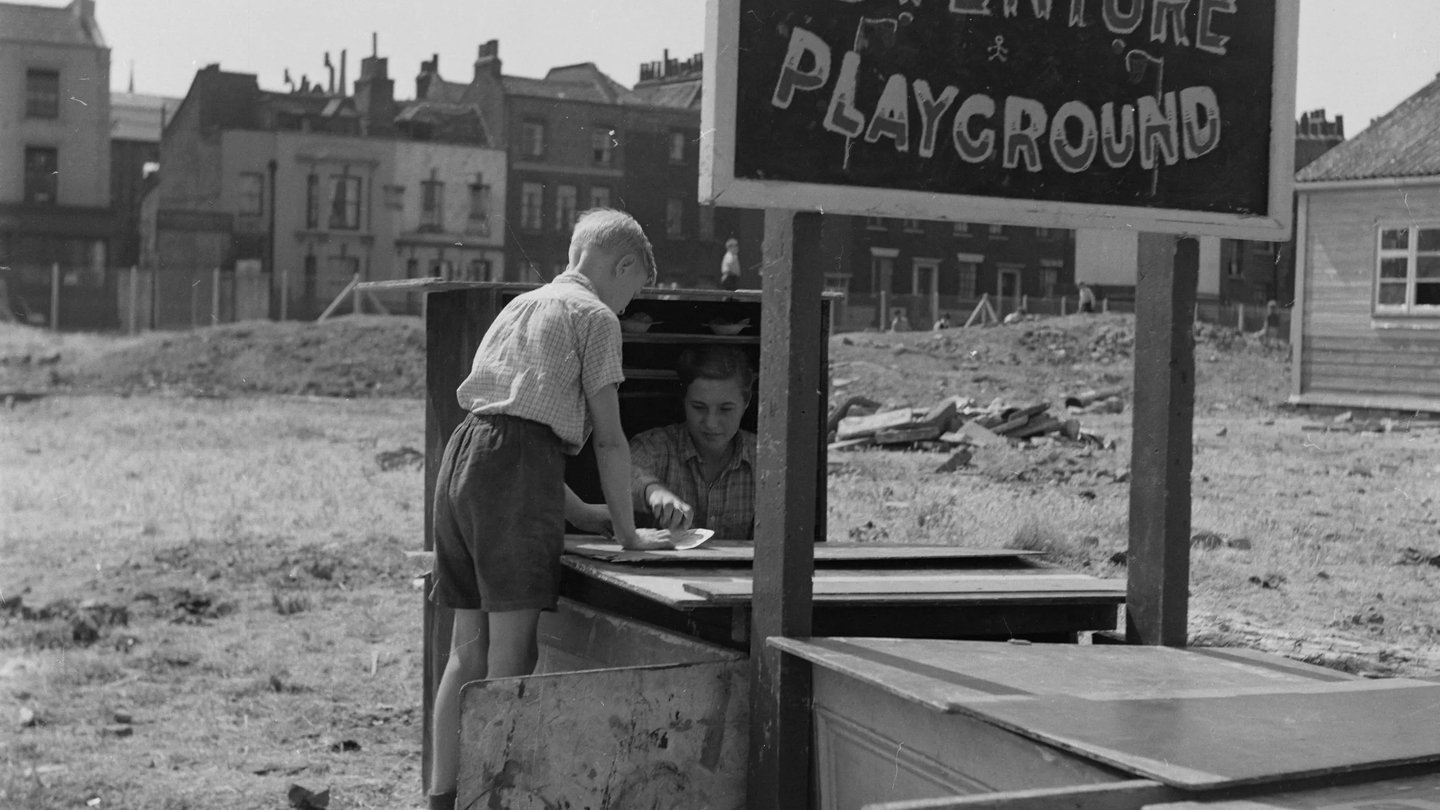
Adventure Playgrounds—a type of children’s space that emerged in postwar Europe during the 1950s. In these areas, children were given the opportunity to independently build, modify, and navigate an unstructured environment with minimal adult intervention. The materials commonly used for these playgrounds included boards, bricks, ropes, tools, postwar debris, and discarded waste.
This is a model in which children develop social rules and organization methods through personal interaction and collaborative practice. Consequently, adventure playgrounds function as a microcosm of society, demonstrating how self-regulation can operate without rigid hierarchy.
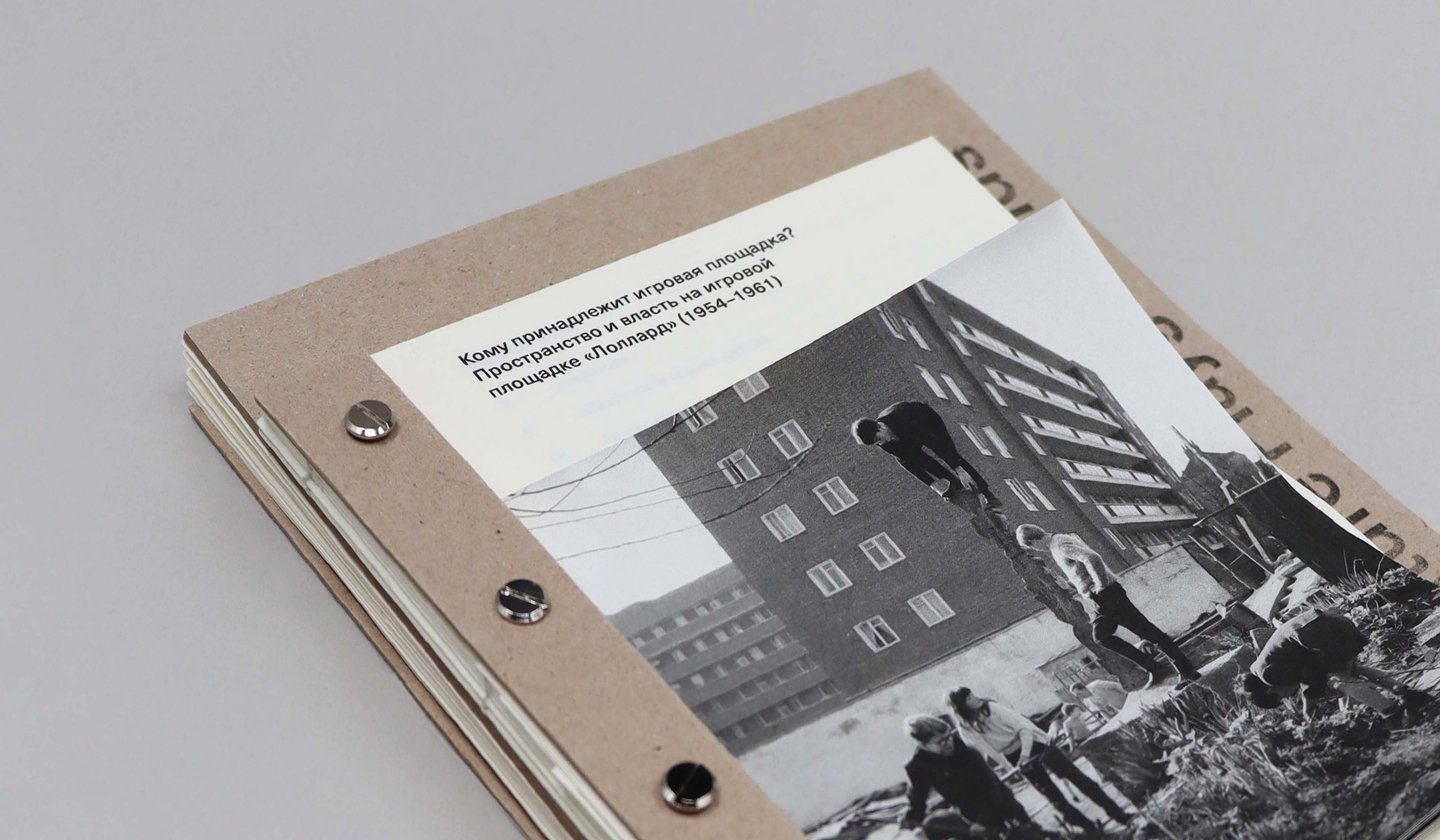
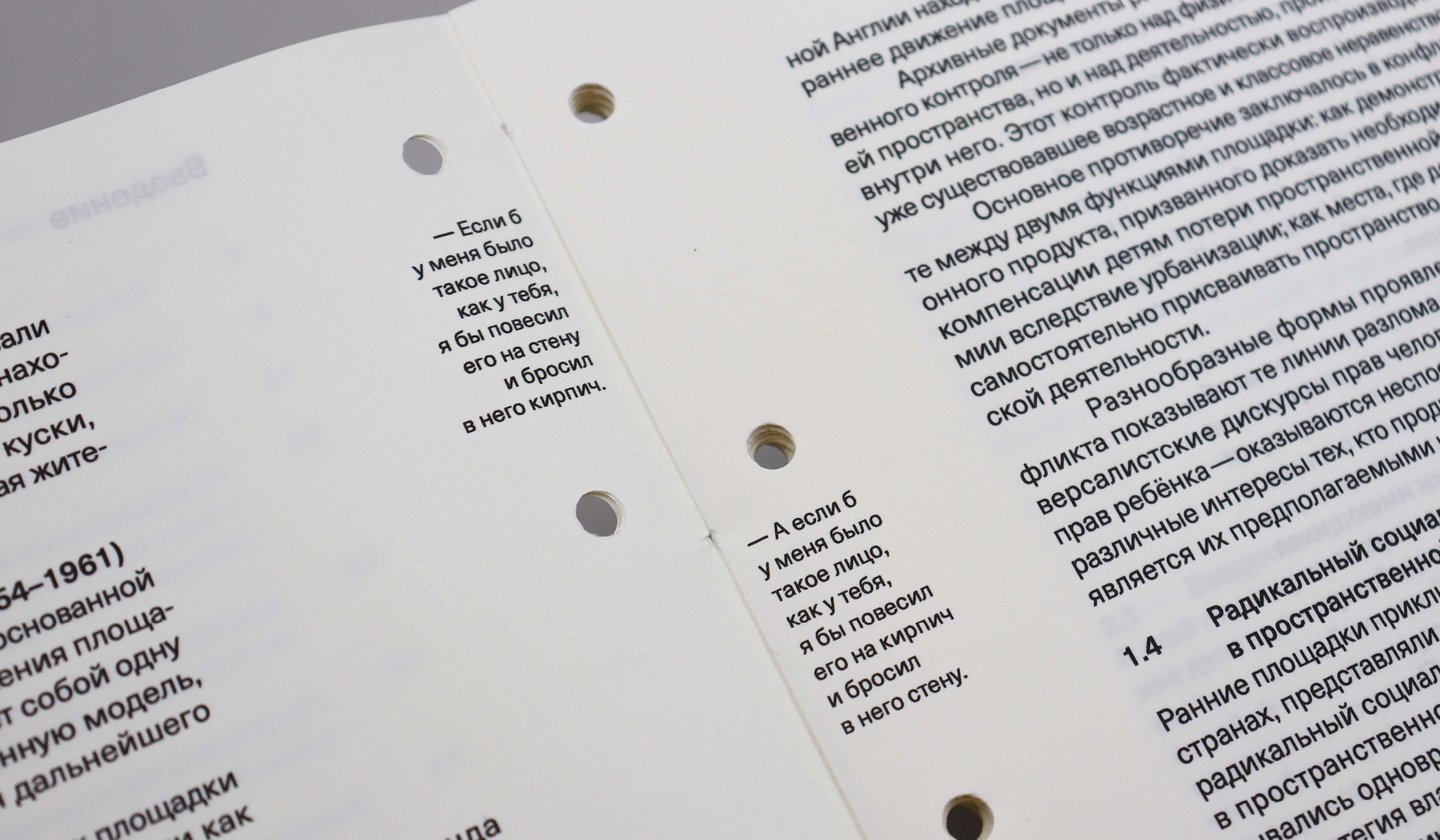
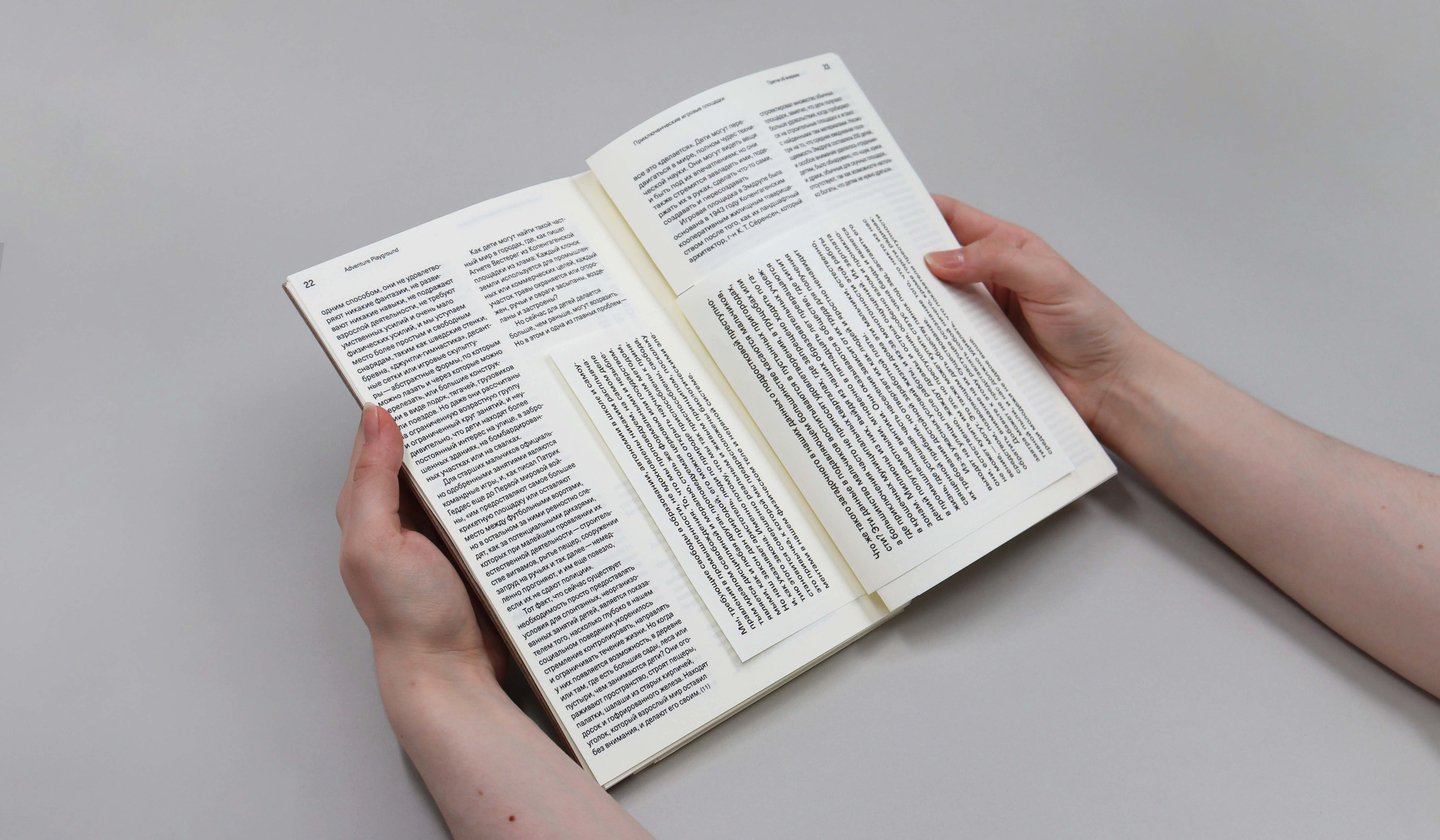
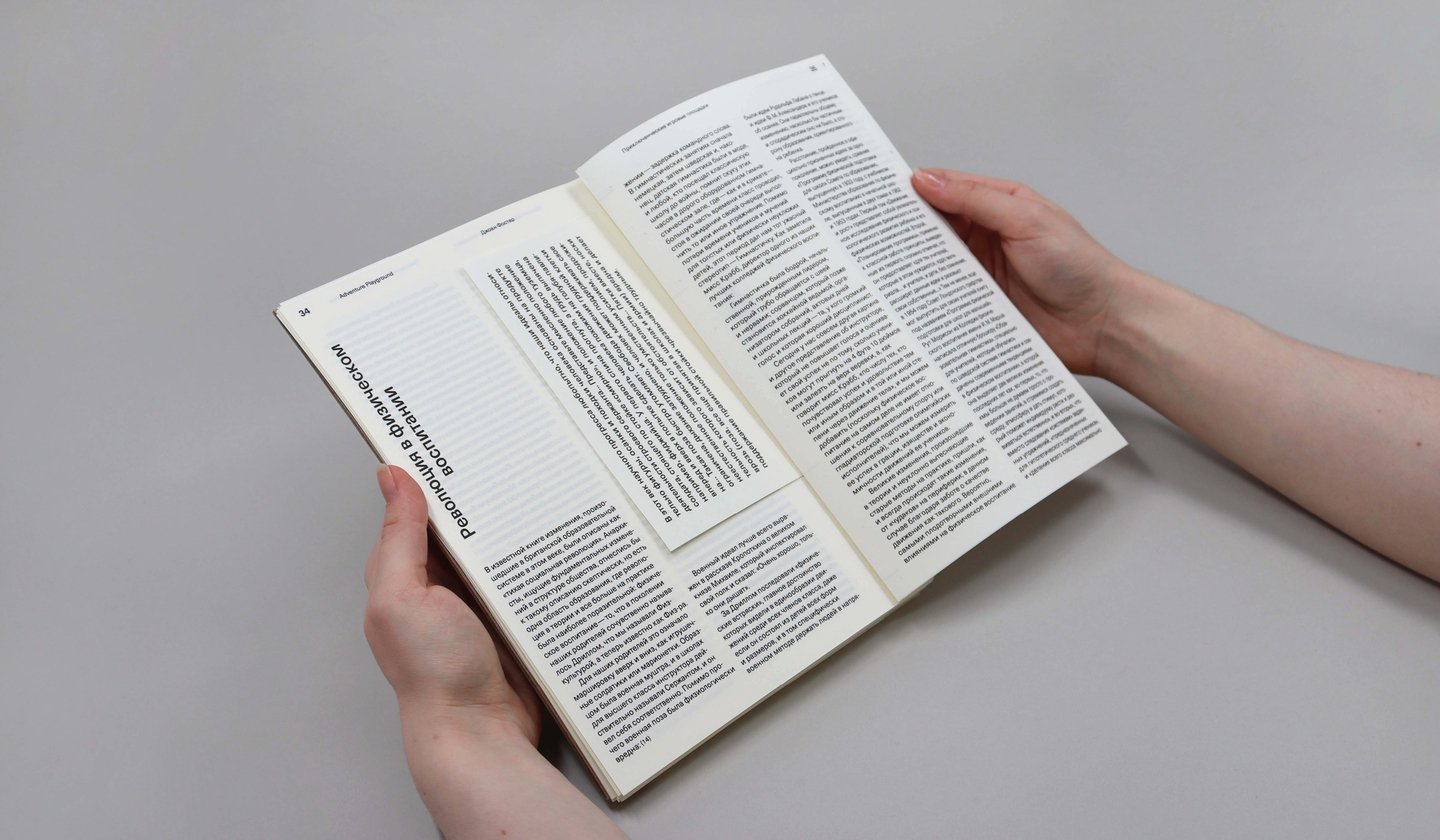
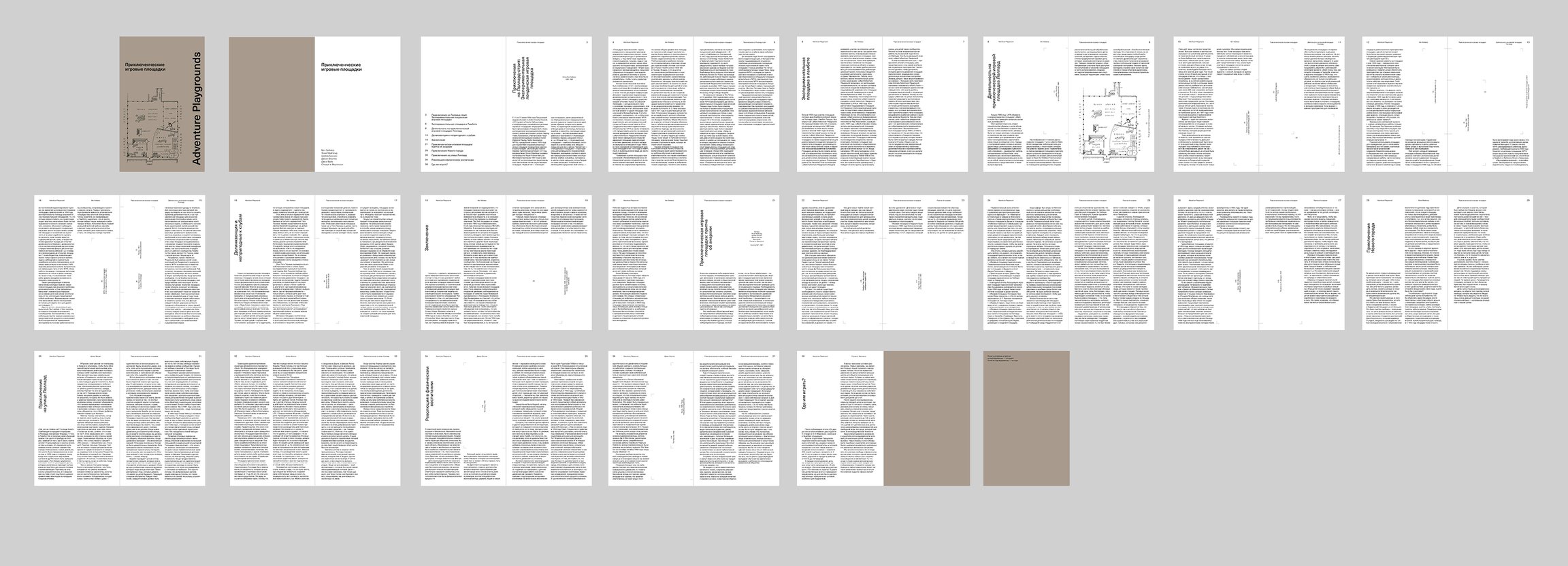
The book’s structure allows the reader to independently construct their engagement with the text and practice various modes of reading the material.


Scientific Section↗
Publicism↗