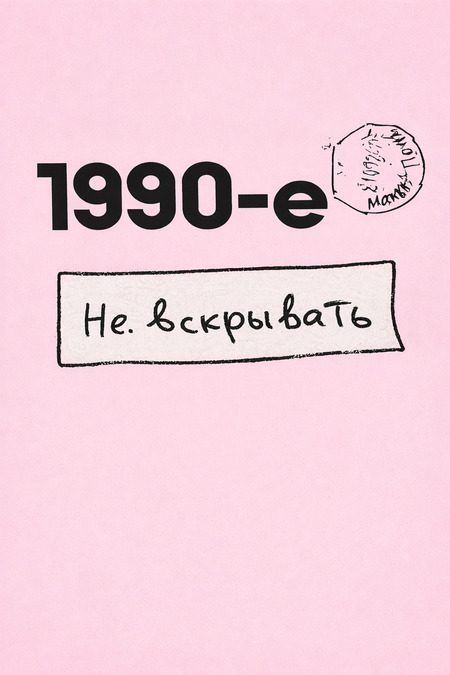
Exhibition Project Concept
The 1990s—a vibrant and multifaceted decade in Russian history. It was an era of radical change, encompassing historical upheavals, intensive artistic exploration, the formation of a new infrastructure, and the establishment of contemporary art. During this period, numerous new cultural initiatives emerged within the art scene, among which the self-published work of the art historian and curator Larisa Kashuk became prominent.
Favoring everything that was «unstable, transitional, and in motion, ” Larisa Kashuk consistently documented the processes taking place in the art of the 1990s. She compiled the results of her work into self-published collections, which sought to capture the zeitgeist of the modern era.
The exhibition has a two-part structure. The first part offers a look at the 1990s through the work and archives of Larisa Kashuk. This section features works by 1990s artists from the Kashuk collection, as well as publications from the underground presses «Credo, ” „On Contemporary Art, ” and „Face. Visage. Persona, ” which include textual and graphic materials—which Kashuk referred to as „scribbles”—statements by art figures reflecting the artistic environment of the late 20th century, alongside a photo archive.
The second part unites the works of young artists created within the framework of an art laboratory. These works enter into a dialogue with „messages from the past, ” reinterpreting Larisa Kashuk’s archive and the artistic practices of the 1990s. The creators address past artists, reexamining their reflections on the future of art, and responding to the premonitions that 1990s figures attempted to convey about the fate of 21st-century art. The laboratory resulted in new pieces that form the timely layer of the exhibition.
Project Structure
«The 1990s. Do Not Open» is a project comprising several parts: curatorial research of Larisa Kashuk’s archive and personal collection, a creative laboratory, and an exhibition. The laboratory includes public meetings with figures from the 1990s art scene and an internal workshop: artists are selected via an open call for internal meetings focused on familiarizing themselves with the archive and creating homage works to Larisa Kashuk’s archive and the 1990s era.
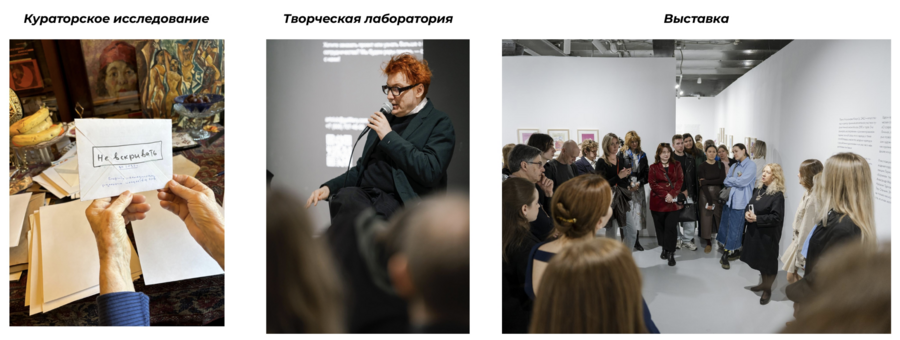
Teaser
Advisory Group
Creative Lab Structure
The lab ran from January 20th to March 14th and included: searching for artists (launching an open call), a public program of meetings with participants from the 1990s art scene, and an internal practicum for the laboratory’s participating artists (meetings with Larisa Kashuk, study of archival materials, reading seminars, film screenings, and discussions on concepts and production).
Open Call
When selecting the finalists for the open call, the portfolio and a statement of purpose detailing interest in working with the archive and the 1990s era were taken into consideration.
Public Lab Program
A key objective of the public program was to establish a discourse around the artistic practices of the 1990s, aiming to immerse lab participants and students deeply in the cultural context of that era. It was dedicated to exploring this multilayered decade, which is regarded as one of the most turbulent and ambiguous in the recent history of Russian art—a time of searching for new artistic languages, institutions, and forms of interaction within the art world.
During public events focused on the artistic culture of the 1990s, discussions took place featuring curator and art historian Viktor Miziano, art critic and editor-in-chief of The Art Newspaper Russia Milena Orlova, artist and art theorist Dmitry Gutov, curator Irina Gorlova, as well as artists Nina Kotel, Alexander Ponomarev, Vladislav Efimov, and Pavel Pepperstein.
Open Interview with Victor Miziano
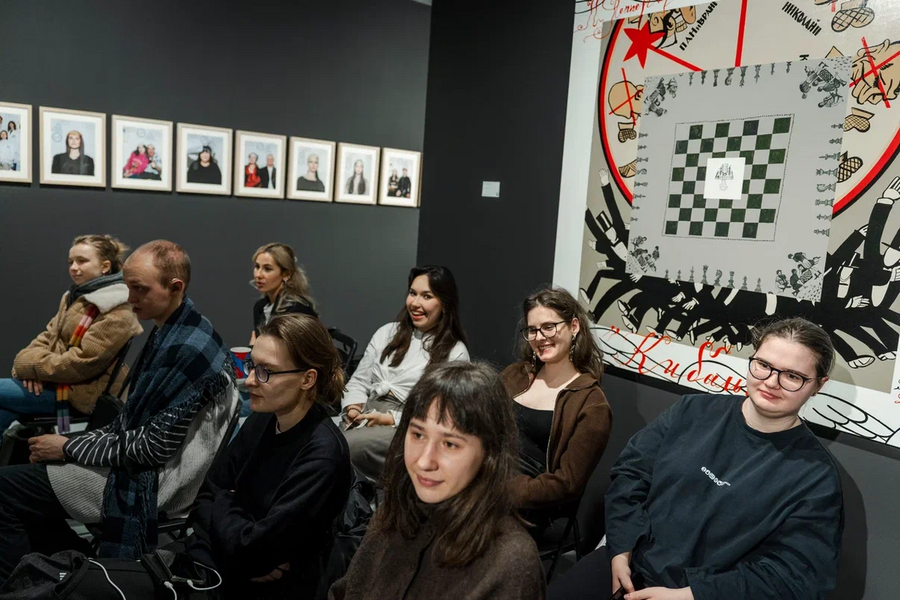
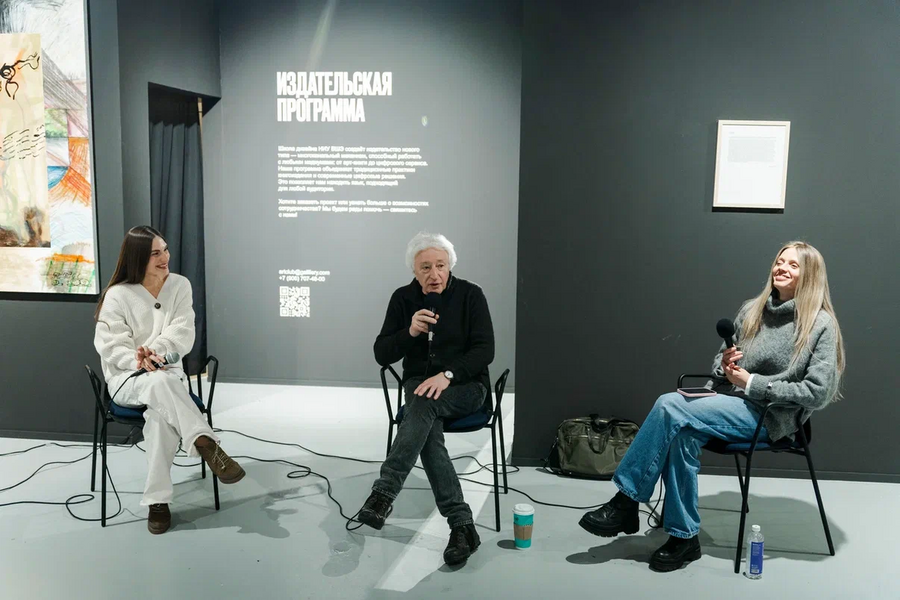
Open Interview with Viktor Miziano. 02/25/2026
«Curatorial Practices of the 1990s»
A discussion on the formation of the curatorial profession in the 1990s—a time of institutional transformation and the emergence of Russian art on the international stage.
Victor Miziano described how the 1990s era felt, both at the beginning and the end of the decade. The conversation covered the aspect of radical, «traumatizing freedom,» the genesis of the Center for Contemporary Art (CCA) in Yakimanka, key curatorial projects («Aesthetic Experiences,» «Consciousness is a thing the world must attain, whether it wants it or not»), work on the Russian Pavilion at the Venice Biennale, and the development of new curatorial practices in the arena of international biennales.
Open Interview with Milena Orlova
Open Interview with Milena Orlova. February 27, 2026
Open Interview with Milena Orlova. February 27, 2026
«Criticism and Art Journalism of the 1990s»
The discussion focused on the genesis of art criticism and art journalism, as well as the emergence of the first independent institutions and galleries.
Milena Orlova shared the history of the appearance of art criticism within the artistic field, using her journalistic practice as an example. The meeting covered key publications that wrote about art—such as «Khudozhestvenny Zhurnal» and «Mesto Pechati”—and the role of newspaper criticism in „Segodnya, ” „Kommersant, ” and „Nezavisimaya Gazeta, ” discussing its influence on society’s recognition of „incomprehensible contemporary art.“ The discussion also touched upon the arrival of the first glossy magazines, „Ptyuch“ and „OM, ” and their contribution to popularizing contemporary art, recalling major projects, artistic actions, and performances.
Discussion with Dmitry Gutov and Irina Gorlova
Discussion with Dmitry Gutov and Irina Gorlova. 03/02/2026