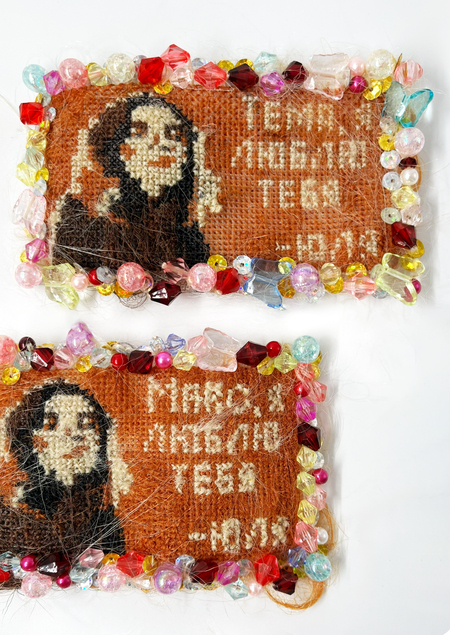
In my work, «I Love You—Yulia,» I reference a cultural tradition whose peak was the era of sentimentalism—ornaments crafted from hair.
In that framework, such an object served a dual function: it acted as a talisman of memory while simultaneously functioning as a declaration of love. Sentimentalism perceived love as a sublime, almost sacred phenomenon—the union of two kindred souls was understood as the primary life purpose. However, happiness in love was considered something flat and mundane; authentic feeling necessarily had to be accompanied by obstacles. Love was understood as an elemental force, a sickness of the soul, in which sorrow was cultivated as the highest degree of experience.
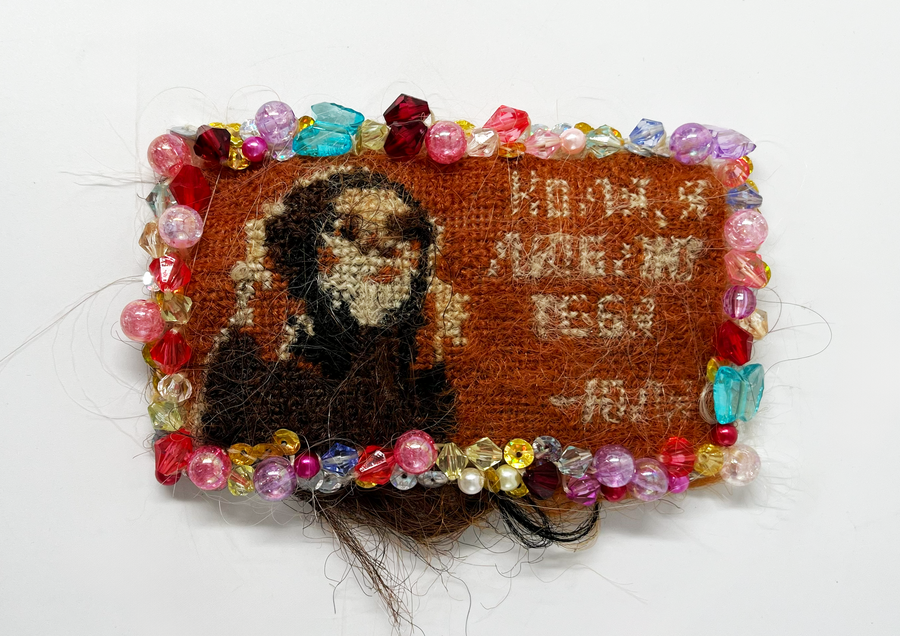
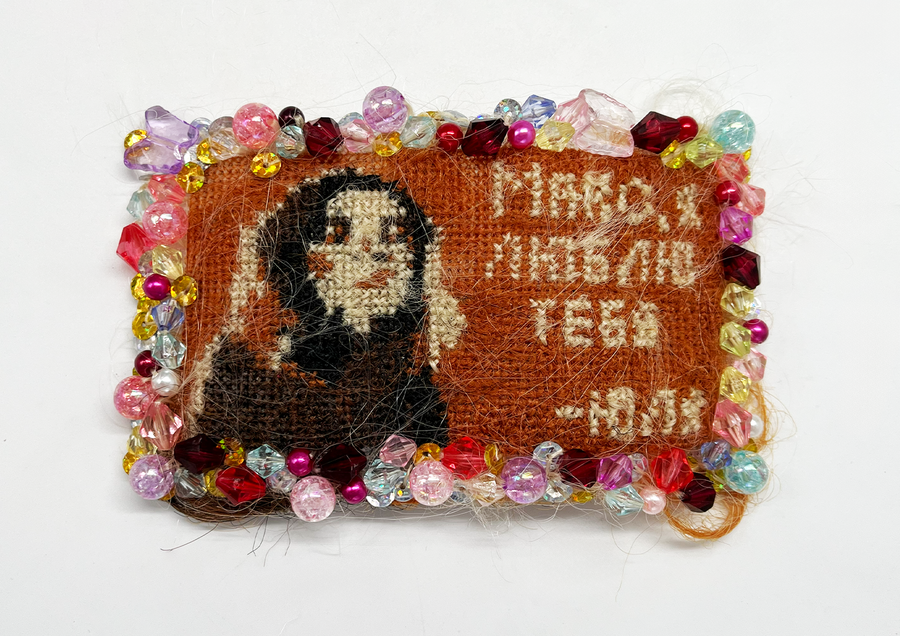
Analyzing this model, I noticed it aligns with how I perceived love during my early teenage years.
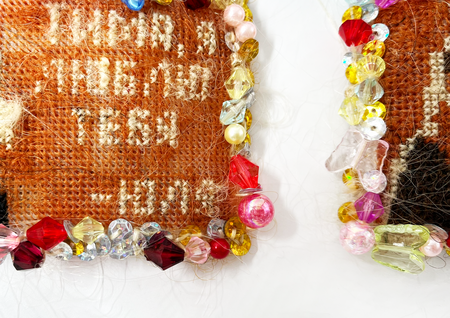
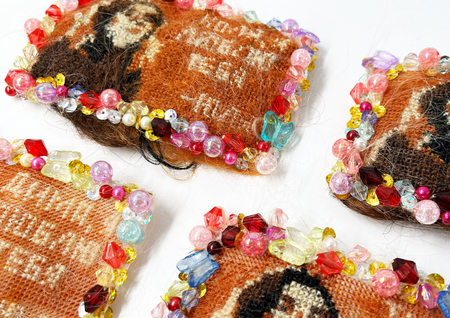
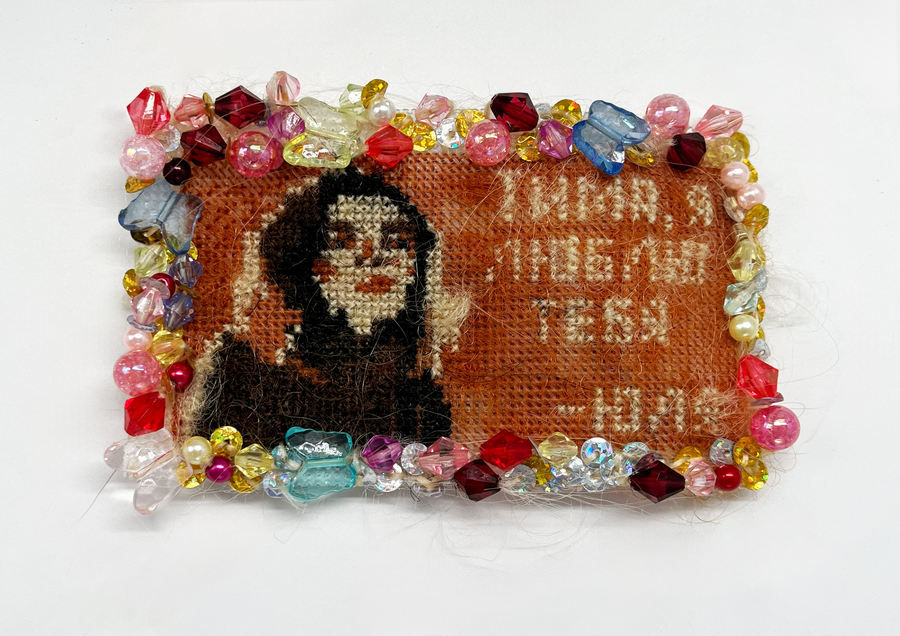
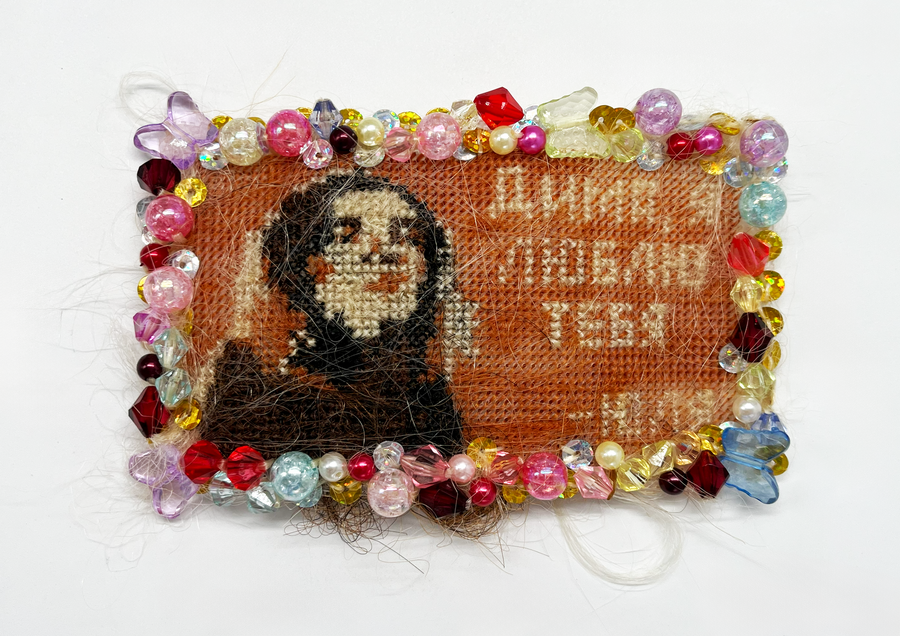
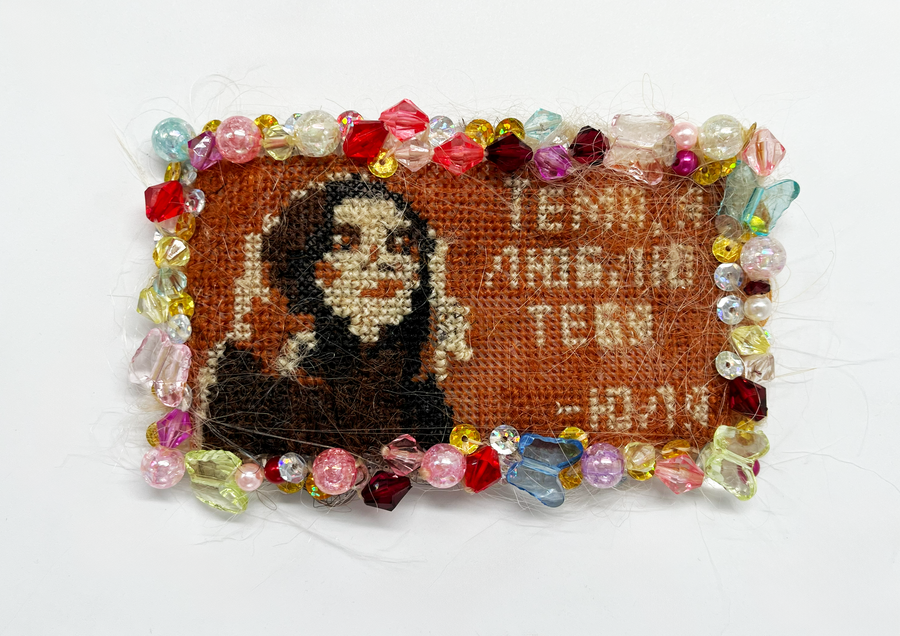
Back then, unrequited love for a boy sitting next to me felt like finding a soulmate. His passion for soccer became the main obstacle to our pure, bright love, and his rejection led to boundless suffering and liters of spilled tears. In this project, I merge an old tradition with the experience of a vulnerable teenage girl. I am creating five hair embroideries, each bearing my own portrait—a «memento» of myself—and the phrase: «(Name), I love you—Yulia.» This gesture reads as a desperate confession of painful love; that’s how all such confessions felt in those delicate years.
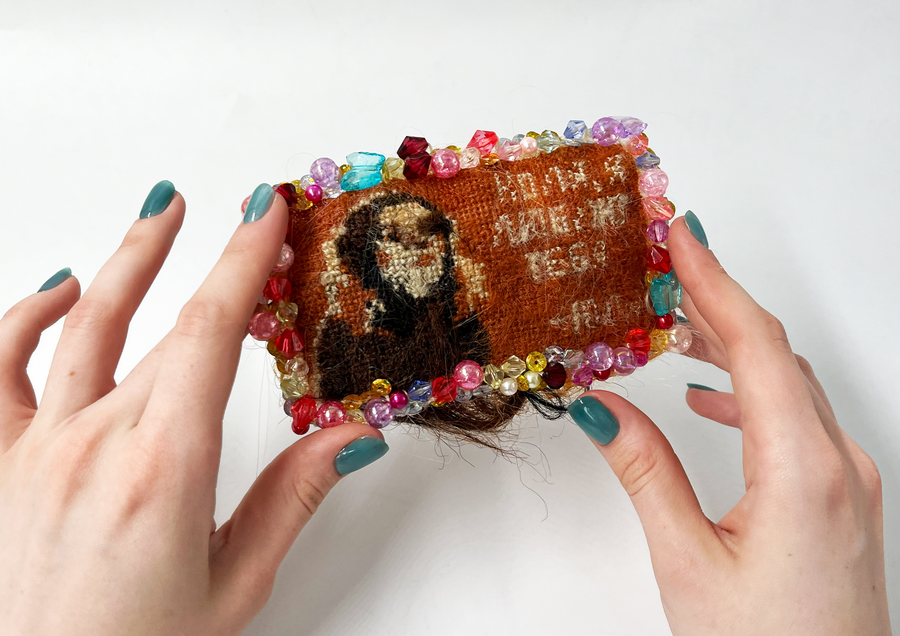
However, I am creating an entire series of embroidery pieces, and a new name appears in each one. These are the names of boys I liked in school. The quantity reflects the superficiality of those feelings—how the «one and only» changed every year. This idea is reinforced by the visual design; all the embroideries are almost identical, which creates a sense of uniformity and deflates the pathos of the intimate gesture. Thus, a subtle irony arises regarding the supposedly «deep» feelings of the teenage girl I once was. The irony is supported by the decorative framing: plastic colored beads, sequins, and pearls. They look silly, naive, and childish, which once again brings attention to the fact that all those feelings still belong to an immature girl.