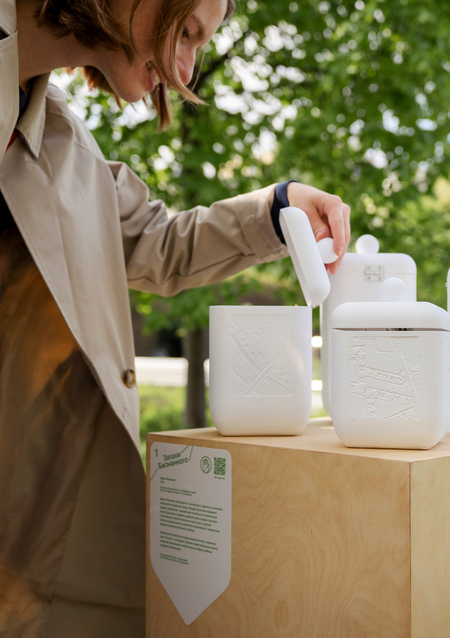
«Direct Contact» is an urban project designed to help residents see their neighborhoods in a new light and engage in their development through participation in cultural and research initiatives. The pilot phase of the project took place in N. E. Bauman Garden from May 13–17, 2026, and can serve as a foundation for developing similar programs in other parks.

The «Direct Contact» platform integrates artistic research, exhibition projects, educational programs, and a digital archive, creating a space to study and reflect upon the urban environment through contemporary art. Its goal is to establish a sustainable connection between residents, artists, researchers, and specific territories, preserving the outcomes of this work in an open digital format.

«Direct Contact» is an artistic research platform for the city, aimed at rethinking how we interact with the urban environment through art, territorial studies, and collective observation practices. The project is based on the premise that the contemporary city is increasingly perceived automatically—as a system of familiar routes and functional scenarios, where attention to the space itself gradually diminishes. In this context, artistic practice is viewed as a tool for regaining awareness of the environment and reconfiguring the everyday experience of being present in the city.
The methodological foundation of the project is artistic local history—an approach in which the territory functions not as a mere backdrop, but as an independent object of study. The focus extends beyond architectural landmarks and historically significant sites to encompass the everyday environment: local mythologies, traces of time, private memories, the sensory characteristics of the space, and the subtle details of urban life. This approach allows for the study of the city as a multilayered structure, shaped at the intersection of memory, experience, and daily practices.
The Basmanny district was the first area of investigation. Within the artistic research lab, artists engaged with its historical, architectural, and everyday context, translating the research findings into artistic forms. The result was a walking exhibition in the N. E. Bauman Garden—a route featuring nine works that creates a cohesive, yet complex, representation of the territory.
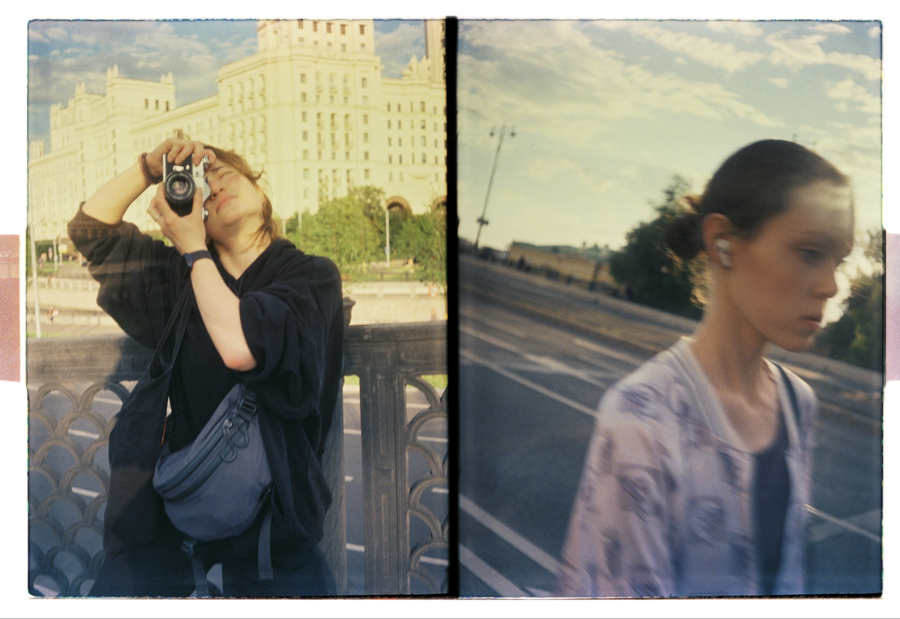
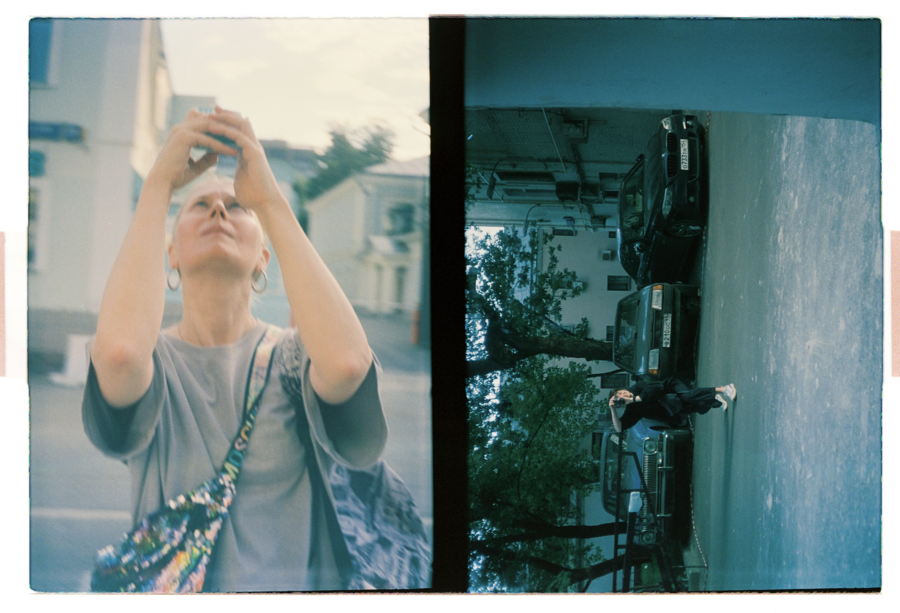
Open drift documentation for Basmanny District: «Wandering Eye» by Laima Vorobyeva, as part of the second stage of the «Direct Contact» lab, 2025
A vital component of the project was the public program accompanying the exhibition. Over five days, the program featured lectures, guided walks with artists, mediations, workshops, concerts, and discussions. This programming expanded the project’s scope of inquiry and created a space to discuss contemporary artistic practices, urban memory, and various methods of engaging with the territory. It was structured as a continuation of the exhibition’s logic, actively involving the audience in dialogue with the city.
A distinct area of platform development is the digital archive, which collects and organizes materials from art and research laboratories: texts, routes, documentation, observations, and visual assets. The archive captures not only the final projects but also the research process itself, forming a sustainable knowledge base on the urban environment and a resource for future artistic, analytical, and curatorial work.
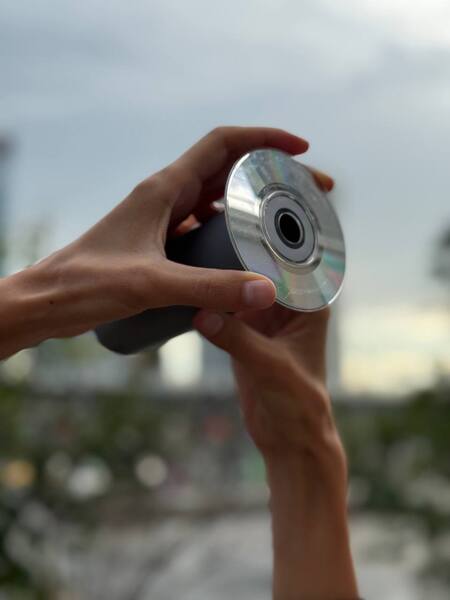
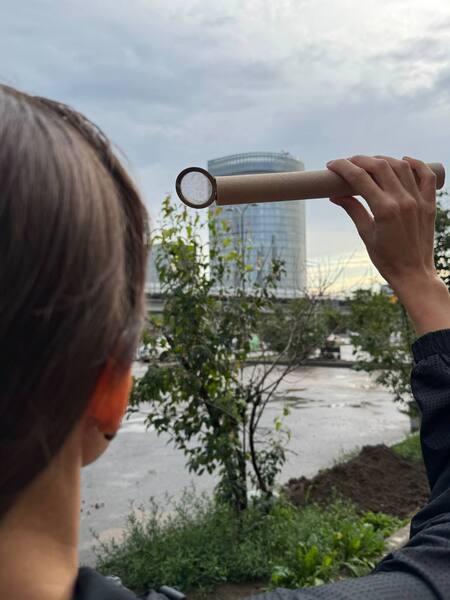
Documentation of Olga Gorodenskaya’s walk «Habitoscopy» within the Artistic and Research Laboratory «Direct Contact,» Basmanny District, 2025
«Direct Contact» is envisioned as a scalable model for artistic engagement with the city. In the long term, the project plans to develop new laboratories dedicated to other districts of Moscow and urban territories beyond its borders. Thus, the platform unites exhibition formats, research practices, public programming, and digital infrastructure into a single, long-term model for working with the city.
Basmanny District Art and Research Laboratory
The Art and Research Laboratory was conceived as an experimental platform to test how methods of artistic ethnography could function within a real urban context. The laboratory brought together artists, curators, and researchers to study the Basmanny district—its history, urban environment, and local communities. The core idea was to transform this territorial investigation into the foundation for future artistic projects and the walking exhibition, «Direct Contact, ” while also gauging the interest of both the general public and the professional community.
- Launch an open call for artists working with research-based, site-specific, and participatory practices.
- Implement a closed research phase involving archival work, lectures, discussions, and curatorial guidance in collaboration with key cultural institutions.
- Conduct an open phase in the form of artistic walks for a broad audience.
- Ensure media coverage for the project and presence in professional and media circles.
- Assess the laboratory’s potential as a foundation for a scalable project format.
Artists of the Creative Laboratory, State Museum of Architecture named after A. V. Shchusev Archive, 2025
Open Call
Февраль–март 2025
The open call became a key instrument in shaping the professional community for the «Direct Contact» project. It allowed us to attract a wide range of artists working with research-based, site-specific, and socially engaged practices, as well as to identify relevant artistic approaches to working with the urban environment.
Following a two-stage selection process—review of applications and subsequent interviews—13 artists were invited to the project. The main selection criteria were the participants' research potential, the quality of their artistic practice, and the promise of the proposed ideas for realization within the scope of the project.
Thanks to the open competition, the project became an accessible platform for emerging talent, interdisciplinary dialogue, and professional interaction between artists, curators, and urban institutions.
Lab Stage 2
Июнь–сентябрь 2025
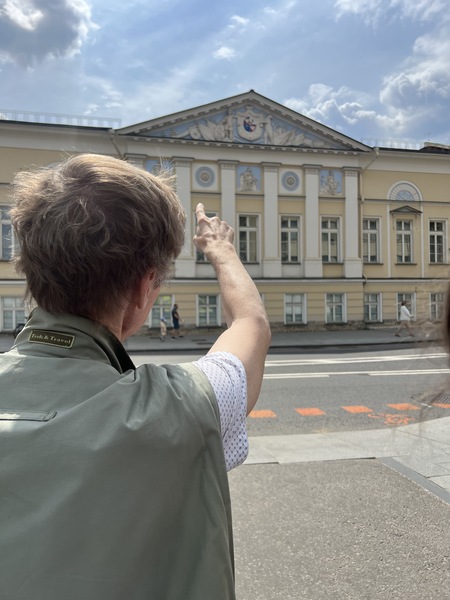
In 2025, an artistic research laboratory was established to study the Basmanny district and develop a series of art projects. This laboratory was supported by Elohovskiy Gallery and benefited from the informational and institutional participation of GES-2, the «Fabrika» Center for Contemporary Art, the Museum of Moscow, and the State Museum of A.V. Shchusev, which underscored the professional community’s strong interest in the project.
Two phases of the artistic research laboratory were conducted to thoroughly develop the project and test its relevance within the actual urban context. The closed phase allowed the artists and the curatorial team to shape concepts for future projects, establish the research framework, and prepare artistic solutions with the support of professional institutions. The open phase focused on engaging the audience through a series of public events. This allowed us to test viewer interest, receive direct feedback, and confirm a high demand for this type of cultural project.
The main outcome of the creative laboratory was a walk-through exhibition in the N. E. Bauman Garden and an educational program in the Basmanny district.
Walkthrough Exhibition in N. E. Bauman Garden
The walking exhibition «Direct Contact» took place from May 13 to May 17 and was structured as a route through the N. E. Bauman Garden grounds. The tour lasted approximately 30 minutes. Along the route, nine installations were displayed—miniature models of artworks created using 3D printing and set upon pedestals.
Artists: Natalia Alatorceva, Elena Vinogradova, Olga Gorodenskaya, Raisa Zaslav, Daria Iukkannen, art group «Circle of Third Parties» (Ilya Hart, Anna Maramygina, Yulia Potylitsina), Alyona Troitskaya, Zhenya Eisner, art group «EVPRAXIS» (Irina Safonova, Evdokia Dergilyova)
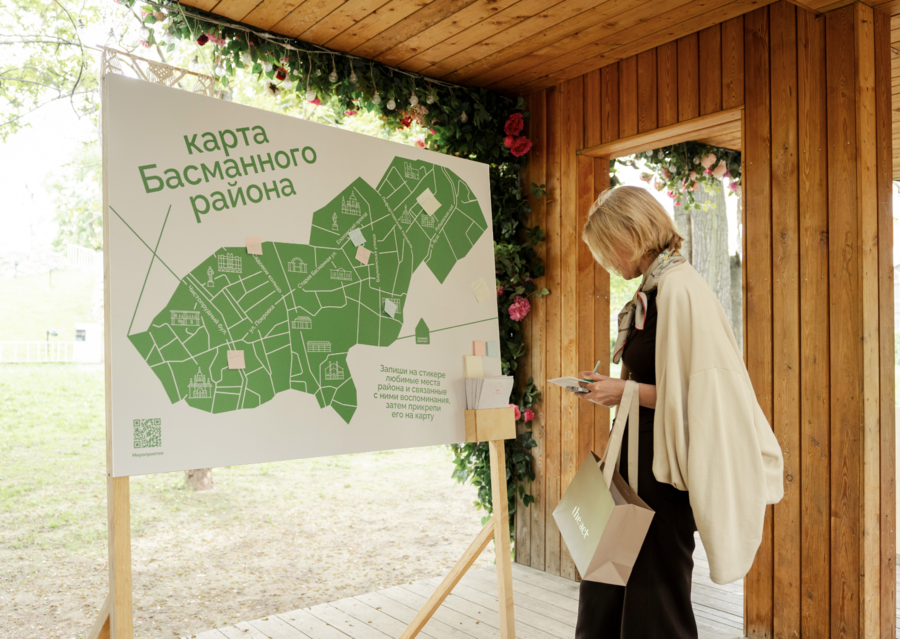
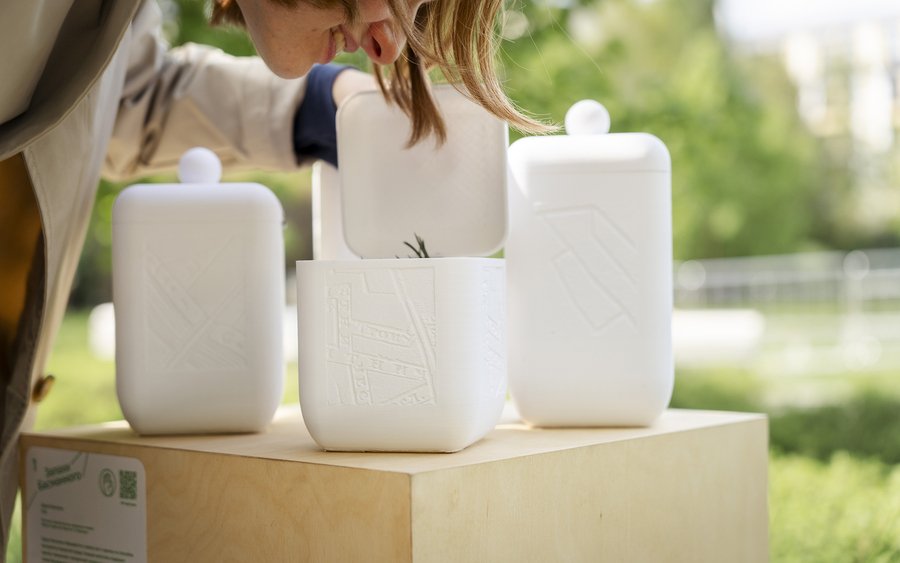
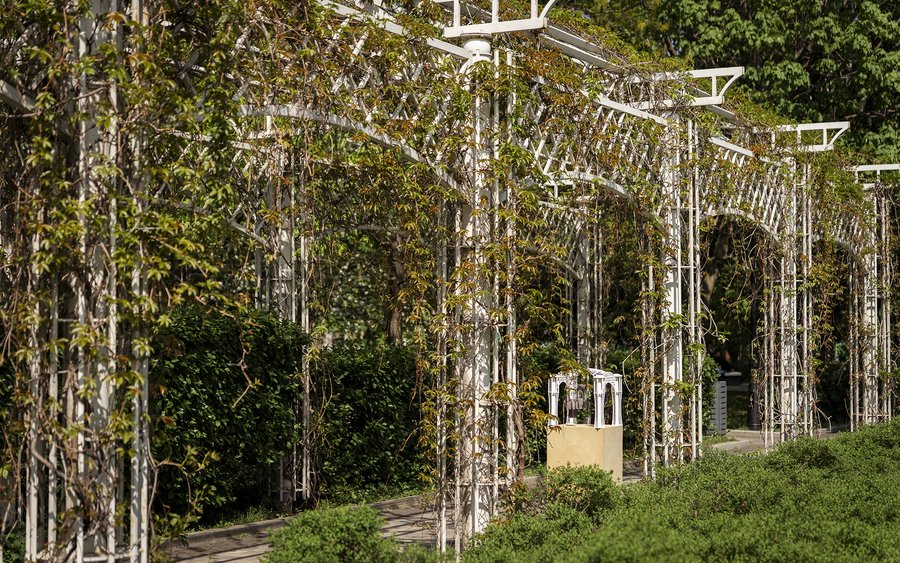
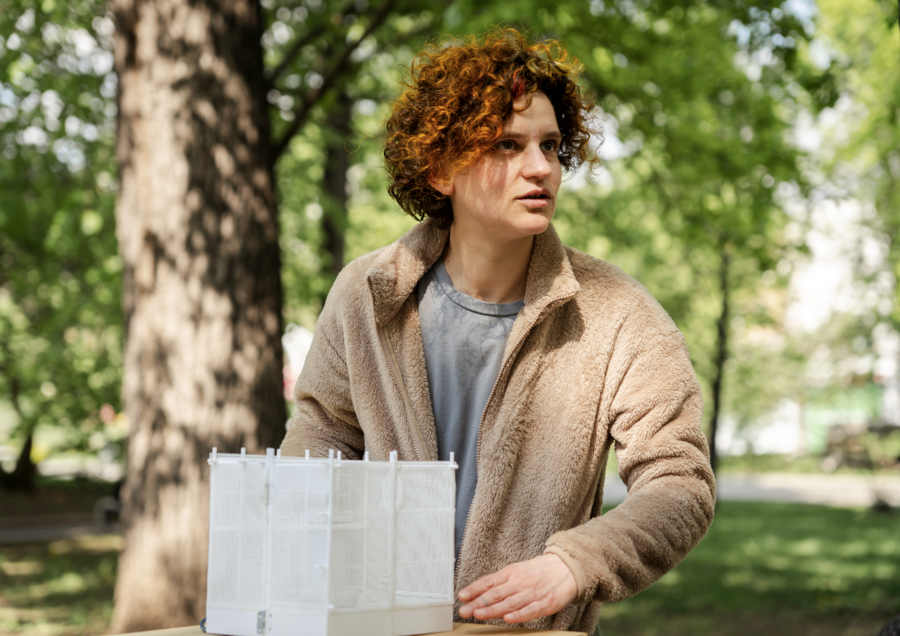
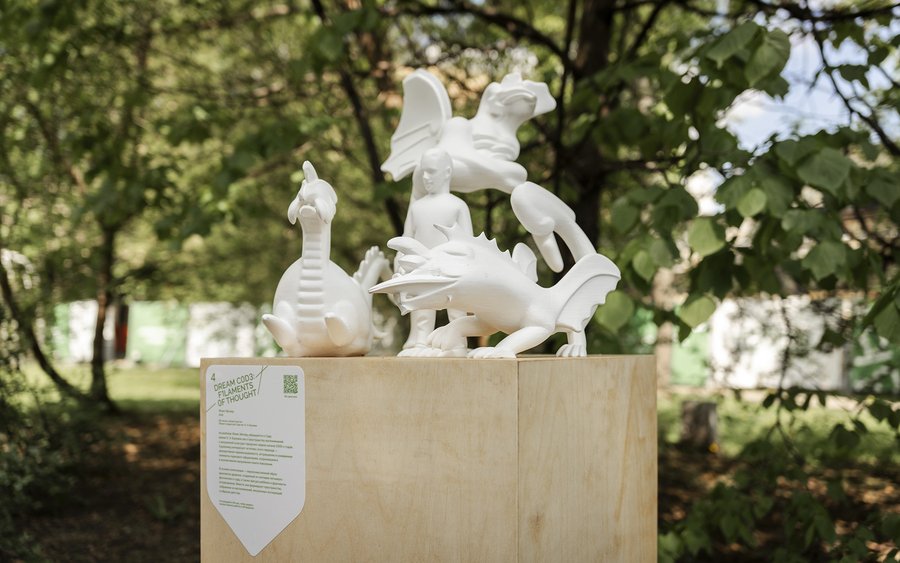
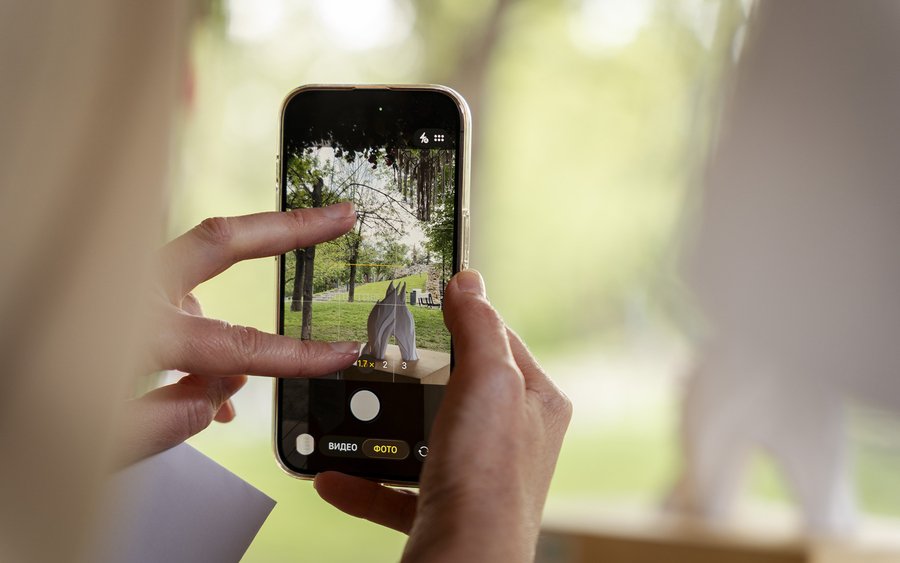
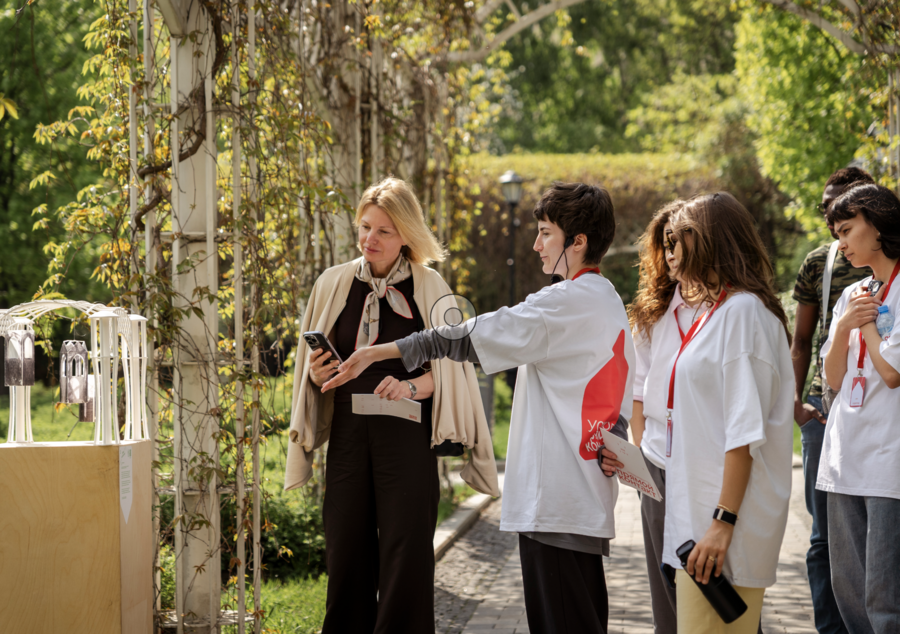
Photo documentation of the exhibition walk «Direct Contact» in the N. E. Bauman Garden, 2026
AR Walk
Доступна онлайн на сайте платформы
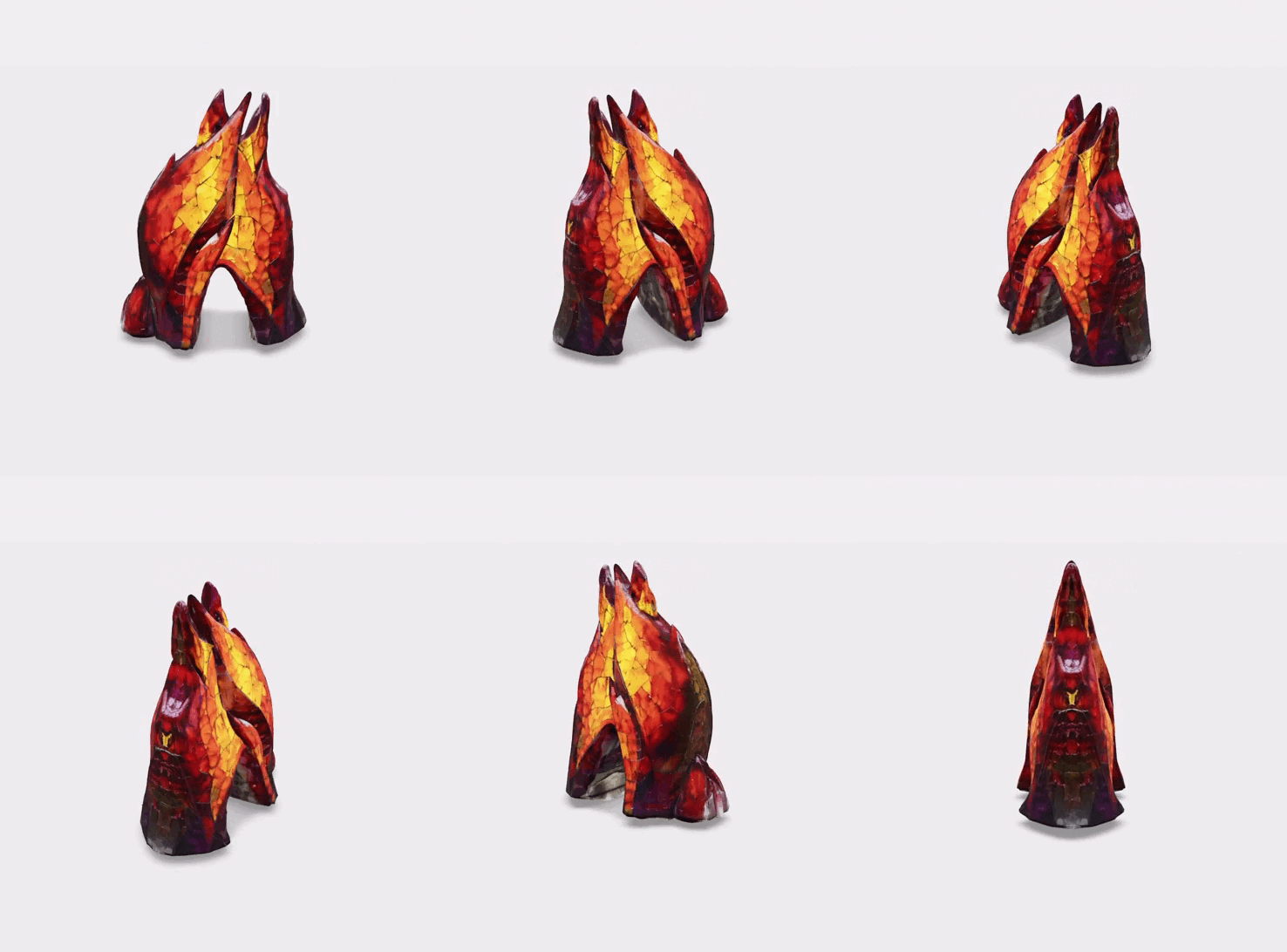
AR Walk is an opportunity to experience the route of a completed exhibition in Bauman Garden in a new way. Within the digital archive platform, the project continues to exist online: the walk was available concurrently with the offline exhibition and remains accessible as a digital layer after its conclusion.
Projects
9-объектов — 9 способов иначе посмотреть на город