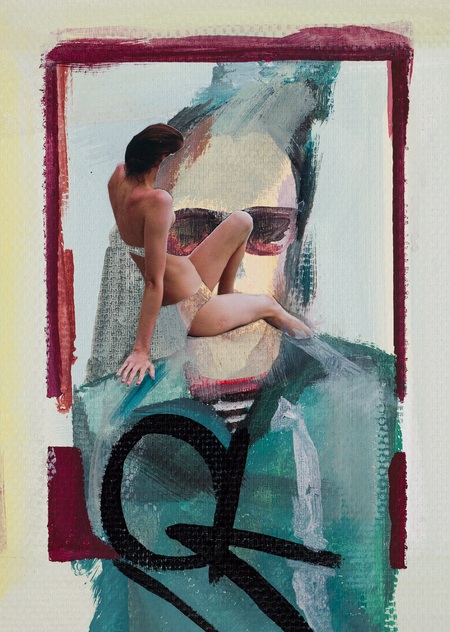
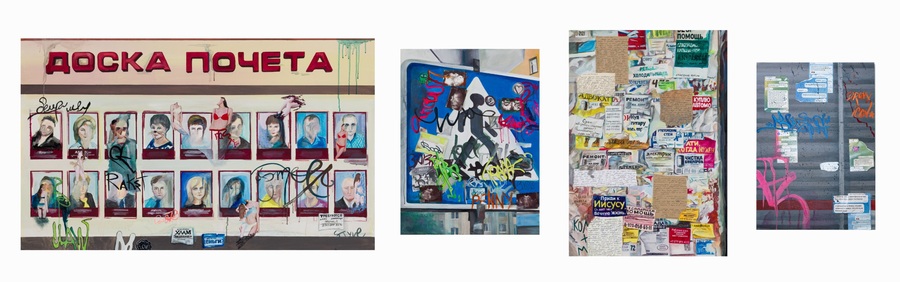
In this era of global narrative crises—be they ideologies, metanarratives, or overarching concepts—artistic focus is shifting toward the private, the everyday, and the marginal. The hyper-documentation of life via social media is creating a massive, yet amorphous, digital archive.
Concurrently, there arises a need to preserve alternative testimonies that exist outside the «grand narrative, ” allowing us to speak about the human experience through individual forms of memory.
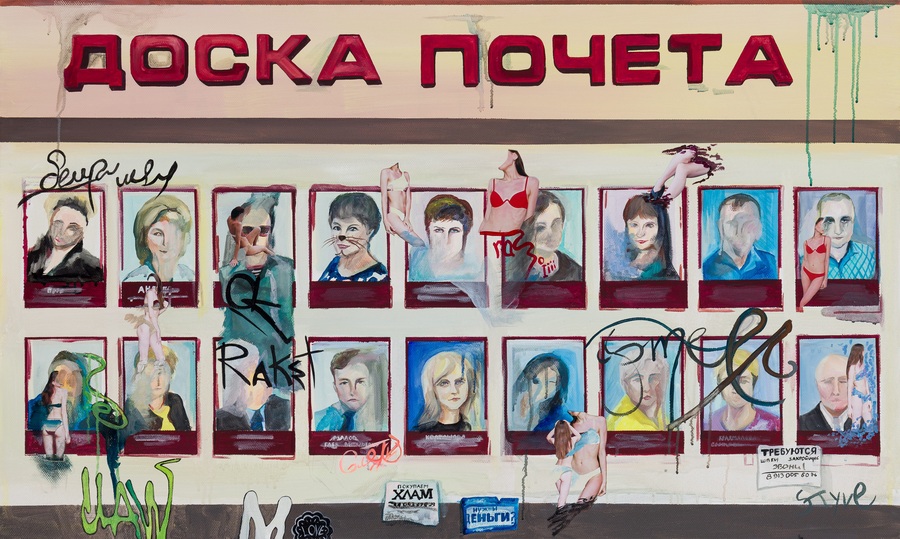
Honor board, canvas, photo, acrylic, 90×150 cm, 2025
The project addresses art as a system of communication in which signals of memory, fear, and love take on figurative forms. The individual and the city become participants in a dialogue, and diaries and city walls—despite being opposites—unexpectedly discover a kinship.
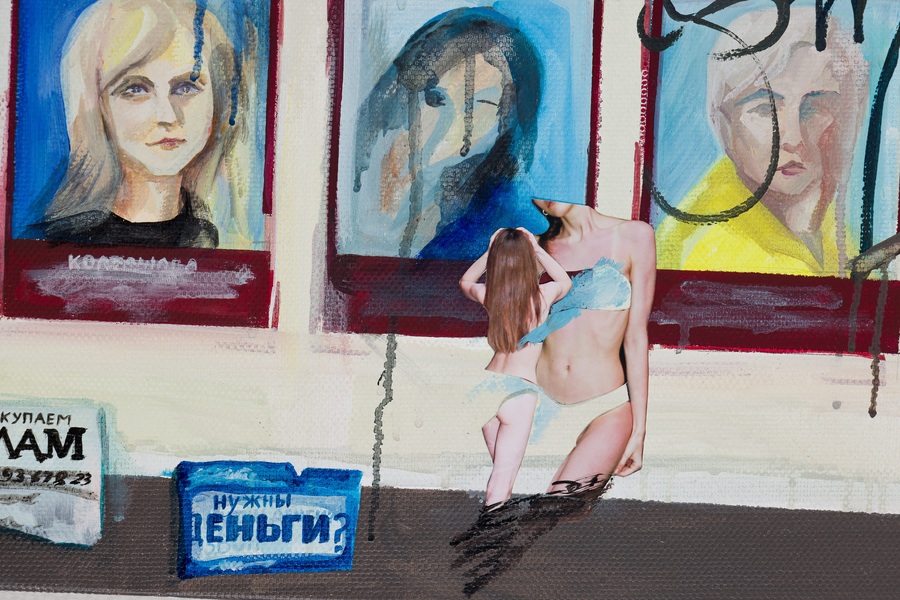
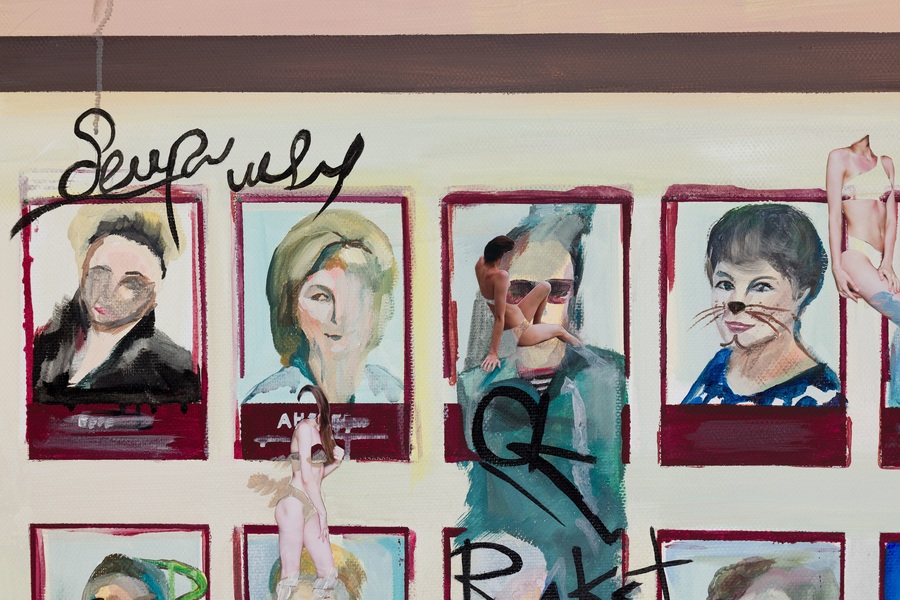
«Hall of Fame» board, fragments
The works utilize diary entries, medical documents, photographs, correspondence, and other materials directly related to my private life. By integrating into the pictorial space, they cease to be merely documents and become artistic imagery.
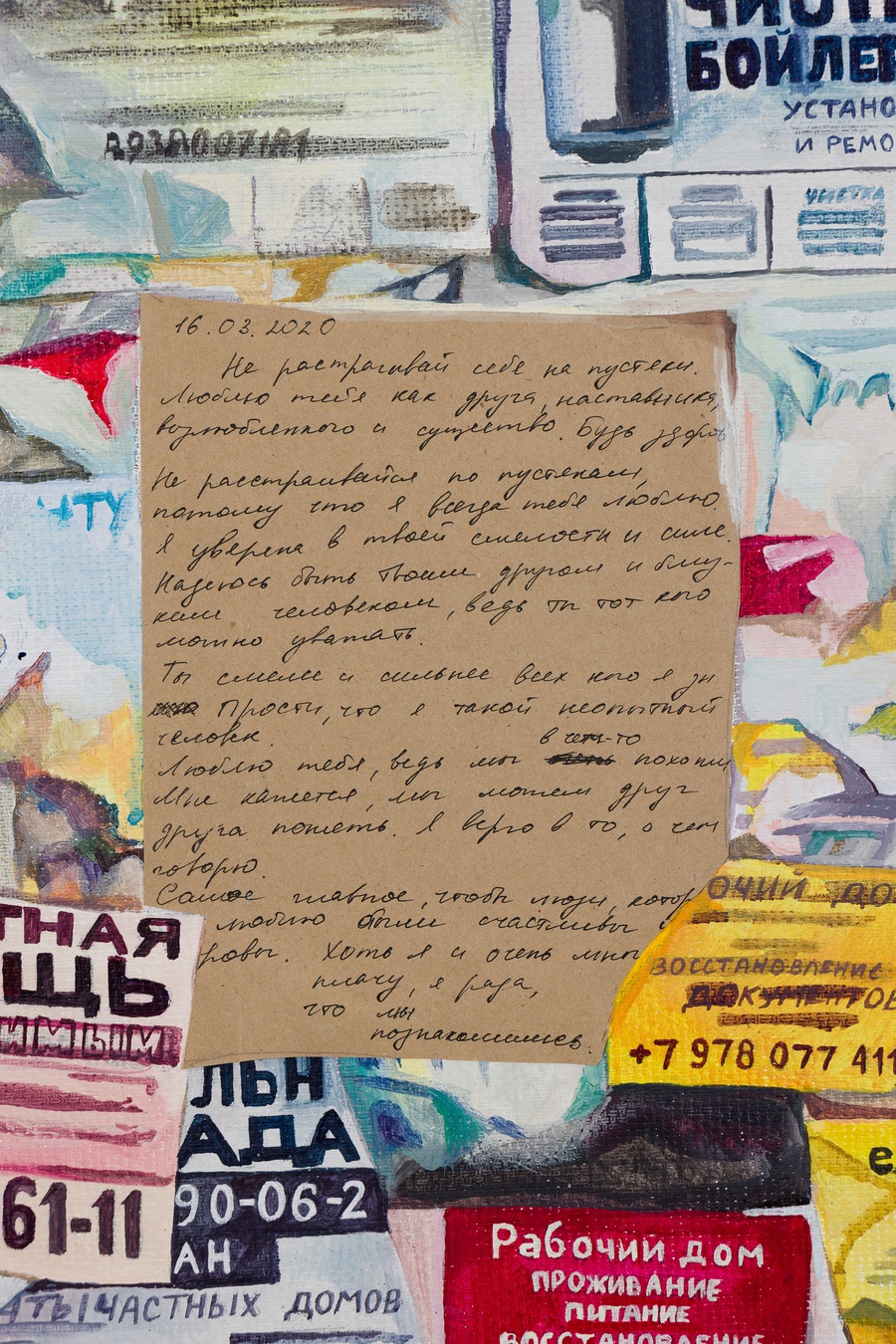
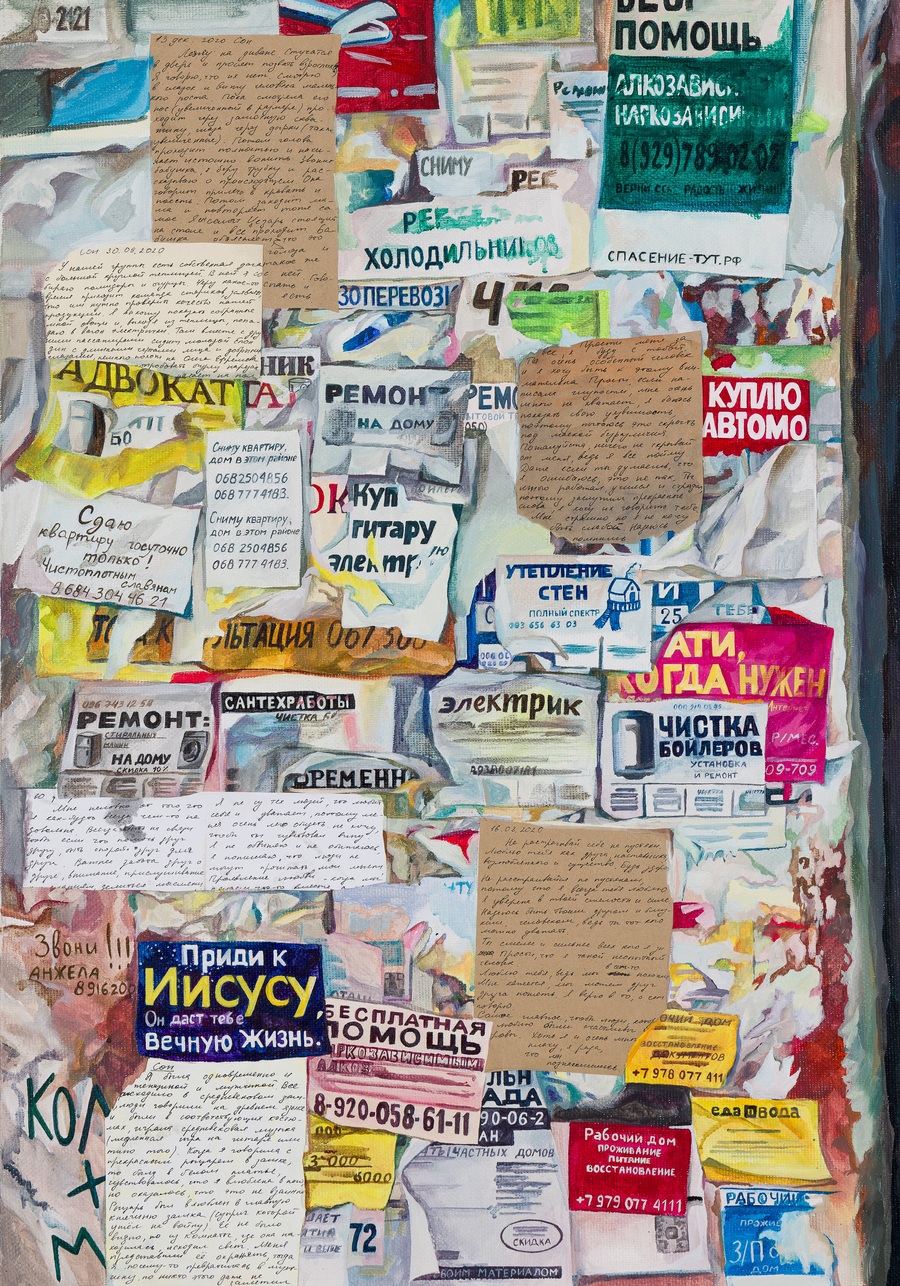
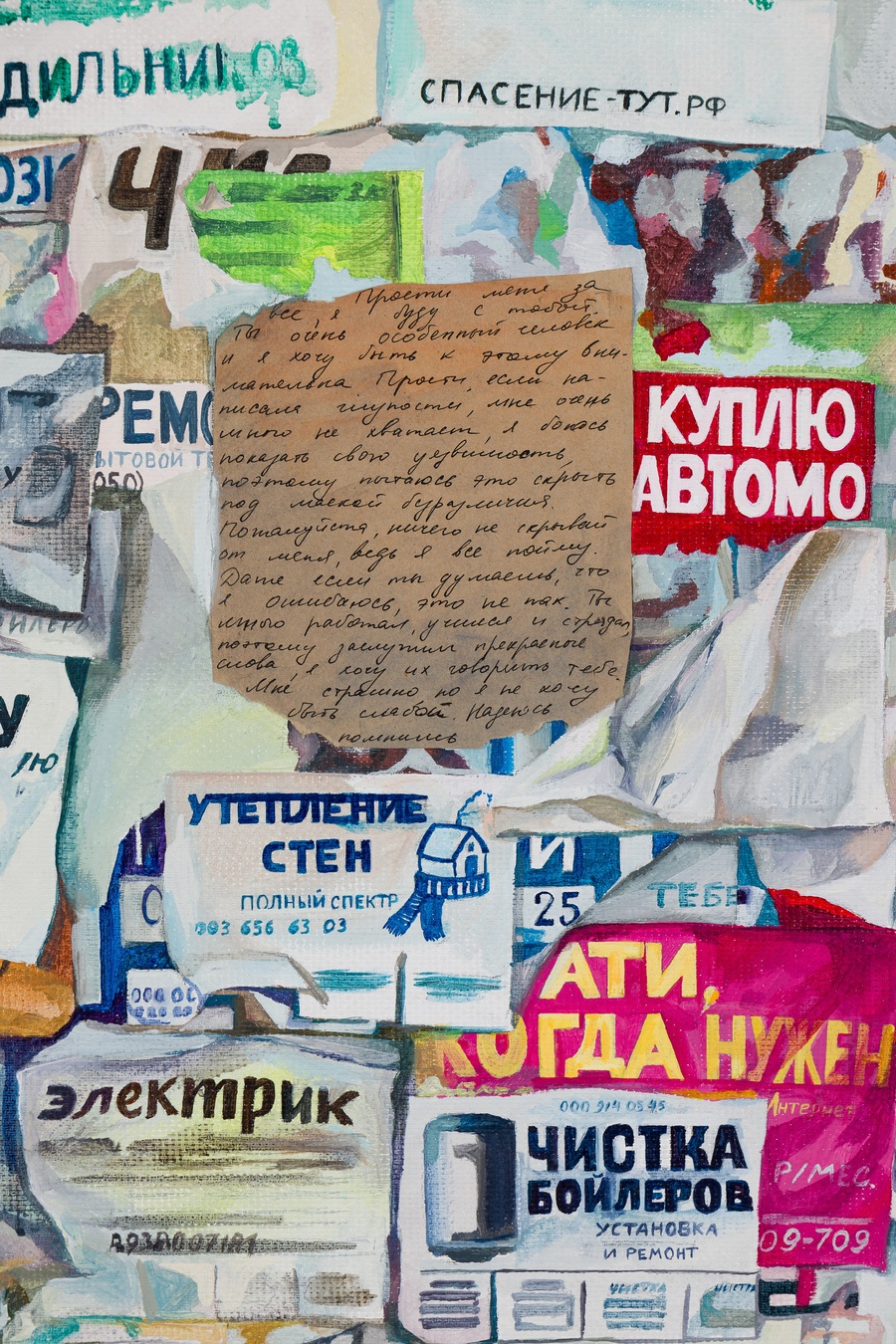
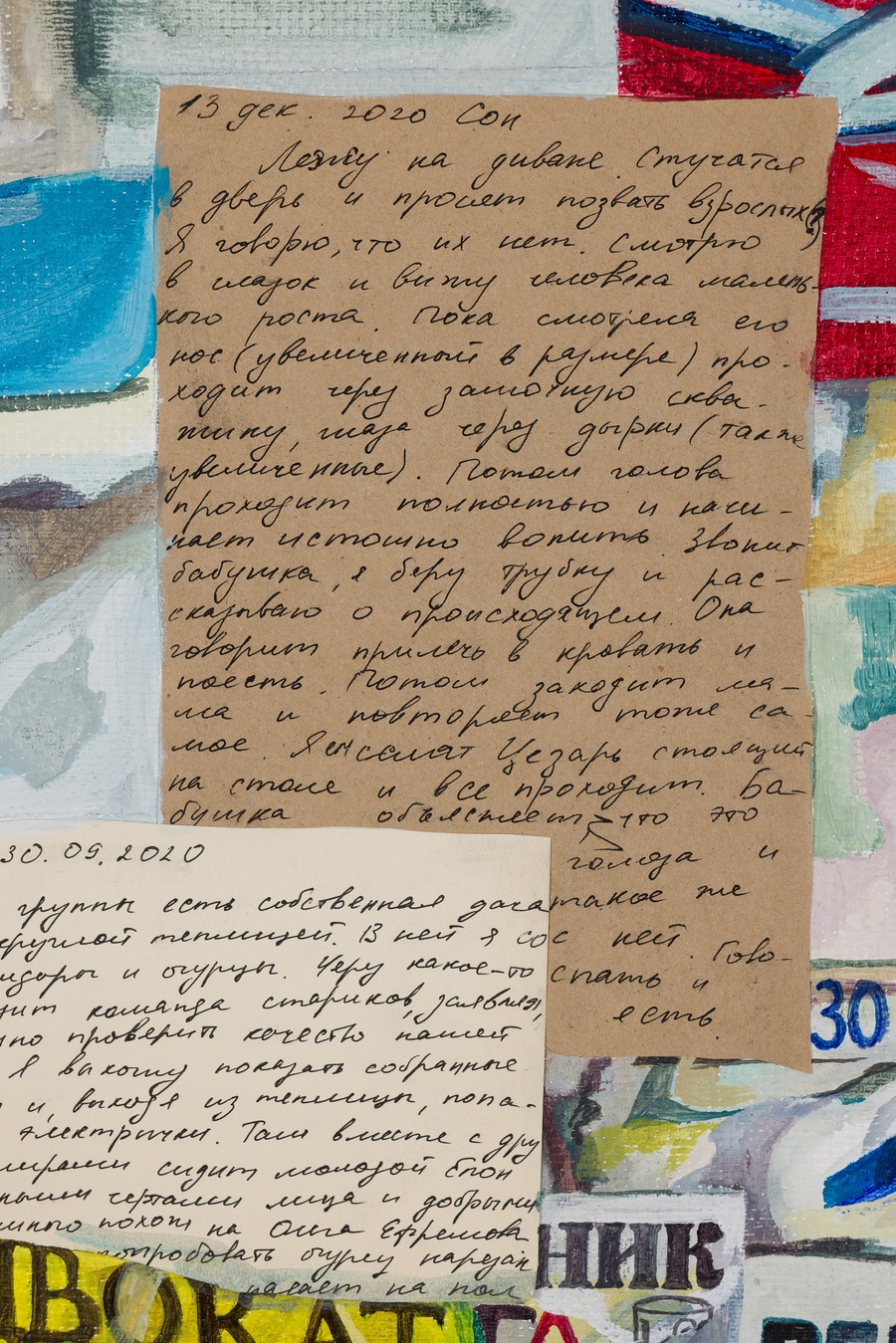
«Diary,» canvas, paper, acrylic, 100×70 cm, 2025
Traditionally, personal experience is viewed as belonging exclusively to the private sphere. Diaries, correspondence, medical records, or family photographs exist outside of the public space and rarely become the subject of collective attention. In this project, these materials lose their accustomed function and become part of an artistic statement. Their presence does not illustrate specific biographical events, but instead allows us to speak about subjectivity as an independent value.
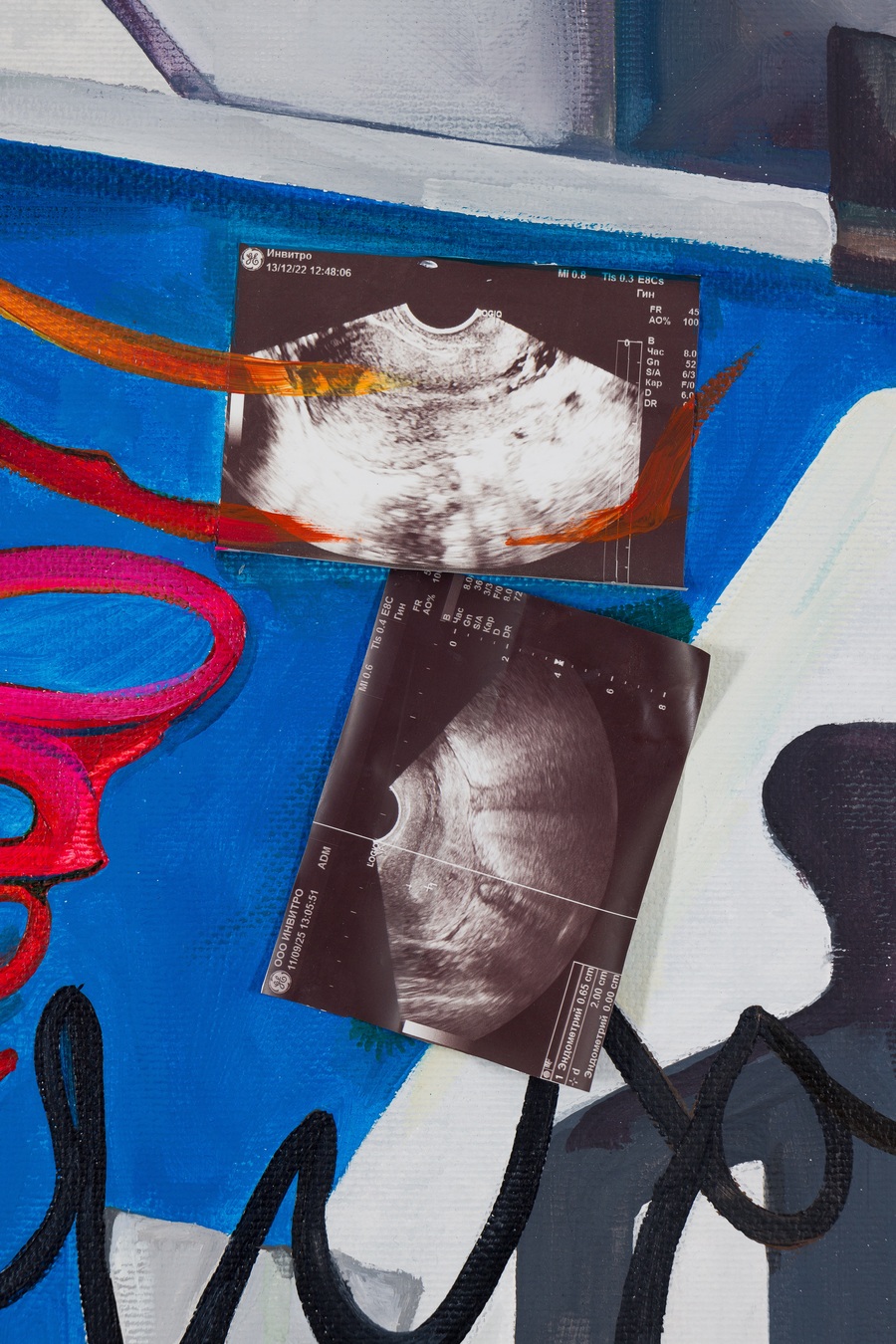
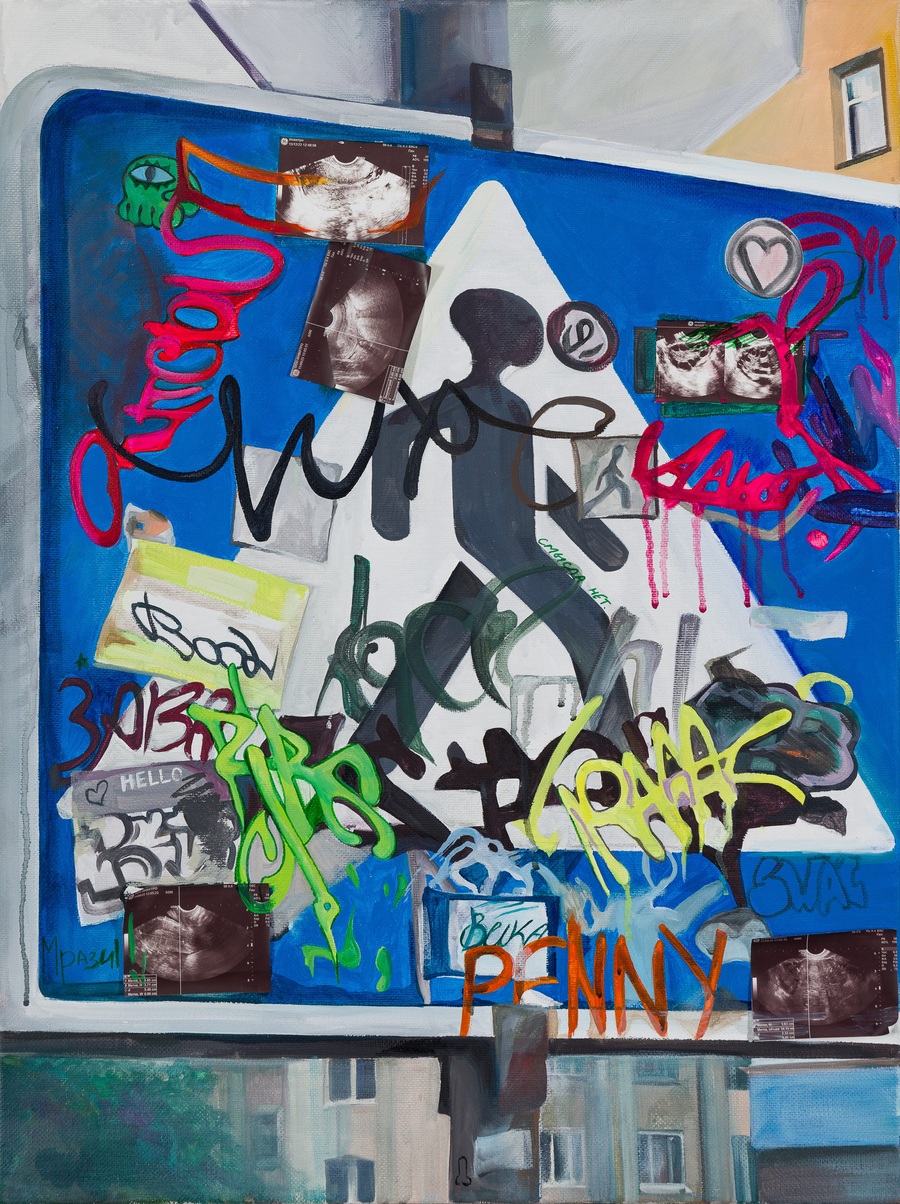
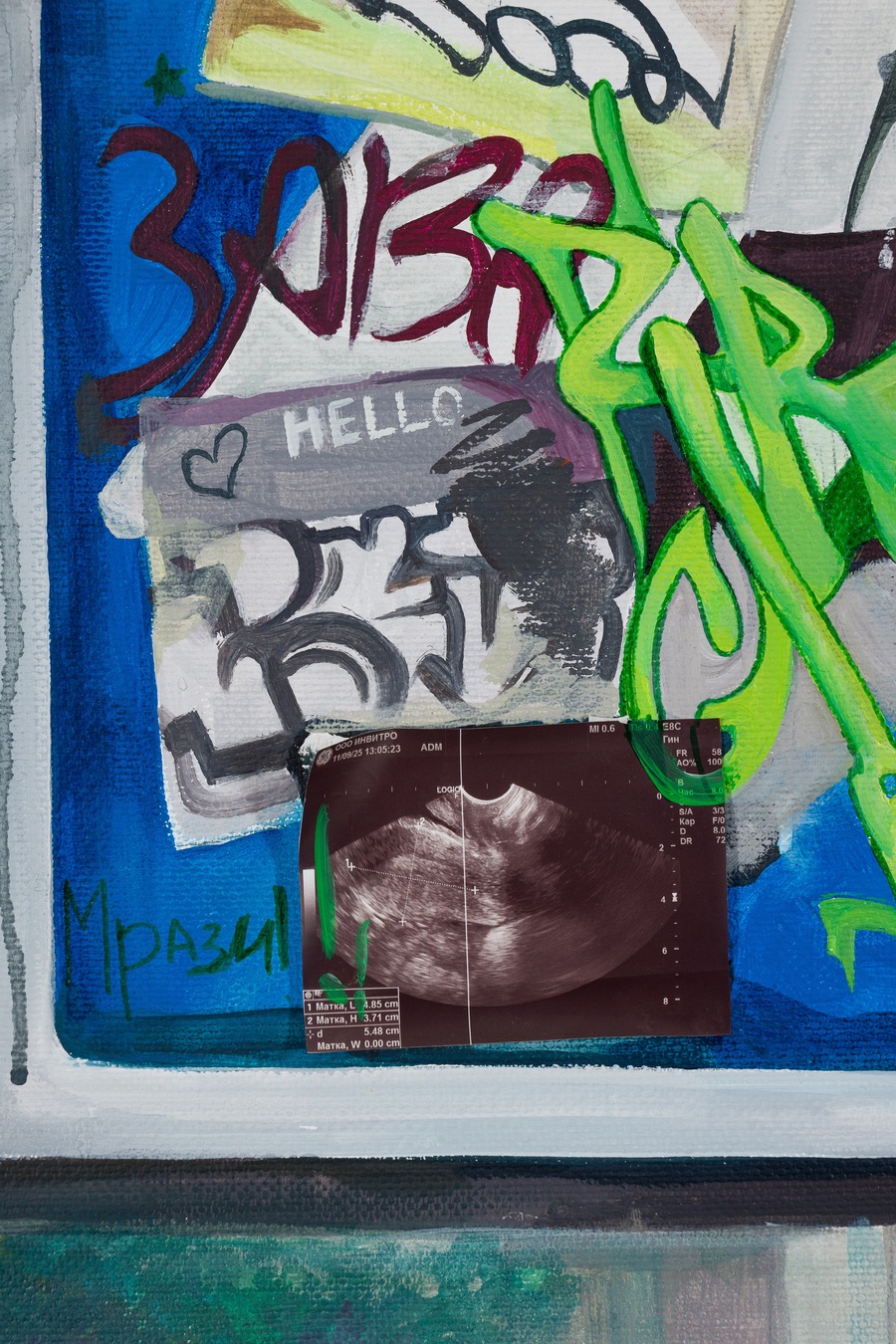
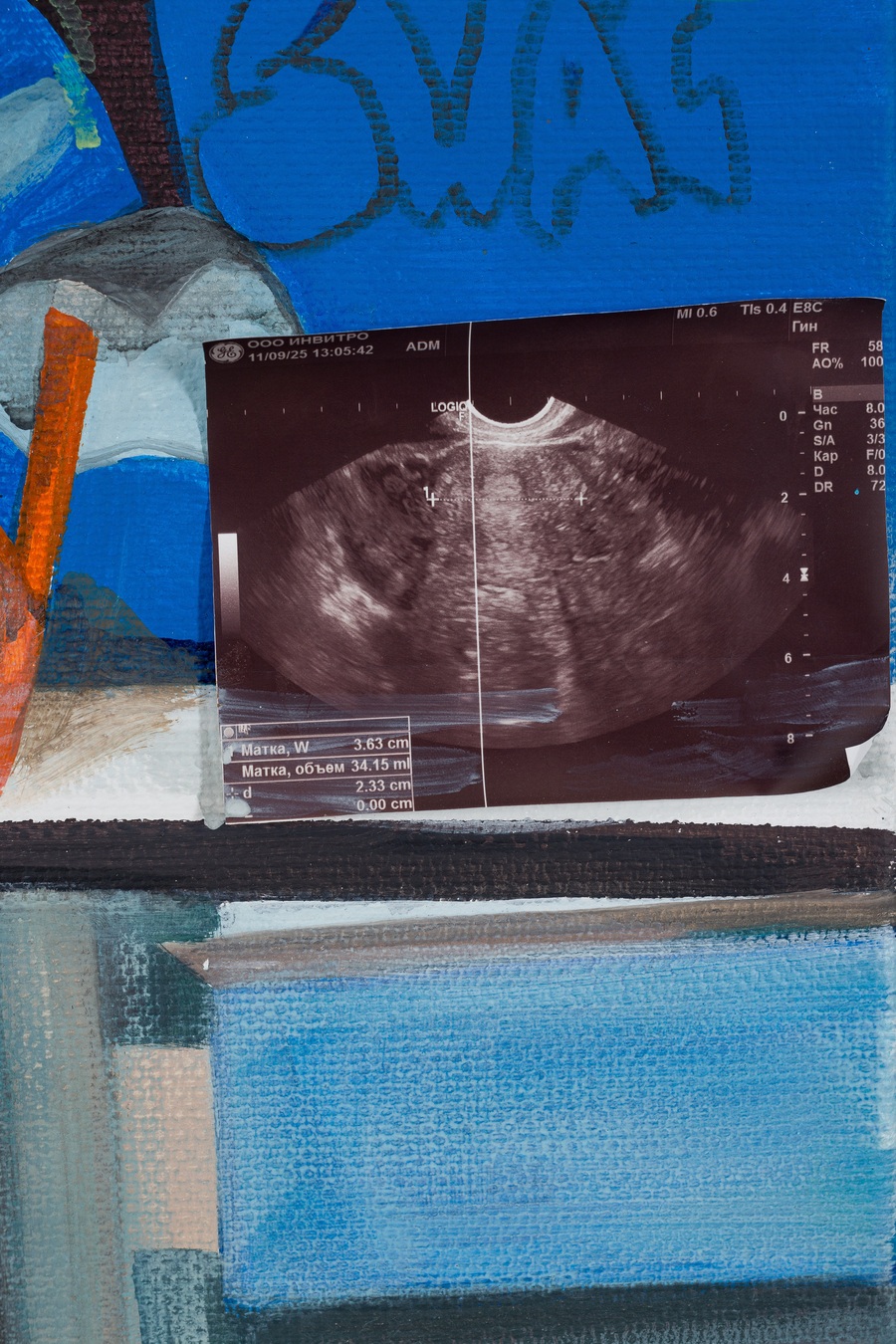
«Passage permitted, ” canvas, ultrasound images, acrylic, 80×60 cm, 2025
Simultaneously, the project addresses the question of how personal this experience remains within the context of the modern city. Our feelings, memories, and self-perceptions are not formed in isolation, but through constant interaction with social, cultural, and informational systems.
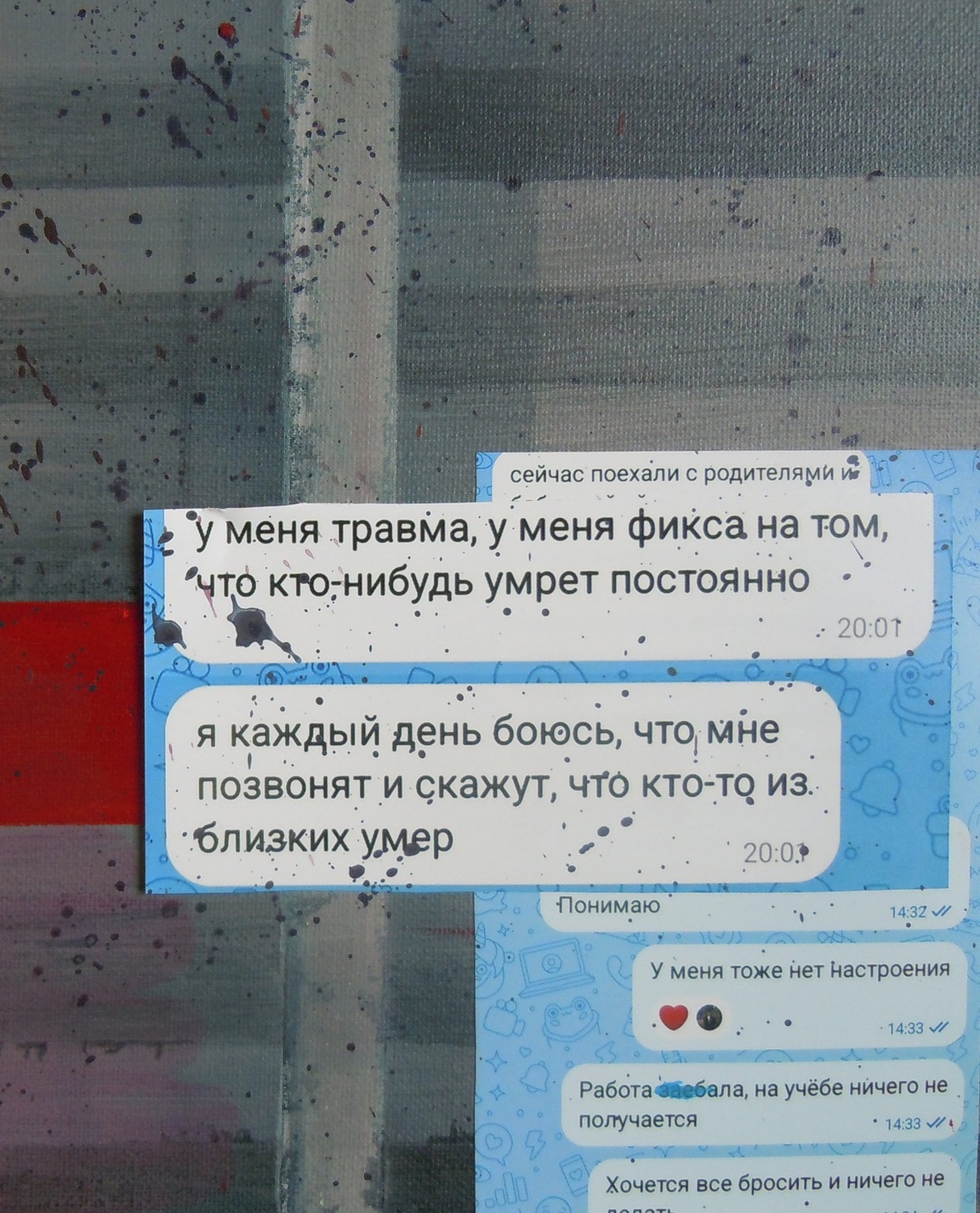
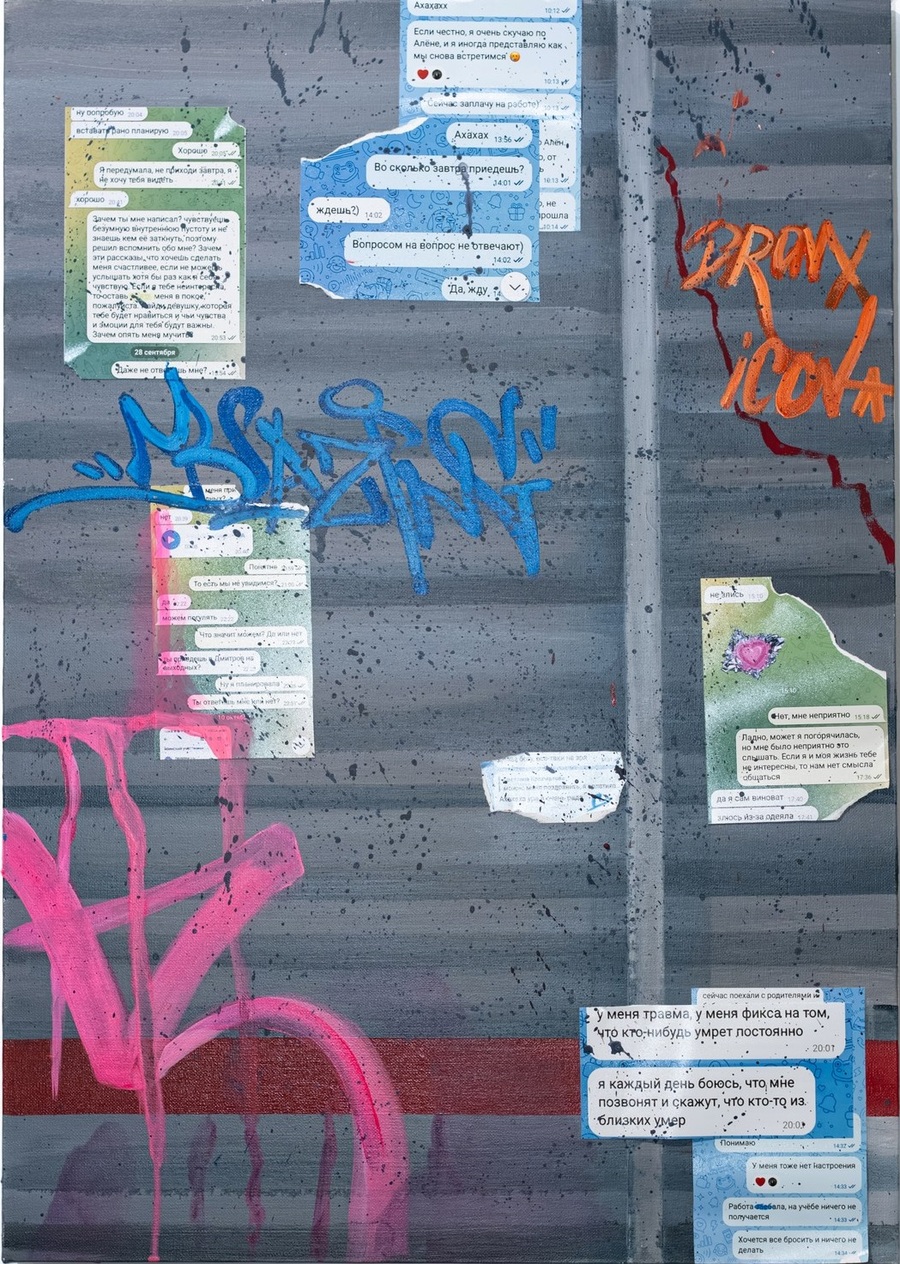
«Tags», canvas, photo paper, acrylic, 70×50 cm, 2025
The city becomes not only the setting, but also an environment that participates in the production of subjectivity. In this sense, «The Diary of the Typical Resident» is an attempt to capture the condition of a person who simultaneously strives to preserve their inner life while feeling how deeply it is already connected to the structures surrounding them.