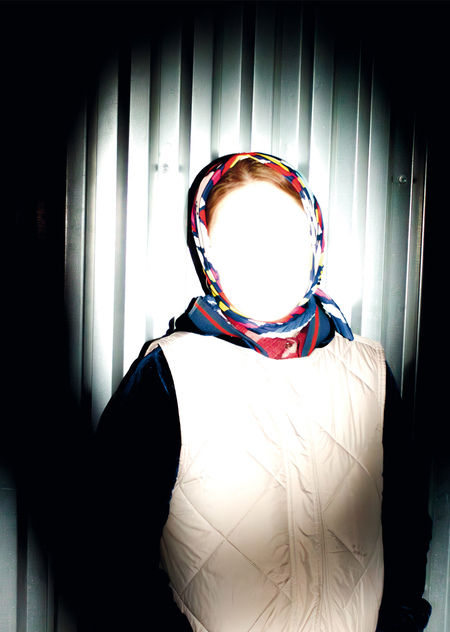
Interview with Ekaterina Kartseva, editor of the artandyou portal, featuring the curators of the exhibition «Gaps in History"—Daria Pyrkina and Diana Machulina—who discussed art education and the paths of young artists in the contemporary world.
Ekaterina Kartseva: You’ve touched upon an interesting theme—the gaps, breaks, and voids within the context of a final portfolio exhibition. After all, the goal of education is to form cohesive knowledge, while the role of a researcher is to fill those lacunae.
Daria Pyrkina: I would say that comprehensive knowledge is probably not even possible today because knowledge is not universal. Firstly, knowledge is vast; the sheer volume of data currently available to a person cannot be mastered in a lifetime. Therefore, knowledge must primarily be systematic right now. And systematic in terms of approaches, because the world is changing incredibly fast, and new knowledge is being generated constantly. Thus, the main task of education today is more crucial than ever—though it always has been—to teach people how to learn and to instill principles of consciousness that will help them navigate the world throughout their entire professional lives: to remain flexible, to master new fields and areas, and to view the world as a system and a structure of relationships.
Diana Machulina: This is quite comprehensive. You can teach the method of engaging consciousness, but you shouldn’t prescribe a universal doctrine, because then it risks becoming the internalization of a single style—mere imitation. And the contemporary artist, given the constantly shifting circumstances and the continuous evolution of the world, must be flexible—not in the sense of bending to circumstances, but in the sense of being able to shape them to their own vision.
Contemporary art is not some fringe activity of a solitary wolf—an unsocialized genius who fails to grasp context. This contradicts the goals of the modern artist, who must be highly educated across various disciplines.
A contemporary artist must possess soft skills—universal human proficiencies—alongside hard skills, which are often intertwined with software education. The result is a highly adaptable individual capable of navigating any circumstance. Because contemporary art is inherently interdisciplinary, it requires a fluid transition from one area of practice to another. This connection might stem from economics, history, cinema, biology, or anything else. In short, we can collaborate and engage with any facet of life.
Ekaterina Kartseva: The influence of an educational program or a mentor on their students—or on their mentees—is traditional. Aspiring artists often intentionally choose a program or instructor whose views on art and values resonate with them. Do you feel an impact on the students, or do you actively try to avoid it?
Diana Machulina: I believe the entire School has the most significant influence on the students. I see that our students are different from others, and the challenges they face during the process—multitasking, responsiveness—ultimately become their strengths. They gain a comprehensive understanding of the world, both theoretical and practical. Regarding my personal influence, I try to avoid imposing my views and instead draw out what is necessary from the student. It is clear that self-discovery is a rather difficult task for young people who have just graduated from school, but it is important that they find themselves and formulate what they want to achieve and what they want to work on. Their preferred techniques and forms of expression are developed through the process of studying technologies and discussing the best ways to articulate a specific idea.
I oppose not only students copying their instructors but even copying themselves. Every new project is a new struggle. The only constants remain one’s attitude toward life and one’s inner beliefs.
Darya Pyrkina: I still feel that the whole question here is what would happen to these same students in a few years if they weren’t connected to their instructor. After all, they are all like-minded individuals, and they are, one way or another, aligned on similar positions that are close to one another. And these entire academic and faculty-student communities don’t form for no reason either.
The instructor’s role, especially in creative disciplines, is not to clone themselves but to draw out the student’s inherent self—to try and help that identity form.
Those days are long gone, thankfully—when a young artist would apprentice under a master and work for them. Even back then, the opportunity arose to become an independent master after completing and defending their own masterpiece. Today, young artists rarely work as apprentices, and it seems that our established faculty often assist younger colleagues, lending support to help them flesh out their projects.
Diana Machulina: We teach them all together. Meaning my students are a bit of your students, at least through your mentors, who then start working with my artists. And all of this merges into a single force within the student—a force accumulated from all instructors across all disciplines. My students do their art practice with Konstantin Azher, and his students do theirs with me. In short, we are all contributing to the development of each student.
Daria Pyrkina: Yes, of course, that is important because very few of us can teach a student everything. And the polyphony of voices is also a characteristic of the modern world that we are trying to recreate in miniature at the School.
Ekaterina Kartseva: Is there some ideal educational model in contemporary art, and what might be preventing it from being realized?
Daria Pyrkina: I don’t believe there is a single perfect model. To be more precise, you can create a perfect model, but it won’t function in the real world. It’s like a thoroughbred horse in a vacuum. So, yes, we can design as many of these ideal horses as we like, but then other forces will suddenly come into play. Therefore, no, perfect and functioning models do not exist. Moreover, there aren’t any perfect students—those perfect thoroughbred horses that can be placed in that vacuum. Everyone is different. And education is always tailored, and educational models are adapted to specific goals, temperaments, personality types, aspirations, and life plans. So, no, of course, there are no ideals. But we strive toward them.
Ekaterina Kartseva: The exhibition doesn’t have a set theme; you avoid constraints to demonstrate the graduates' free expression as a cross-section of our contemporary time—a time characterized by polyphony, fragmentation, and complexity. Yet, you claim to summarize the year through the works presented. In other words, are there still specific themes that resonate with the art community?
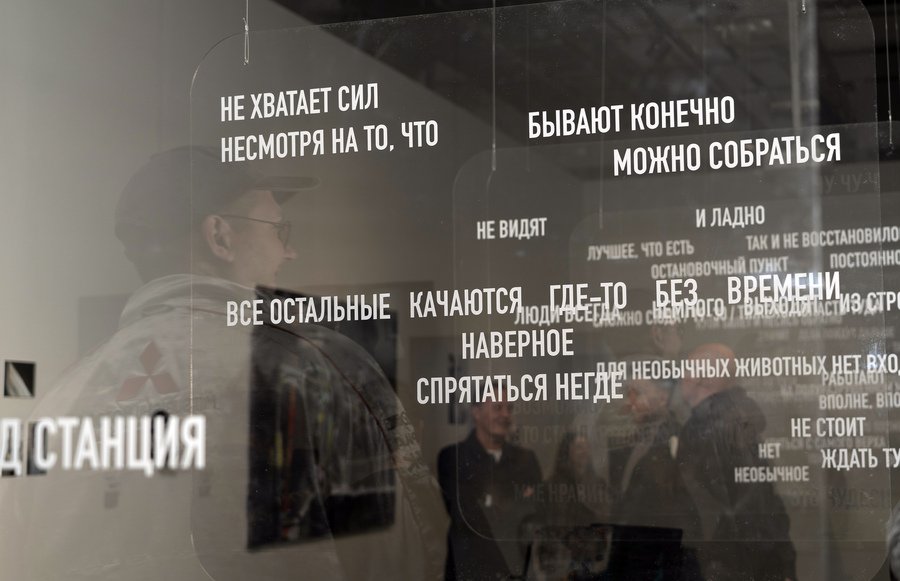
Daria Pyrkina: I wouldn’t say there is one single «current seasonal theme.» With the change of seasons and the flipping of calendars, nothing really shifts radically in an instant. Students, faculty, the public, critics, and curators—we all inhabit roughly the same world. Of course, each of us has our own micro-universe, but the historical context in which we all find ourselves is unified. And artists' creativity springs from that reality—from that actuality, whether objective or subjective—that surrounds them. So, yes, there are indeed some dominant themes, dominant moods, or dominant strategies. We present and highlight them in different ways. For example, at the May graduation exhibition, if you recall, the main theme was one of excess and superfluity—the multiplicity of dimensions, tasks, and everything else. Such opulence, a slight unceremoniousness; the exhibition was called «Everything Always and at Once.» For the current exhibition, we decided to dedicate it to that very concept of non-linear time, which is, essentially, a continuation of those same lines of thought.
Our world is so multifaceted, multi-layered, and complex that fissures and gaps inevitably arise when we attempt to connect these diverse layers of experience.
Diana Machulina: We reviewed all the final thesis projects from this academic year. The purity of the experiment is precisely this: we did not provide a theme; it emerged organically. The theme arose through the analysis of the completed works. This underlying current revealed itself as certain reflections absorbed from the experience of the moment.
Darya Pyrkina: Like any other person, we read the news in newspapers, we read books, and we socialize with people. Of course, we are all swimming in the same general information field. Naturally, we can view all of this differently—and that is what makes the world wonderful; it is incredibly diverse.
Diana Machulina: I think that if an artist didn’t feel the nerve of history happening right now, they wouldn’t have an audience.
People are drawn to art because they find resonance with what they themselves feel but cannot articulate—a reflection of the unsaid, given form to something vague that lingers in the subconscious.
Ekaterina Kartseva: What is the difference between the new generation and artists, for example, your generation?
Darya Pyrkina: When Diana and I began engaging with the artistic scene, we were among the first to address this generational issue. There were historical preconditions for this. Today, in 2024, university graduates are coming from the generation born in the third millennium. For them, the entire 20th century is literally a bygone era. And, of course, these are completely different people. They have grown up in different geopolitical and technological landscapes. They are all digital natives—people who live in a world of extremely fast communication and rapid movement. In that very globalized world (although globalization has been heavily criticized from all sides for years now), they exist within a completely different system of international relations, and a completely different system of interpersonal relationships that are largely mediated by media and so forth.