
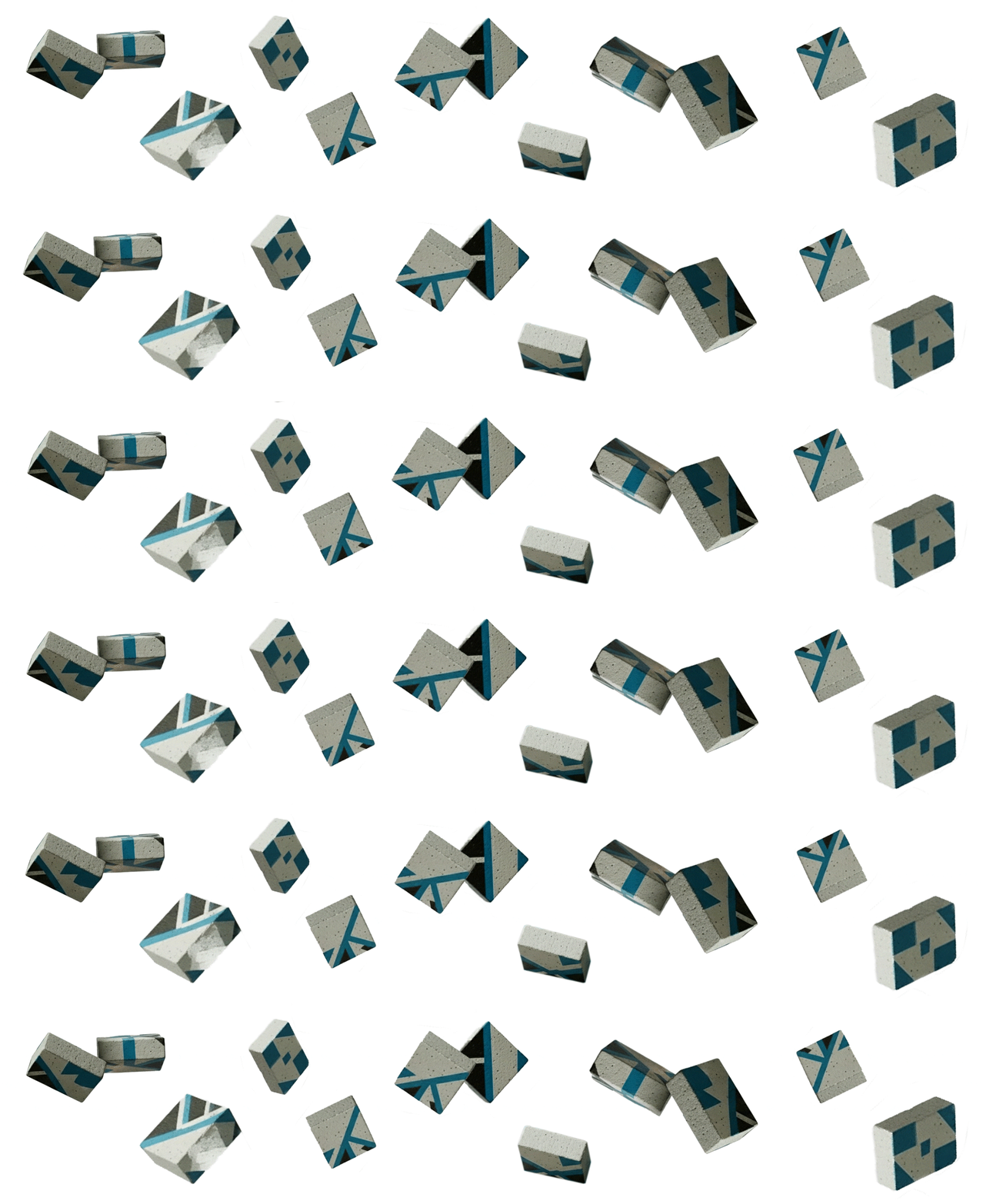
[concept]
Deconstruction
Deconstruction (from «deconstruction») — an interactive series of sculptures that explores the fragile nature of personal memory through the language of the avant-garde, where the visual style of Suprematism expresses the concept of memory’s «flickering.»
Over time, the details of the past inevitably fade, leaving in the mind only broad silhouettes, significant colors, and isolated sensations. Thus, instead of a label for condensed milk or the outline of a toy, an image surfaces in consciousness—distant and barely discernible—a blue-cyan diamond or a red, absurd, wavering figure, accompanied by a piercing white void around it.
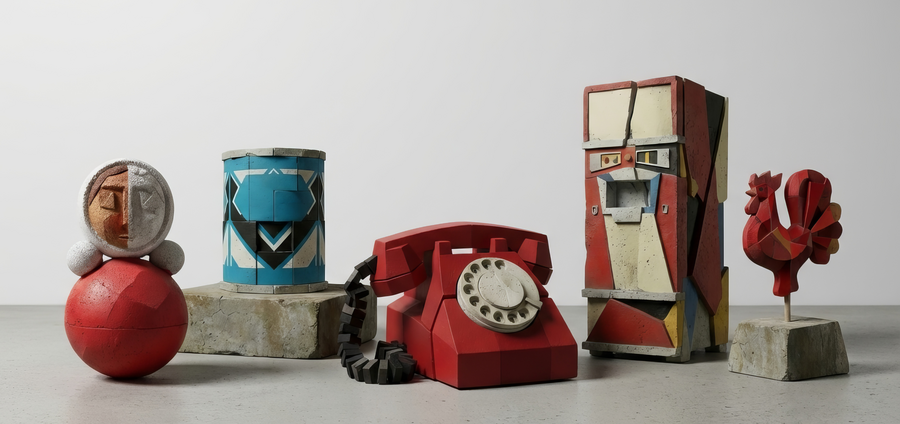
Sculpture series [generated in Ideogram]
By incorporating [0,10] (zero-ten) into the title, the sculpture series references the «last Futurist exhibition, ” which marked the birth of Suprematism.
Thus, deconstructed attributes of Soviet life become a timeless „architecton, “ a monument to themselves.
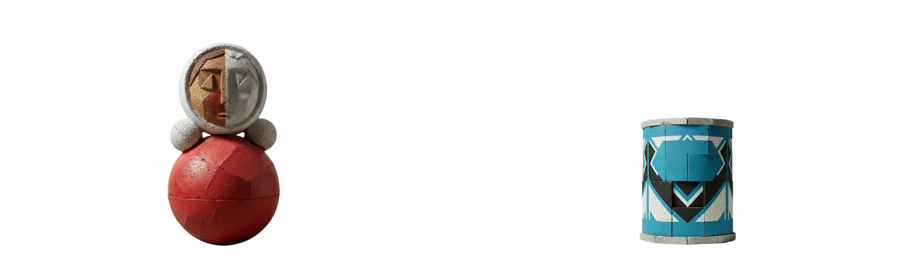
sketches of objects from the series [generated in Ideogram, refined in Nano Banana]
Object sketches from the [generated in Ideogram, refined in Nano Banana] series
The interactivity of the deconstruction series is realized through a system of hidden magnetic fasteners. The disassembled nature of the objects underscores the nonlinearity and personal quality of memory—each piece visualizes certain moments of life in its own way, which consequently influences a deeply individual perception of the material world.
Demonstration of the object’s disassembled structure [Blender render]
Thanks to the magnets, parts from different «memories» can freely combine, creating new hybrid forms.
Sketches of objects before painting [generated in Nano Banana]
Promotional image for the entire series [generated in Ideogram, refined in Nano Banana]
Inspired by the original plaster constructions of Kazimir Malevich, this project translates that visual code into physical production. After the precise 3D printing of the master model and the creation of silicone molds, the final objects are cast in either acrylic plaster or architectural concrete. This process allows for the achievement of a characteristic porous texture and a noble aesthetic.
Promotional images of individual objects [generated in Nano Banana]
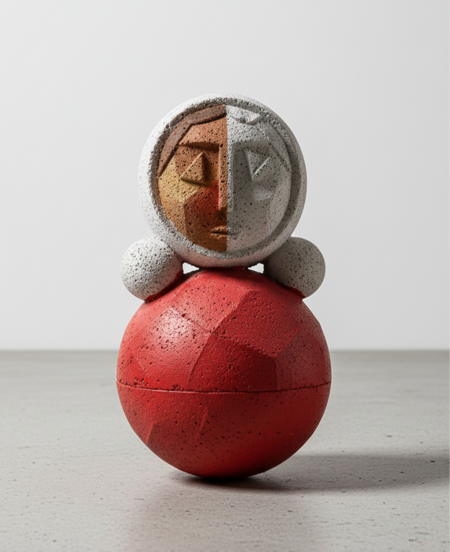
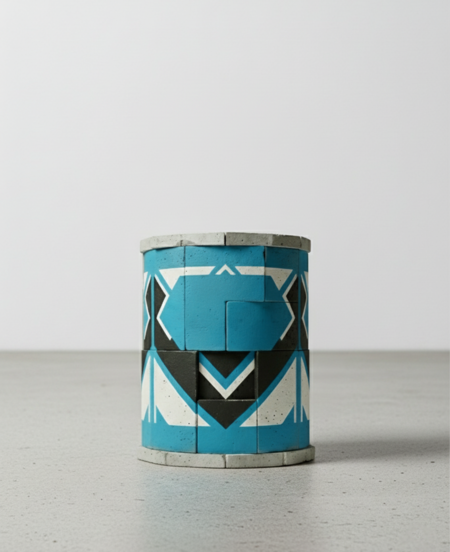
Promotional images of individual objects [generated in Nano Banana]
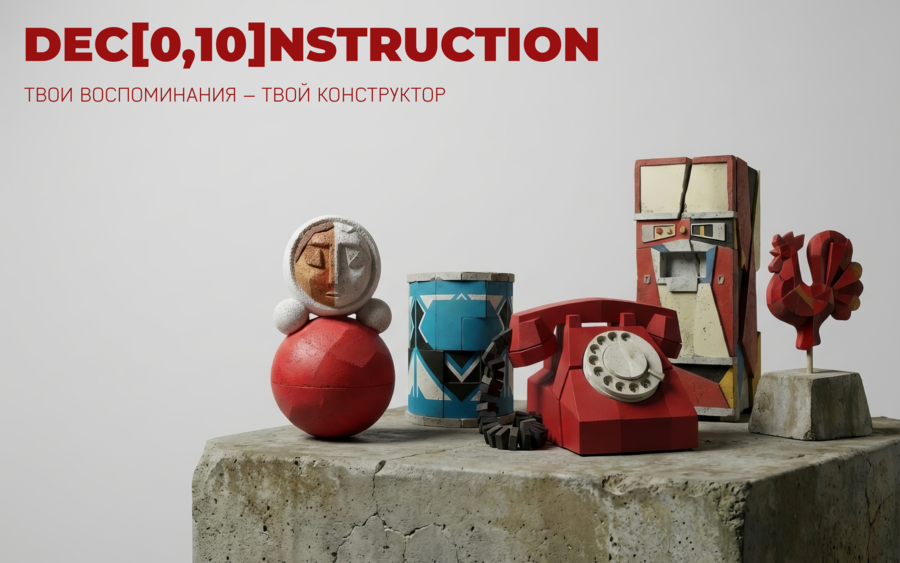
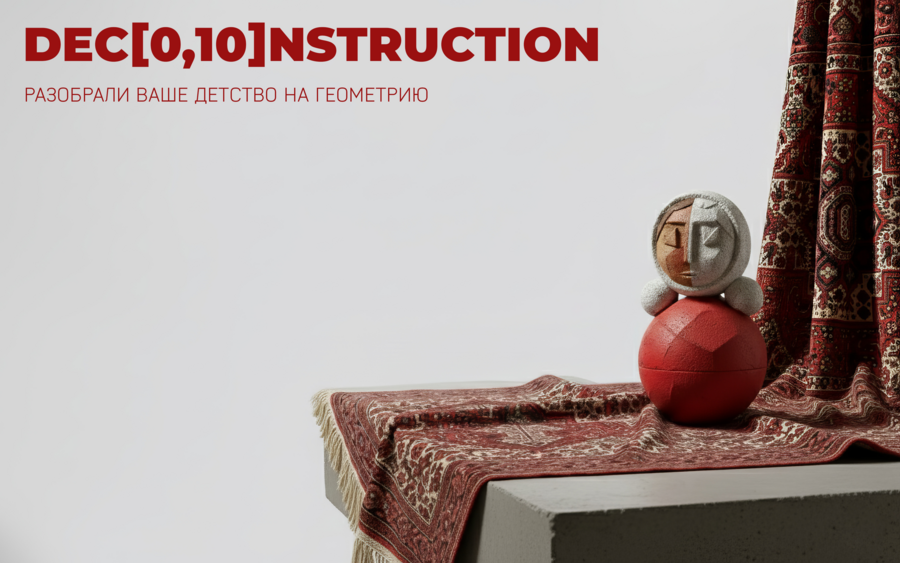
Promotional posters [generated in Nano Banana, typography added manually]

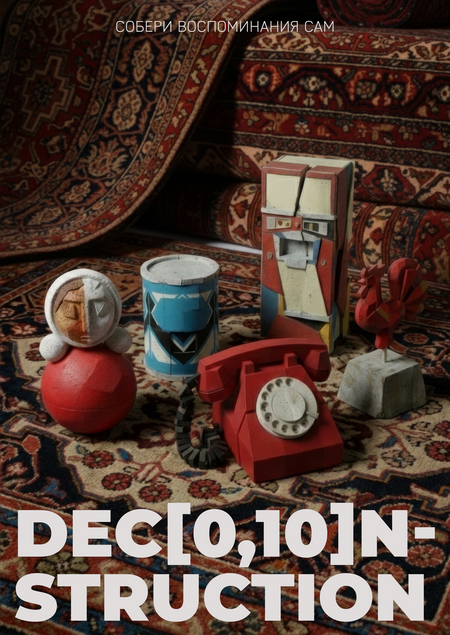
Promotional posters [generated in Ideogram, refined in Nano Banana, typography added manually]
[Development Process]
[2D Concepts Series]
Initially, the work was built upon an analysis of the visual codes of Soviet everyday life. The sketching process involved stripping familiar objects—such as [doilies, condensed milk jars, rotary telephones, soda dispensers, and rooster lollipops]—of superfluous details. Through a series of graphic sketches, these real artifacts were transformed into Suprematist compositions.
For creating the series sketches, we utilized Ideogram [for generating the conceptual foundation] and Nano Banana [for stylistic editing and unification].
The primary objective of this stage is to balance the recognizable silhouette of a past object with the radical geometry of the avant-garde, establishing the logic for future object segmentation.
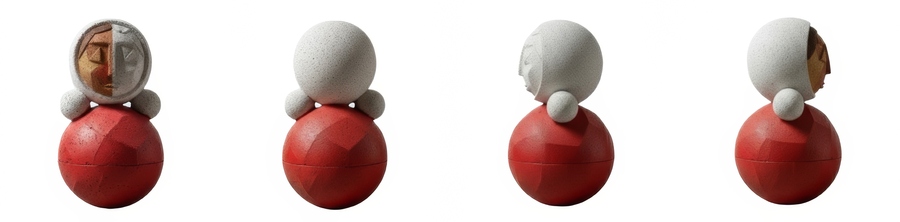
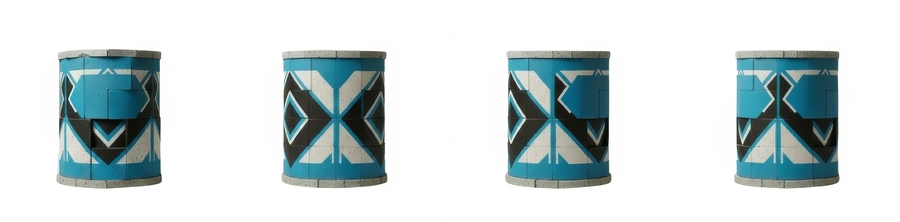

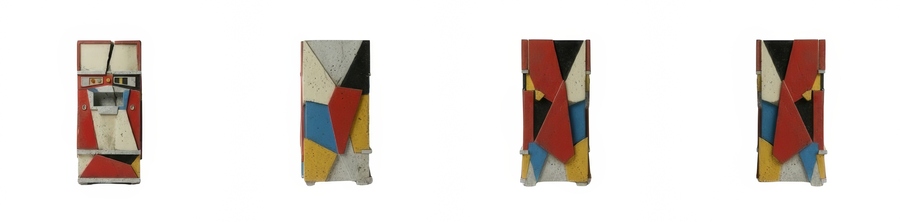
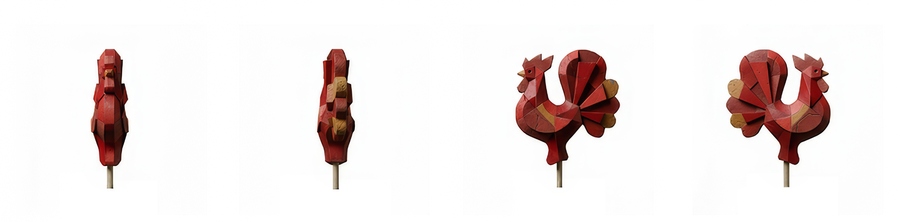
Object sketches from various angles [generated in Nano Banana]
[3D Realization of the Series]
Translating the sketches into a three-dimensional environment allowed for the development of the volumetric-spatial structure of the «architecture of memory.» During the 3D generation and multiple iterations, special attention was paid to the precision of element connection—individual segments held by magnets.
3D model of a wreckage [generated in Tencent Hunyuan 3D, rendered in Blender]
Terneable 3D models of Nevalyashka [generated in Tencent Hunyuan 3D, rendered in Blender]
3D model of a condensed milk can [generated in Tencent Hunyuan 3D, rendered in Blender]
Tertiary 3D models of condensed milk cans [generated in Tencent Hunyuan 3D, rendered in Blender]
Tencent Hunyuan 3D neural network was selected for the development of three-dimensional objects and their textures. Within the 3D Studio functionality of the platform, the generated 3D models were segmented into constituent parts.
Topological error correction was performed in Blender using the 3D Print Toolbox add-on, while final technical validation and placement of supports for subsequent printing were conducted in Anycubic Photon Workshop.
3D model of the VEF TA-68 rotary phone [generated in Tencent Hunyuan 3D, rendered in Blender]
Terrenderable 3D model of the VEF TA-68 rotary phone [generated in Tencent Hunyuan 3D, rendered in Blender]